Sea Buckthorn: The Omega-7 Lipokine, the Mucosal Repair, and Everything Your Google Search Missed
200+ bioactive compounds. A berry that survives −40 °C. And a fatty acid that acts like a hormone. Here is what the standard blog posts do not tell you.
What Sea Buckthorn Actually Is
Most superfoods are a single nutrient story. Sea buckthorn (Hippophae rhamnoides L.) is different — it is a systems-level food with overlapping mechanisms that nutritional science is still mapping.
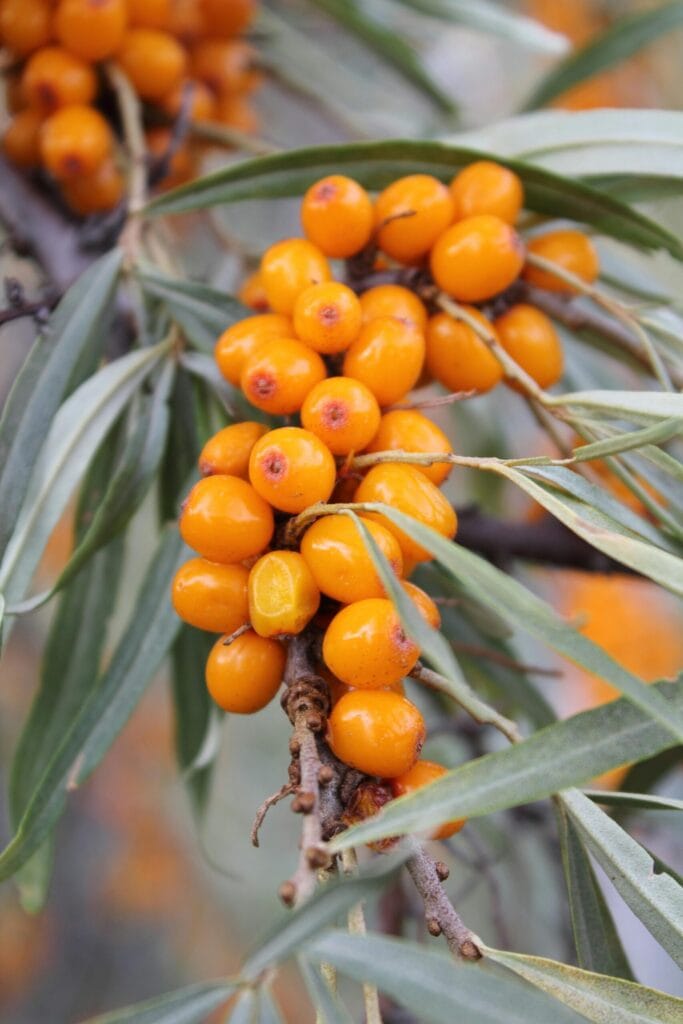
Sea buckthorn is a thorny, nitrogen-fixing shrub native to the cold, semi-arid slopes of Europe and Asia. In India it grows at 2,500–4,500 m elevation across Ladakh, Spiti, Kinnaur, and parts of Uttarakhand. Its bright orange berries ripen in September, turning the bare Himalayan terrain into what looks like fields of fire.
The plant belongs to the family Elaeagnaceae. Its regional Indian names include Chharma (Ladakh/Himachal), Ames (Uttarakhand), and Leh berry in contemporary commerce. Ancient Ayurvedic and Tibetan texts reference it as a restorative herb — some scholars link it to the legendary “Sanjivani booti” described in the Ramayana for reviving Lakshmana, though that identification is interpretive rather than definitive.
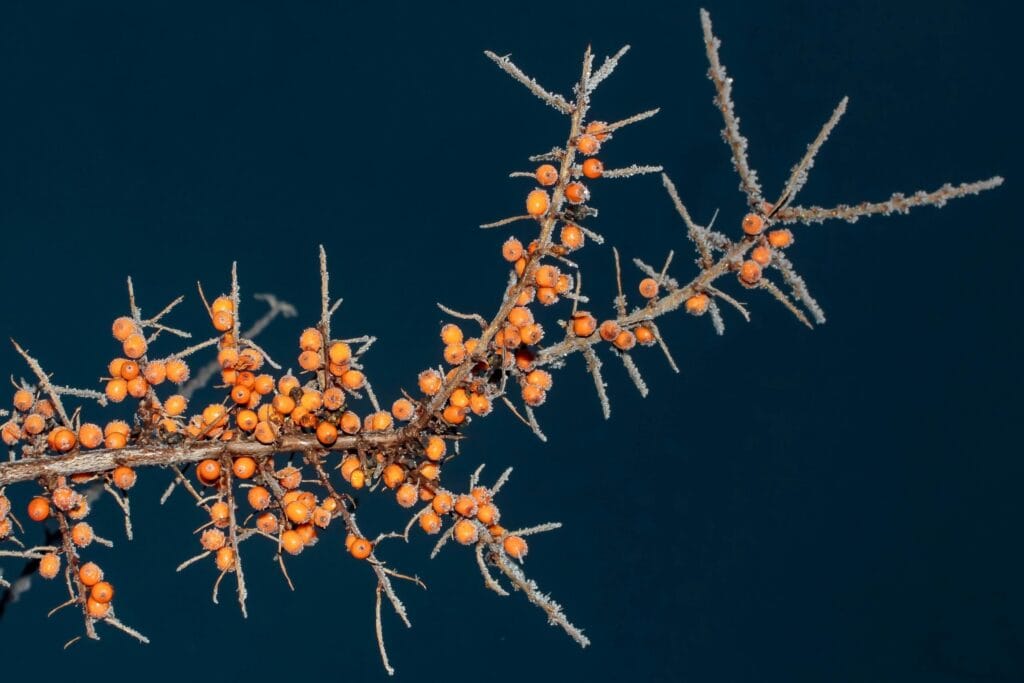
What makes the plant biologically remarkable is its extreme stress-tolerance: it survives temperature swings from −43 °C to +40 °C, grows in nitrogen-poor rocky soils by fixing atmospheric nitrogen, and produces fruit with over 200 identified bioactive compounds — an evolutionary response to UV radiation, oxidative stress, and nutritional scarcity at altitude.
India Context
The Government of India has classified sea buckthorn as a “cold desert crop” and it is listed under the National Horticulture Mission for high-altitude states. DRDO’s Defence Institute of High Altitude Research (DIHAR) in Leh has been researching and promoting its cultivation since the early 2000s, largely for its role in soil conservation and defence personnel nutrition.
Complete Nutrient Profile — Real Numbers
Most articles cite sea buckthorn’s vitamin C content breathlessly and move on. The full picture is more interesting. Values below are per 100 g of fresh berry pulp, compiled from published chromatographic analyses (USDA, peer-reviewed European food chemistry studies).
| Nutrient | Amount per 100 g | Notable context |
|---|---|---|
| Vitamin C (ascorbic acid) | 120–2,500 mg | 8–165× that of oranges; enormous cultivar variation |
| Vitamin E (tocopherols) | 100–300 mg | Among highest plant sources |
| Omega-3 (α-linolenic acid) | 28–35% of seed oil FA | Balanced n-6:n-3 ≈ 1.3:1 in seed oil |
| Phytosterols (β-sitosterol) | 100–600 mg / 100 g oil | Cholesterol-lowering mechanism |
| Omega-7 (palmitoleic acid) | 20–45% of pulp oil FA | Highest plant-source concentration known |
| Carotenoids (total) | 30–110 mg | Includes β-carotene, zeaxanthin, lycopene, β-sitosterol |
| 5-Hydroxytryptophan (5-HTP) | Trace (leaves > berries) | Precursor to serotonin; underresearched |
| Vitamin K1 + K2 | ~10–50 µg | Rarely cited but clinically relevant |
| Organic acids (malic, quinic) | 2–6 g | Responsible for tartness; buffer effect on GI |
| Protein | 3–4 g | Unusually high for a berry |
| Flavonoids (isorhamnetin, etc.) | 200–1,800 mg | Variety and solvent-dependent |
Important note on the two oils: Sea buckthorn yields two distinct oils from a single berry. The pulp/flesh oil (orange-red) is rich in omega-7 palmitoleic acid and carotenoids. The seed oil (amber-gold) is rich in omega-3 and omega-6 with an unusually balanced n-6:n-3 ratio of about 1.3:1 — far better than most vegetable oils. Most products contain blended or single-fraction oils; check labels carefully.
The Omega-7 Story Nobody Is Telling Properly
The four omega fatty acids in sea buckthorn — 3, 6, 7, and 9 — are widely mentioned. What most content skips is why omega-7 is physiologically interesting beyond skin health.
Omega-3
anti-inflammatory, DHA precursor
Omega-6
cellular structure, immune signalling
Omega-7
lipokine hormone signalling ← the novel one
Omega-9
oleic acid, found in olive oil too
Omega-7 as a Lipokine — the 2008 Harvard Discovery
In 2008, researchers at Harvard’s Dana-Farber Cancer Institute (Cao et al., Cell) identified palmitoleic acid (omega-7) as a lipokine — a fat-derived signalling molecule that acts like a hormone. Secreted by adipose tissue, it travels to the liver where it suppresses hepatic lipogenesis (fat synthesis) and improves insulin signalling. This was a genuinely novel finding: a fatty acid behaving as an endocrine messenger between tissues.
Subsequent clinical work (Bernstein et al., 2014) demonstrated that purified palmitoleic acid supplementation (840 mg/day) significantly reduced triglycerides and C-reactive protein (CRP). Sea buckthorn pulp oil, with 20–45% palmitoleic acid content, is the richest plant-source of this compound on earth.
Mechanism deep-dive
Palmitoleic acid appears to act through at least three pathways: (1) direct PPAR-γ agonism, improving insulin sensitivity; (2) suppression of HMGCR (the same enzyme targeted by statins) in lipid-loaded liver cells; (3) reducing pro-inflammatory cytokine production in macrophages via M2a polarisation. A 2026 Nature Scientific Reports study confirmed sea buckthorn oil showed statin-comparable effects on cholesterol reduction in hepatocellular steatosis models — through the HMGCR pathway.
The Palmitic Acid Counterargument — Addressed
Some supplement critics argue that because sea buckthorn pulp oil also contains ~31% palmitic acid (a saturated fat associated with cardiovascular risk), the omega-7 benefits are negated. This debate is important and unresolved. The current evidence shows:
- Whole food matrices behave differently from isolated fatty acid studies — the antioxidant and phytosterol content of sea buckthorn oil likely modulates palmitic acid’s effects
- No adverse cardiovascular outcomes have been documented in populations with high sea buckthorn consumption
- Those using sea buckthorn therapeutically for lipid management may benefit from purified, palmitic-acid-depleted omega-7 supplements rather than whole berry oil
Mucosal Repair: Eyes, Gut, and Reproductive Tract
This is the most clinically underreported area of sea buckthorn research and almost entirely absent from popular nutrition content. Sea buckthorn oil has documented mucosal-regenerating activity across multiple body systems.
Dry Eye Syndrome
A randomised, placebo-controlled Finnish trial (Larmo et al., 2010) gave participants sea buckthorn seed oil capsules for six months. The sea buckthorn group showed significant improvements in tear film stability and symptom reduction. The proposed mechanism: omega-7 supports the lipid layer of the tear film, reducing evaporation-driven dryness.
Gastric Ulcer Healing
A clinical experiment involving 30 peptic ulcer patients who took sea buckthorn oil capsules daily for one month reported a cure rate of 76.6% and a total effective rate of 96.7%. The mechanism likely involves mucosal repair acceleration — sea buckthorn oil appears to stimulate regeneration of the protective mucous lining of the GI tract and reduce oxidative stress in the gut epithelium.
Key finding
Both oral and topical sea buckthorn oil have shown evidence of aiding recovery from mucosal inflammation in the mouth, oesophagus, stomach, and reproductive tract — a cross-tissue mucoprotective profile not shared by any other single food source.
Vaginal Atrophy in Menopause — the Clinically Validated Use
This benefit is almost entirely absent from Indian-language nutrition content and mainstream health blogs, despite being one of the best-evidenced applications. A randomised double-blind placebo-controlled study (Larmo et al., Maturitas, 2014) of 116 postmenopausal women found that 3 g of sea buckthorn oil daily for three months produced significant improvement in vaginal epithelial integrity and vaginal health index scores.
This matters because standard estrogen therapy is contraindicated for women with hormone-sensitive cancers. Sea buckthorn oil — which appears to act through a non-estrogenic mucosal mechanism involving omega-7, carotenoids, and vitamin E — represents a potential alternative. The PMC 2023 review on sea buckthorn in female reproductive health confirmed these findings and noted historical Ayurvedic use for uterine inflammation and endometriosis symptom management.
Sea Buckthorn and Altitude Physiology — An Underresearched Area
This is possibly the least-covered angle in any published blog article on sea buckthorn, yet it sits at the intersection of indigenous knowledge and genuinely open research questions.
Sea buckthorn grows at 2,500–4,500 m — precisely the altitude range where humans experience acute mountain sickness (AMS), hypobaric hypoxia, and increased oxidative stress. Tibetan and Ladakhi communities have consumed it for centuries. Indian military personnel stationed in Siachen and Kargil have historically had access to it.
Theorised mechanisms by which sea buckthorn may support altitude acclimatisation:
- Antioxidant load: Hypoxia at altitude drives mitochondrial reactive oxygen species (ROS) production. Sea buckthorn’s combined carotenoid + vitamin E + vitamin C + flavonoid antioxidant matrix is one of the most concentrated in any natural food.
- Anti-inflammatory signalling: Altitude-induced inflammatory cascades may be modulated by isorhamnetin and quercetin-type flavonoids found in sea buckthorn berries and leaves.
- Erythropoiesis support: Vitamin C, iron co-factors, and carotenoids all participate in red blood cell metabolism. Theoretical synergy with the polycythaemia response to altitude, though direct RCT evidence is lacking.
Research gap
No large-scale randomized controlled trial has yet tested sea buckthorn specifically against AMS endpoints. DIHAR has published observational data and animal studies, but this remains a clinically open question. Anyone searching for “sea buckthorn altitude sickness” will find almost no rigorous peer-reviewed content — this is a genuine gap in the literature, not a settled question.
India's Leh Berry Economy and Traditional Knowledge
Sea buckthorn grows across an estimated 6 lakh+ hectares in India’s cold deserts and is a keystone species for soil stabilisation in fragile trans-Himalayan terrain. Yet commercially, India has barely scratched the surface. The Ladakh Autonomous Hill Development Council (LAHDC) and DRDO-DIHAR have invested in processing infrastructure, but market integration with urban India remains nascent compared to Chinese, Russian, or Finnish sea buckthorn industries.
China processes over 80% of global sea buckthorn — a crop that originated partly in the Tibetan Plateau that India shares. India’s output is primarily local juice concentrate, a few small-batch supplements, and raw berry sales at Leh markets. There is a documented body of traditional Tibetan ethnobotanical knowledge around sea buckthorn preparation (water extraction, oil cold-pressing, leaf tea) that has not been systematically codified in peer-reviewed form.
Traditional Uses by Part of the Plant
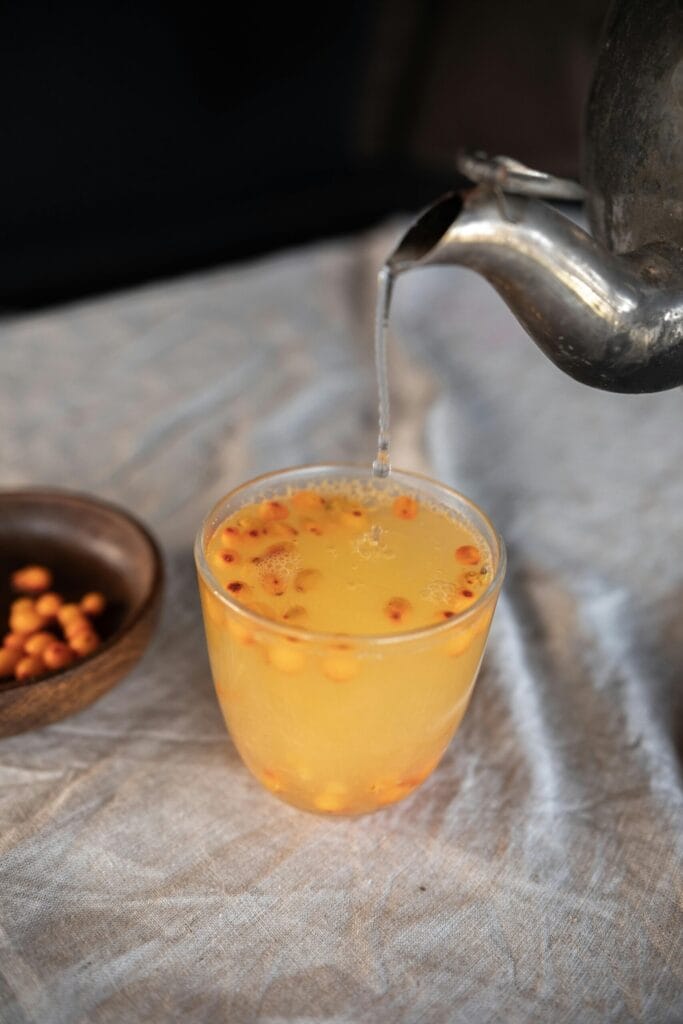
- Berry: Fresh juice, dried berry, jam, cold-pressed pulp oil. The tart flavour profile is similar to tamarind crossed with passion fruit.
- Seed oil: Pressed separately for topical skin applications and internal supplementation. Tibetan medicine uses it for liver and GI conditions.
- Leaves: Dried and prepared as a nutrient-dense herbal tea. Leaves contain up to 20% crude protein — also used as high-value livestock fodder in Ladakh.
- Bark: Used in traditional pain management preparations in Central Asian medicine.
- Nitrogen-fixing roots: The plant’s root system hosts actinobacteria (Frankia spp.) that fix atmospheric nitrogen, enriching degraded soils — an agro-ecological benefit with direct relevance to Himalayan land restoration.
Myth Busting
“Sea buckthorn has more vitamin C than any fruit on earth.”
Camu camu (Myrciaria dubia) typically contains higher ascorbic acid. Sea buckthorn’s range (120–2,500 mg/100 g) is extremely wide across cultivars — some varieties are unremarkable.
“All four omega fatty acids in sea buckthorn are essential.”
Only omega-3 and omega-6 are classified as essential fatty acids (cannot be synthesised by the body). Omega-7 and omega-9 are non-essential but biologically significant.
“Sea buckthorn oil can replace hormone therapy for menopause.”
Evidence supports a role in mucosal integrity, particularly vaginal atrophy, via non-hormonal mechanisms. It is an adjunct or alternative for specific symptoms in women who cannot use estrogen — not a replacement for HRT overall.
“Sea buckthorn is safe at any dose for anyone.”
High doses may cause GI upset. Sea buckthorn can interact with antidiuretic drugs and anticoagulants. It should be used cautiously by those on blood-thinning medications or with bleeding disorders.
How to Use It — Practical Dosage Guide
Bioavailability varies significantly by form and whether taken with fat. All oil forms should be consumed with a fat-containing meal.
| Fresh/dried berry | 20–30 g/day | Whole food form, highest phytochemical diversity; tart flavour best blended |
| Juice (undiluted) | 15–30 ml/day | Dilute with water 1:5; standardised products preferred |
| Pulp oil (capsule) | 1–3 g/day | Omega-7–rich; deep orange colour confirms carotenoid content; take with food |
| Seed oil (capsule) | 1–3 g/day | Omega-3/6–rich with balanced n-6:n-3; amber colour; dry eye / GI use |
| Combined CO₂ extract | 3 g/day | Used in vaginal atrophy RCT; includes both seed and pulp fractions |
| Leaf tea | 1–2 cups/day | Flavonoid-rich; lower lipid content than berry; traditional Tibetan preparation |
Caution
Avoid sea buckthorn supplements before surgery (antiplatelet effects). Pregnant women should consult a physician. Those on warfarin or other anticoagulants should monitor closely. Children under 5: consult paediatric guidance. Very high doses (>10 g oil/day) have not been adequately safety-tested.
Buying Guide for Indian Consumers
- Look for products sourced from Ladakh, Spiti, or Kinnaur — these are genuine Indian terroir
- Cold-pressed oil in dark glass bottles; amber/gold (seed oil) vs deep orange (pulp oil)
- ISO 22000 or FSSAI-registered brands preferred
- Avoid products that do not specify pulp vs seed oil — they behave differently
- HPTLC-verified extracts from verified species (H. rhamnoides, not the less nutritionally dense relatives)
Because sea buckthorn produces two distinct oils, buying the wrong one means missing out on your target benefits. If you are looking for the Omega-7 and carotenoid benefits, you need a high-quality Pure Sea Buckthorn Pulp Oil (Check on Amazon). If your focus is on a balanced Omega-3 and Omega-6 profile for general health, opt for Sea Buckthorn Seed Oil (Check on Amazon). Always check the label to ensure no cheap carrier oils have been added.
FAQ — Questions You Cannot Find Answered Elsewhere
1. Does cooking or heating destroy sea buckthorn's key nutrients?
Vitamin C is heat-sensitive and significantly reduced above 70 °C. The fatty acids and fat-soluble vitamins (A, E, K) in the oil are more heat-stable but still vulnerable to oxidation at high temperatures. For maximum benefit, consume as cold-pressed oil, raw juice, or at low-heat preparations. Avoid frying with sea buckthorn oil.
2. Can someone with fatty liver use sea buckthorn?
Emerging research (Nature Scientific Reports, 2026) shows sea buckthorn oil may help reduce cholesterol accumulation in steatotic liver cells through HMGCR inhibition — a statin-like mechanism. However, high-fat oil intake in persons with advanced liver disease should only be under clinical supervision. Early-stage non-alcoholic fatty liver may theoretically benefit, but human trials specifically targeting NAFLD/MASLD are still limited.
3. Is there a difference between Chinese, Russian, Finnish, and Indian sea buckthorn?
Yes — meaningful cultivar and origin differences exist. Chinese commercial production (primarily Inner Mongolia and Xinjiang, subspecies sinensis) tends toward higher yield, lower individual berry nutrient density. Russian and Finnish products often use subspecies rhamnoides. Ladakhi berries grow at extreme altitude under high UV and osmotic stress, which may increase secondary metabolite production — but systematic comparative studies are limited. Do not assume all “sea buckthorn” products are equivalent.
4. Does sea buckthorn interact with diabetes medication?
Sea buckthorn may improve insulin sensitivity and reduce post-meal blood sugar spikes (European Journal of Clinical Nutrition study with healthy volunteers). In persons already on hypoglycaemic drugs, this additive effect could theoretically cause hypoglycaemia. Blood glucose should be monitored if introducing sea buckthorn supplements alongside metformin or insulin therapy. This interaction is theoretical-to-probable rather than firmly documented.
5. Can men benefit from sea buckthorn, or is it primarily marketed for women?
The mucosal health and reproductive applications dominate women’s wellness marketing, but the cardiovascular, metabolic (omega-7 lipokine effects), liver protection, skin repair, and antioxidant benefits are equally applicable to men. The athlete and high-altitude acclimatisation literature is largely gender-neutral. Sea buckthorn’s gendering in marketing is a commercial artifact, not a biological reality.
6. What does "lipokine" mean and why does it matter practically?
A lipokine is a fatty acid that acts as a hormone-like signalling molecule — communicating between different tissues (in omega-7’s case, from fat tissue to the liver). Practically: it means omega-7 does not just provide structural support or caloric energy — it actively modulates metabolic processes. This mechanistic understanding is what distinguishes serious research on sea buckthorn from superfood marketing.
The honest bottom line
Sea buckthorn is nutritionally unusual and clinically interesting — but it is not magic. The strongest evidence supports: mucosal integrity (eyes, gut, vaginal), lipid metabolism modulation via omega-7 lipokine signalling, and a broad-spectrum antioxidant profile suited to oxidative stress states. The altitude and AMS angle, the NAFLD implications, and the traditional ethno-botanical applications across India’s cold deserts represent genuinely underexplored territory that deserves more research attention.
Key References
- Cao, H. et al. (2008). Identification of a lipokine, a lipid hormone linking adipose tissue to systemic metabolism. Cell, 134(6), 933–944.
- Bernstein, A.M. et al. (2014). A randomized, double-blind, placebo-controlled trial of omega-7 palmitoleic acid. Journal of Clinical Lipidology.
- Larmo, P.S. et al. (2010). Effects of sea buckthorn berries on infections and inflammation. European Journal of Clinical Nutrition.
- Larmo, P.S. et al. (2014). Effects of sea buckthorn oil intake on vaginal atrophy in postmenopausal women. Maturitas, 79(3), 316–321.
- Frontiers in Nutrition (2022). Sea buckthorn pulp and seed oils ameliorate lipid metabolism disorders and modulate gut microbiota. doi:10.3389/fnut.2022.1067813
- Nature Scientific Reports (2026). Comparative study of palmitoleic acid, sea buckthorn oil, and lovastatin in hepatocellular steatosis model. doi:10.1038/s41598-026-37006-y
- PMC (2023). Sea buckthorn, its bioactive constituents, and mechanism of action: potential application in female reproduction. PMC10662087.
- Mozaffarian, D. et al. (2010). Trans-palmitoleate, other dairy fat biomarkers, and incident diabetes. Annals of Internal Medicine.
- ICMR-NIN IFCT 2017 (Indian Food Composition Tables) — for regional nutritional context.