Peanut Butter: Benefits, Nutrition Facts & Honest Reality Check
Peanut butter is one of those foods that both gym lovers and people trying to lose weight think is good for them. And honestly? It kind of is — but not like you can eat the whole jar every day like Instagram shows.
Let’s break down what’s really inside peanut butter, what it does for your body, where the popular ideas go wrong, and how it compares to just eating peanuts or choosing almond butter instead.
What Is Peanut Butter, Nutritionally Speaking?
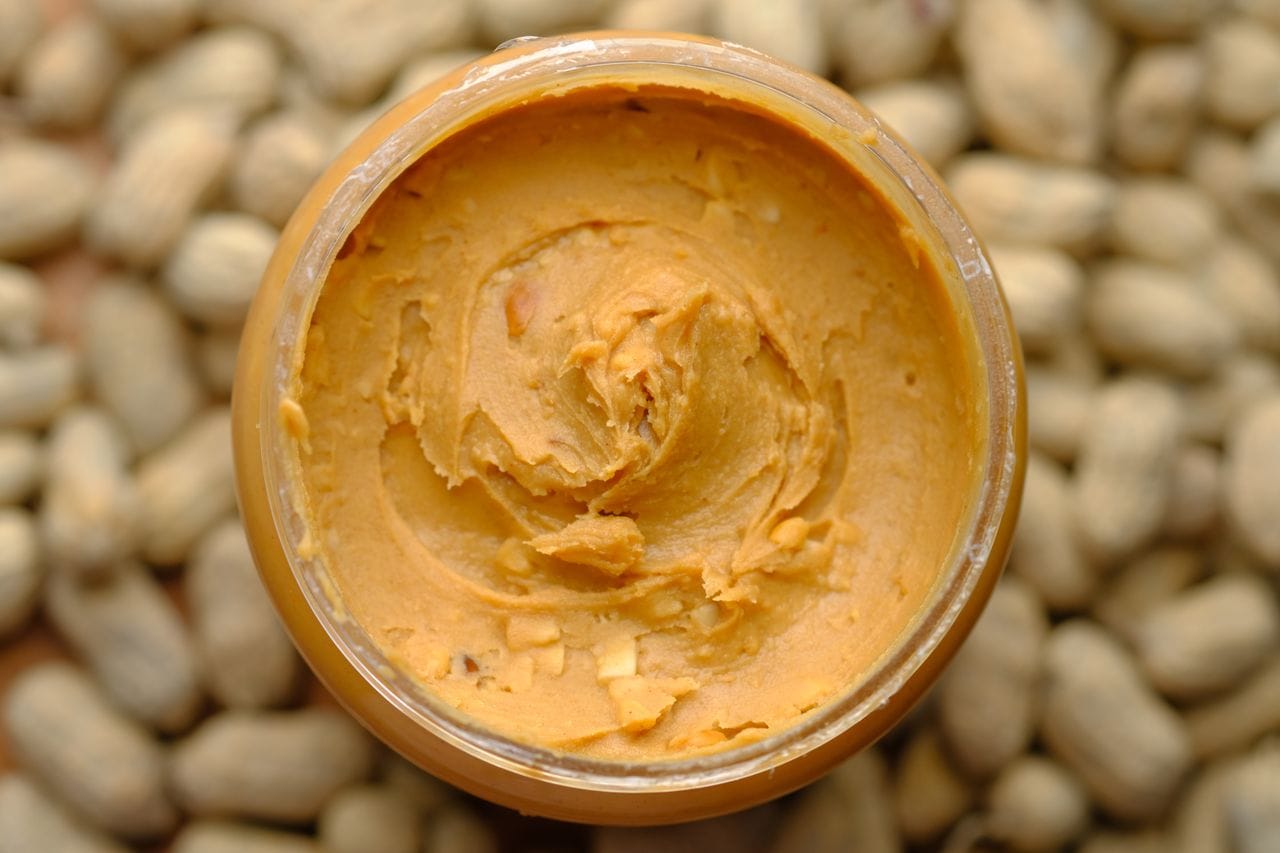
Peanut butter is ground roasted peanuts — that’s it, in its simplest form. A standard 2-tablespoon (32g) serving looks like this:
| Nutrient | Per 2 tbsp (32g) |
|---|---|
| Calories | ~188 kcal |
| Protein | ~8 g |
| Total Fat | ~16 g |
| Monounsaturated fat | ~8 g |
| Polyunsaturated fat | ~4.5 g |
| Saturated fat | ~3 g |
| Carbohydrates | ~6 g |
| Dietary Fiber | ~2 g |
| Sugar (natural) | ~3 g |
| Sodium (natural; no added) | ~5 mg |
The fat breakdown is actually quite good — mostly monounsaturated (the same type found in olive oil). The protein at 8g per serving is decent. The fiber keeps things moving, literally.
Peanuts vs Peanut Butter — Which Is Actually Healthier?
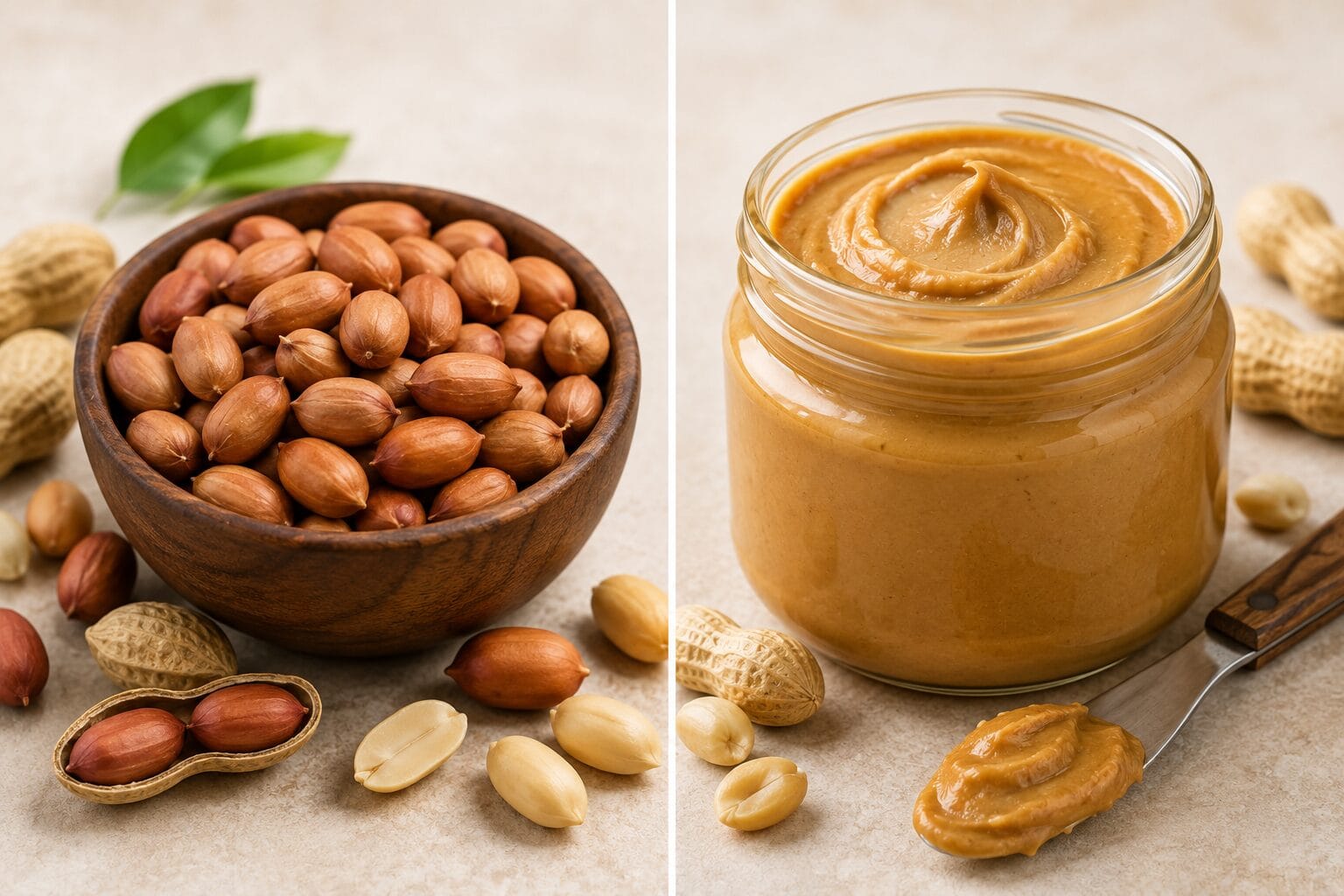
A fair question. Since peanut butter is just ground peanuts, are they nutritionally the same? Almost — but not quite.
| Nutrient | Roasted Peanuts (32g) | Natural Peanut Butter (32g) |
|---|---|---|
| Calories | 187 kcal | 188 kcal |
| Protein | 8.4 g | 8.0 g |
| Total Fat | 15.9 g | 16.1 g |
| Carbohydrates | 6.9 g | 6.4 g |
| Dietary Fiber | 2.7 g | 1.9 g |
| Sodium | 2 mg | 5 mg |
Numbers are near-identical — the real differences are behavioral and practical.
Where peanuts win:
- Slightly more fiber per serving (grinding breaks down some of the fiber structure)
- Harder to overeat — chewing triggers satiety hormones more effectively than smooth paste
- Cheaper: ₹80–120/kg for loose roasted peanuts vs ₹300–500/kg for packaged PB
- No processing, no added ingredients risk
Where peanut butter wins:
- More bioavailable — grinding ruptures cell walls, making nutrients easier to absorb
- Far more versatile: smoothies, spreads, dips, sauces, baking
- Easier to measure a consistent portion
- More convenient, longer shelf life once opened
Reality Check: If your only goal is nutrition, eating a small handful of roasted peanuts is marginally better. Peanut butter becomes the better choice when it replaces something worse — a biscuit packet, sugary jam, or a skipped meal — because it’s convenient enough that you’ll actually eat it. Homemade peanut butter (blender + roasted peanuts + salt) bridges both worlds well.
Real Benefits of Peanut Butter
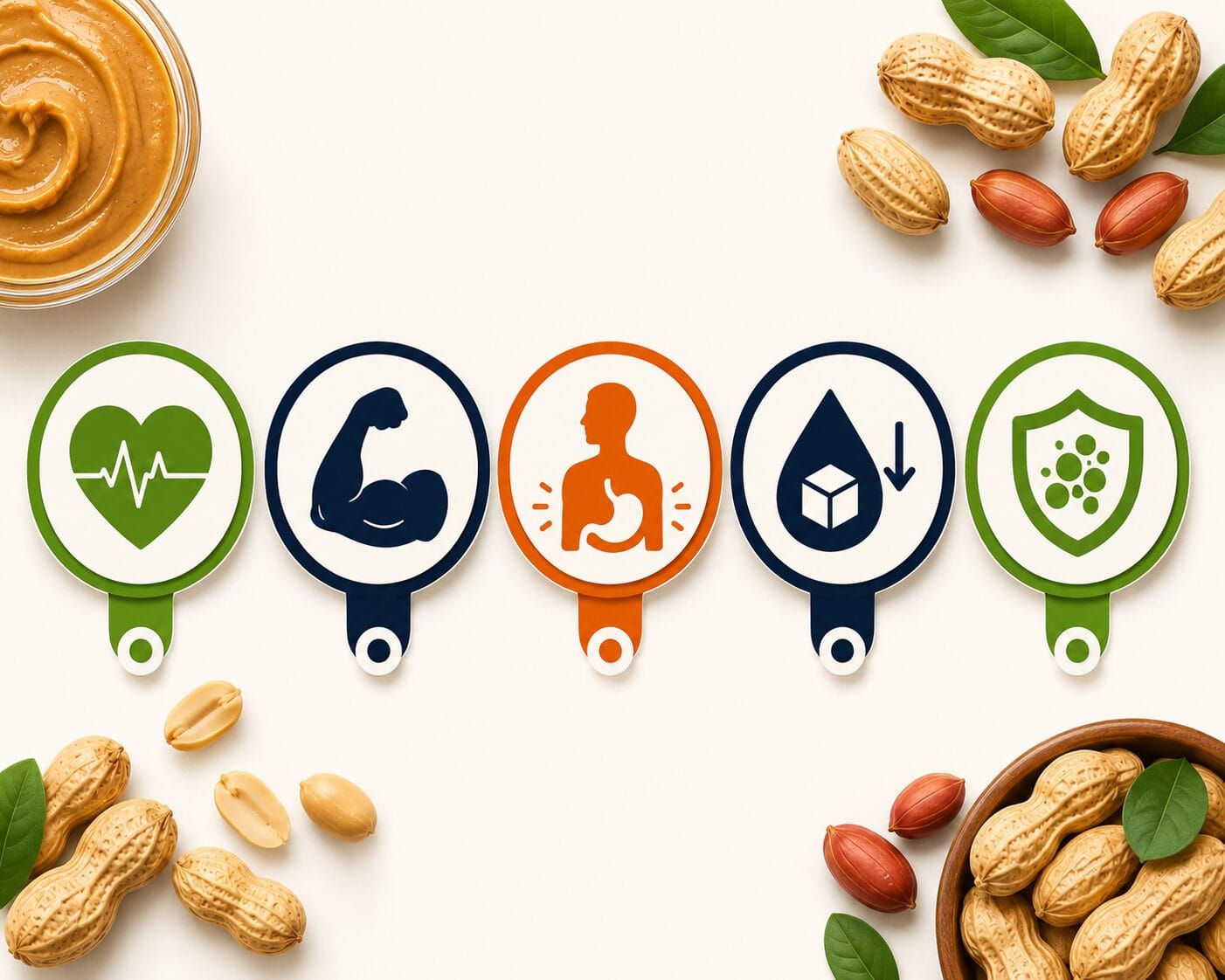
1. It Keeps You Full — And That’s a Big Deal
The combination of fat, protein, and fiber means peanut butter digests slowly. A spoon in the morning can noticeably reduce mid-morning snack cravings. Studies on nut consumption consistently show lower hunger scores and reduced calorie intake over the rest of the day compared to low-fat, high-carb alternatives.
This is genuinely useful — not because peanut butter “burns fat,” but because staying full helps you eat less overall.
2. Heart-Friendly Fat Profile
Most of peanut butter’s fat is monounsaturated (MUFA), which is associated with better LDL-to-HDL cholesterol ratios. Peanuts also contain resveratrol and oleic acid — the same compounds credited to olive oil and red grapes.
A Harvard cohort study found that eating nuts or peanut butter 5+ times per week was linked to a significantly lower risk of coronary heart disease compared to those who rarely ate them. More recent research has broadly confirmed this direction.
Reality Check: This benefit applies to natural peanut butter in moderate amounts, not peanut butter cookies or store packs loaded with hydrogenated oil and sugar. The food matrix matters.
3. Decent Source of Micronutrients
Peanut butter gives you meaningful amounts of:
- Magnesium — muscle function, nerve health, blood sugar regulation
- Vitamin E — antioxidant, skin health
- B3 (Niacin) — energy metabolism
- B6 — protein metabolism
- Phosphorus — bone health
These aren’t dramatic numbers, but for an everyday food eaten consistently, they add up.
4. Blood Sugar Friendly (For Most People)
Peanut butter has a very low glycemic index (GI ~14). The fat and protein slow glucose absorption significantly, making it useful paired with higher-GI foods like white bread or rice cakes to blunt a blood sugar spike.
5. Muscle Support (Not Magic, But Real)
8g of protein per serving isn’t huge, but it’s not trivial. Two servings a day is 16g — a meaningful contribution when combined with other protein sources in an Indian diet (dal, paneer, curd, eggs). It also provides arginine, which supports blood flow during exercise.
The Reality Checks Nobody Wants to Hear
“Peanut Butter Helps You Lose Weight” — Partially True
Peanut butter is not a weight-loss food in the direct sense. At ~590 calories per 100g, it is one of the most calorie-dense foods you can eat. If you’re eating two spoons straight from the jar multiple times a day, those calories absolutely count.
What it can help with: satiety. If 2 tablespoons in the morning means you skip a biscuit packet at 11am, you’ve effectively managed your calories better. The benefit is indirect, through fullness — not metabolism-boosting or fat-burning.
Bottom line: Peanut butter works in a weight management plan; it is not a weight-loss shortcut.
“It’s a High-Protein Food” — Sort of True
Yes, peanut butter has protein. No, it’s not a high-protein food in the way chicken breast or paneer is. 8g per serving is decent, but peanut protein is also incomplete — it’s low in methionine, one of the essential amino acids your body can’t make on its own.
This doesn’t make it bad. It just means you shouldn’t rely on peanut butter as your primary or only protein source. Pair it with complete proteins (dairy, eggs, soy, or the classic lentils + rice combination) for a full amino acid profile.
“Natural” on the Label Doesn’t Always Mean Natural
In Indian supermarkets (and globally), brands slap “natural” on peanut butter that still contains:
- Hydrogenated palm oil (for shelf stability and texture)
- Glucose syrup or added sugar
- Salt levels 10–20x what peanuts naturally contain
How to check: Flip the pack. The ingredients should read: Roasted peanuts. Sometimes sea salt is fine. Anything beyond peanuts + minimal salt is a commercially processed product, regardless of what the front label says.
A few brands that genuinely come close: Alpino Natural Peanut Butter →, MyFitness Natural Peanut Butter →, and The Butternut Co. Unsweetened → (verify the specific variant — some have added sugar). But read the label every time you buy — brand formulations change without announcement.
Aflatoxin Is a Real Concern Worth Knowing About
Peanuts are susceptible to Aspergillus flavus, a mold that produces aflatoxins — compounds classified as Group 1 carcinogens. This is especially relevant in India where storage conditions across supply chains can be inconsistent.
Reputable manufacturers test for this. FSSAI also sets limits. But this is a reason to buy peanut butter from established brands with quality certifications, and to avoid buying loose, unpackaged roasted peanuts in bulk and storing them in humid conditions.
This isn’t a reason to avoid peanut butter. It’s a reason to buy it right.
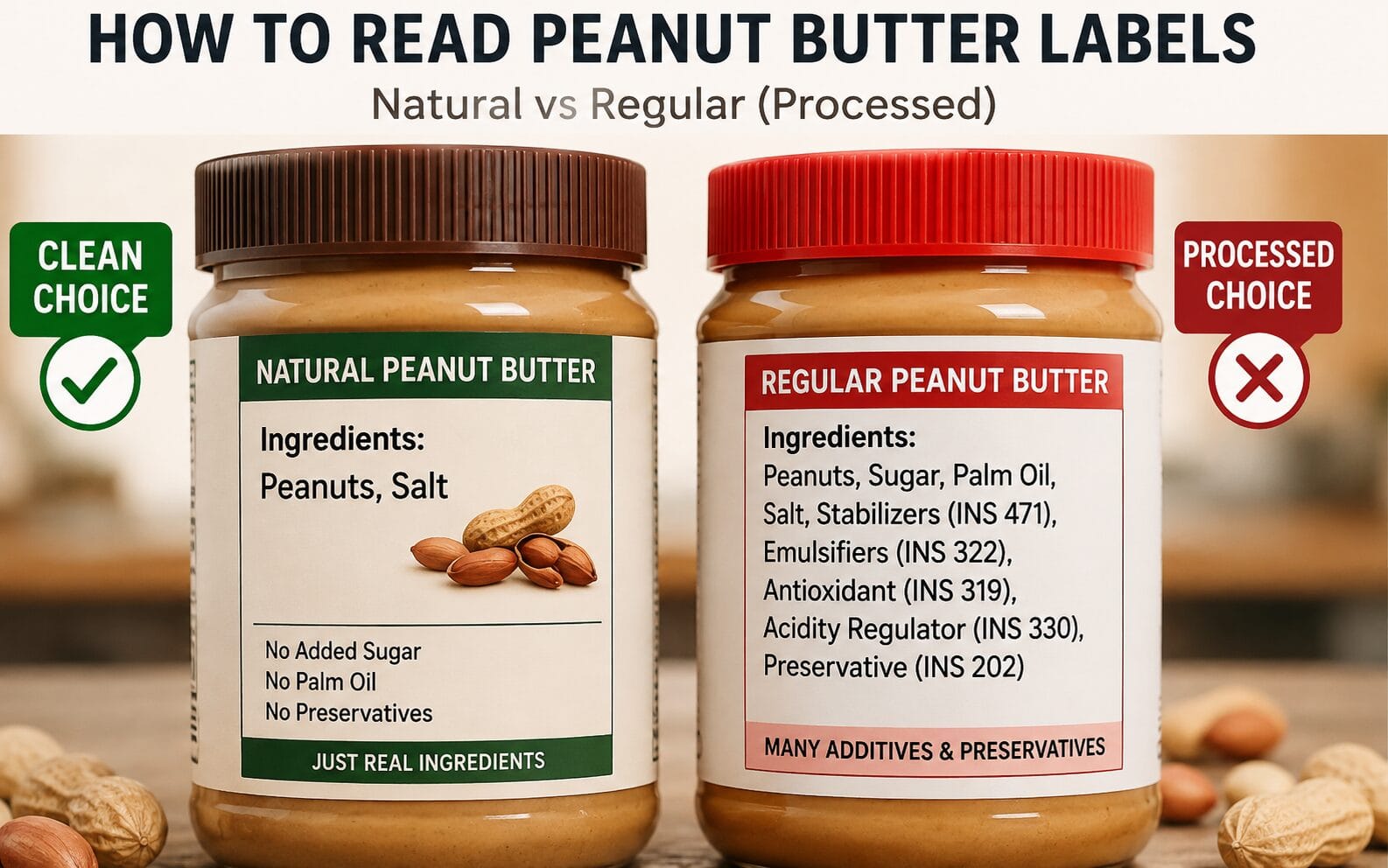
Natural vs. Regular Peanut Butter — Which Should You Choose?
| Feature | Natural (Peanuts Only) | Commercial (Processed) |
|---|---|---|
| Ingredients | Peanuts ± salt | Peanuts, sugar, hydrogenated oil, etc. |
| Taste | Nuttier, slightly bitter | Sweeter, smoother |
| Oil separation | Yes (completely normal) | No (due to emulsifiers) |
| Shelf stable? | Less so | Longer shelf life |
| Nutritional edge | Better fat quality | More palatable for many |
| Price in India | ₹300–500 / kg | ₹200–400 / kg |
Practical recommendation: If you’re using peanut butter as a fitness food or nutrition source, go natural and stir the oil back in. If it’s an occasional spread for a child’s sandwich, commercial is fine. The difference at a population level is real but not catastrophic.
Good natural options on Amazon India:
- Alpino Natural Peanut Butter (1kg) → — widely available, consistent quality
- MyFitness Natural Peanut Butter (1.25kg) → — popular in fitness community, affordable per-kg
- Pintola All Natural Peanut Butter → — smooth and crunchy variants
- The Butternut Co. Unsweetened → — premium option, check ingredients before buying
What About Chocolate Peanut Butter?
Chocolate peanut butter is worth a mention — it’s popular, and if you enjoy it, there’s no reason to avoid it. Just know what you’re getting: added sugar and cocoa are standard in most variants, so treat it as a flavoured spread rather than a nutrition staple. MyFitness Chocolate Peanut Butter → is one of the better options if you want to try it — no hydrogenated oil, even if the sugar is there.
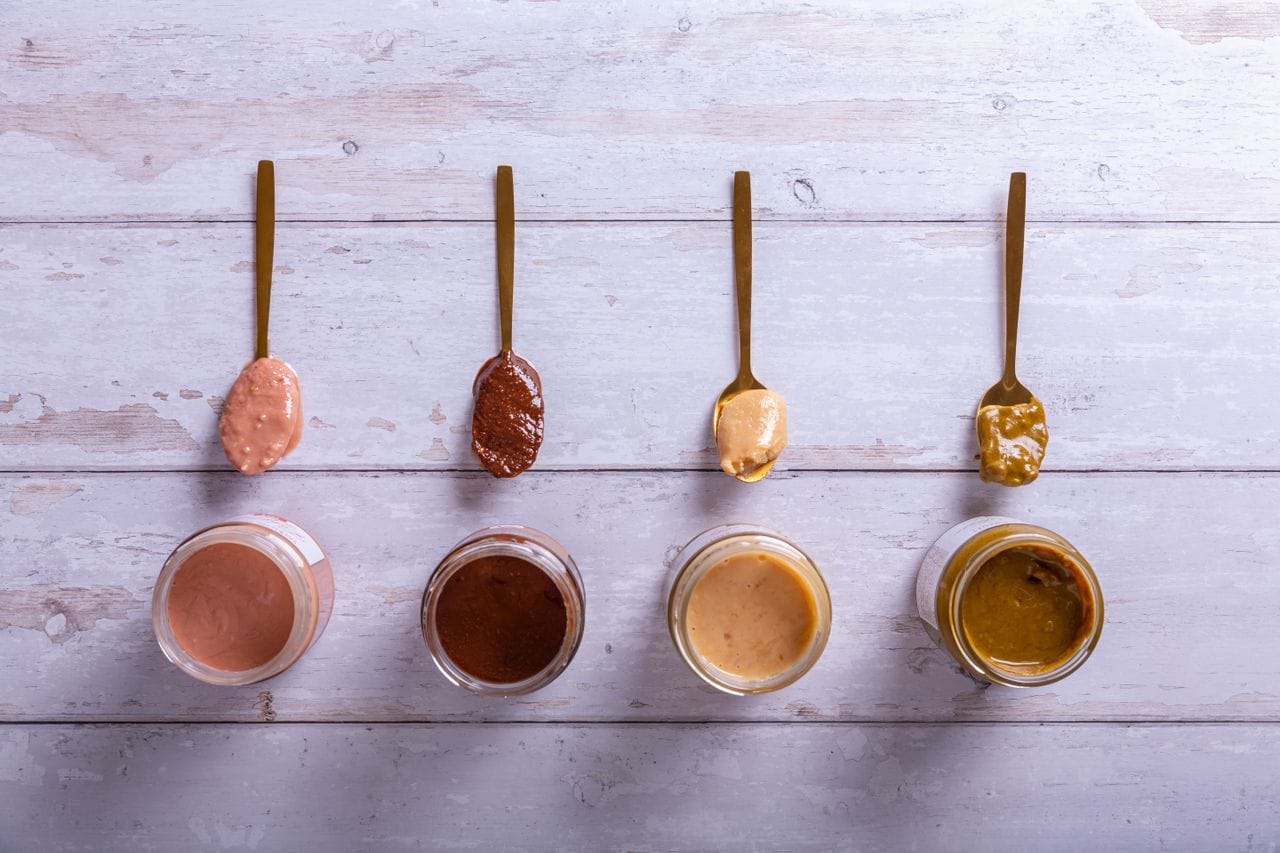
Peanut Butter vs Almond Butter vs Cashew Butter
Now that nut butters have become a supermarket staple in India, almond butter and cashew butter show up right next to peanut butter — often at 2–3x the price. Is the premium worth it?
Here’s how they compare per 2-tablespoon (32g) serving:
| Nutrient | Peanut Butter (32g) | Almond Butter (32g) | Cashew Butter (32g) |
|---|---|---|---|
| Calories | 188 kcal | 196 kcal | 188 kcal |
| Protein | 8.0 g | 6.8 g | 5.1 g |
| Total Fat | 16.1 g | 18.0 g | 15.8 g |
| Carbohydrates | 6.4 g | 6.3 g | 8.8 g |
| Dietary Fiber | 1.9 g | 3.4 g | 0.9 g |
| Vitamin E | 2.9 mg | 7.7 mg | 0.5 mg |
| Calcium | 14 mg | 111 mg | 14 mg |
| Approx. India price/kg | ₹300–500 | ₹700–1,200 | ₹600–1,000 |
Source: USDA FoodData Central
Peanut Butter: Best for Protein and Value
If protein is your priority and budget matters — which, for most Indian households, it does — peanut butter wins. It has the highest protein of the three, nearly comparable calories, and costs a fraction of what almond or cashew butter does. For athletes, gym-goers, and everyday protein tracking, it’s the smartest default.
Almond Butter: Best for Vitamin E and Calcium
Almond butter’s real edge is micronutrient density. One serving gives you 7.7mg of Vitamin E — about 50% of your daily requirement — versus just 2.9mg from peanut butter. Its calcium content (111mg per serving) is close to a third of a small glass of milk. This matters particularly for people who don’t eat dairy, are prone to bone density issues, or want stronger antioxidant intake.
The trade-off is cost and protein. At ₹700–1,200 per kg, almond butter isn’t an everyday food for most people. Pintola Natural Almond Butter → and The Butternut Co. Almond Butter → are the better-reviewed options if you’re going this route.
Reality Check: Almond butter is genuinely superior for Vit E and calcium. But you can get those same nutrients from 10 raw almonds (₹5 worth) alongside your regular peanut butter. Almond butter is a premium convenience, not an essential upgrade.
Cashew Butter: Tastiest, Weakest Nutritionally
Cashew butter is the creamiest and sweetest of the three, which is why it’s so popular in recipes and as a children’s spread. But nutritionally it’s the weakest option here — lowest protein, lowest fiber, highest carbs, and barely any Vitamin E. It’s fine as an occasional ingredient or treat, but it’s not a go-to if you’re eating nut butter for health reasons.
The Verdict
| Your Goal | Best Choice |
|---|---|
| Maximum protein | Peanut Butter |
| Best value for money | Peanut Butter |
| Vitamin E + antioxidants | Almond Butter |
| Bone health / calcium | Almond Butter |
| Creamiest texture / recipes | Cashew Butter |
| Peanut allergy alternative | Almond or Cashew Butter |
For most people eating a regular Indian diet: peanut butter is the right daily choice. Almond butter is worth keeping around in small quantities for the micronutrient boost if your budget allows.
→ Want to explore more? See the full Nuts and Seeds Nutrition Facts guide for 25+ profiles including almonds, walnuts, flaxseeds, and more.
How Much Peanut Butter Per Day Is Actually Okay?
For most healthy adults: 2 tablespoons (about 30–32g) per day is the sweet spot.
- Gives you ~8g protein, ~16g fat, ~188 calories
- Contributes meaningfully without dominating your calorie budget
- Provides satiety and micronutrient benefits without overconsumption risk
If you’re in a high-calorie phase (bulking, athlete, very physically active): 3–4 tbsp is fine.
If you’re on a calorie-restricted diet: Stick to 1–2 tbsp and measure. “A spoonful” without a measuring spoon is typically 2–3x more than you think.
Not sure how much total protein you need in a day? Use the Protein Intake Calculator to get your personalised target.
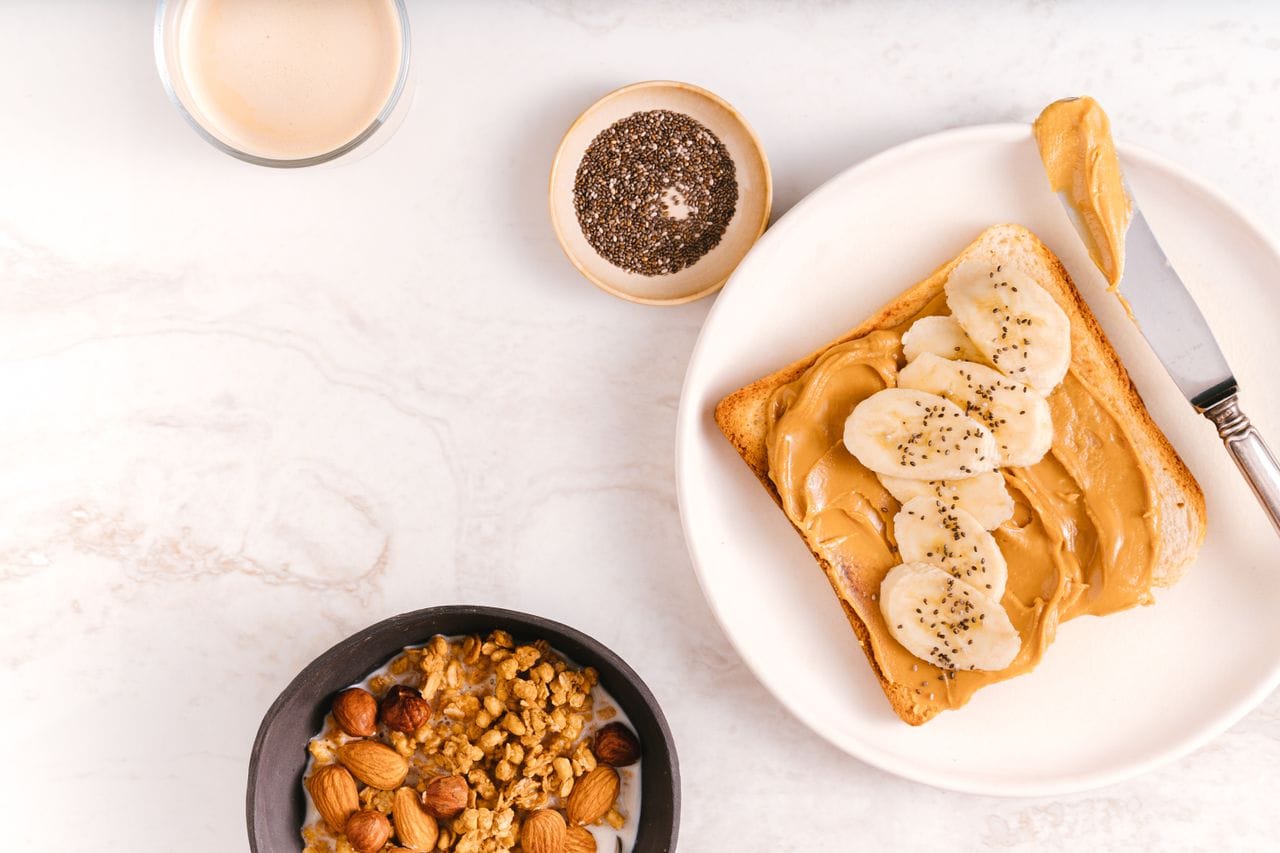
Peanut Butter in Indian Diets — Does It Fit?
Yes, it fits well — and it’s more versatile than most people realise.
Easy ways to use it:
- Spread on bread or a roti with banana for a filling breakfast
- Blended into a smoothie with milk, banana, or oats — works great as a pre- or post-workout meal
- As a dip with carrot or cucumber sticks for a quick, satisfying snack
- Stirred into oatmeal or porridge — adds protein and keeps you full longer
On price: A 1kg jar of decent natural peanut butter costs around ₹300–500. At 2 tbsp a day, that’s 30+ servings — roughly ₹10–17 per serving. For the nutrition you get, that’s solid value.
Homemade option: Blend roasted peanuts in a mixer for 3–5 minutes, add a pinch of salt, and you’re done. It costs ₹80–120 per kg and has zero additives. Worth trying at least once.
For a reliable packaged option, MyFitness Natural Peanut Butter (1.25kg →) is one of the more affordable clean-label choices available on Amazon India and BigBasket.
Who Should Be Careful With Peanut Butter?
- Peanut allergy: One of the most common and severe food allergies. Symptoms range from hives to anaphylaxis. If you haven’t eaten peanuts before, start with a very small amount.
- Those managing weight strictly: High calorie density means portions need measuring, not estimating.
- People with IBS or nut sensitivity: The fat and fiber content can cause digestive discomfort in some people.
- Children under 1 year: Not recommended in any nut form.
FAQ — Peanut Butter
1. Is peanut butter good for weight loss?
Peanut butter doesn't directly cause weight loss. But its combination of protein, fat, and fiber keeps you full longer, which can help reduce overall calorie intake throughout the day. The key is portion control — 1–2 tablespoons within a calorie-controlled diet works well.
2. Which is healthier: peanuts or peanut butter?
Nutritionally they're very close. Whole roasted peanuts have slightly more fiber per serving and require more chewing, which increases satiety signalling. Peanut butter is more bioavailable and more convenient. For pure snacking, peanuts have a small edge. For recipes and versatile use, peanut butter wins. Either is a good choice.
3. Is peanut butter better than almond butter?
Peanut butter has more protein and is far more affordable. Almond butter has more Vitamin E, more calcium, and slightly more fiber. If budget isn't a constraint and you want better micronutrient coverage, almond butter is worth keeping around. For daily, practical use, peanut butter is the better value.
4. How much protein is in peanut butter?
About 8 grams per 2-tablespoon (32g) serving. It's a decent protein source but is incomplete — low in methionine. Pair it with dairy, eggs, or legumes for a full amino acid profile.
5. Is peanut butter safe to eat every day?
Yes, for most healthy adults. 1–2 tablespoons daily is safe and beneficial. Choose natural variants with minimal additives, and be mindful of total daily calories.
6. What is the difference between natural and regular peanut butter?
Natural peanut butter contains only peanuts (and sometimes salt). Regular commercial peanut butter often includes added sugar, hydrogenated oils, and emulsifiers for shelf stability and texture. Natural has a better fat profile; commercial is smoother and sweeter.
7. Can peanut butter increase cholesterol?
Natural peanut butter — high in monounsaturated fat — is unlikely to raise harmful LDL cholesterol. Processed versions with hydrogenated oils (which contain trans fats) can negatively affect cholesterol levels. Read the ingredients label.
8. Is homemade peanut butter healthier?
Generally yes — you control everything. Roasted peanuts blended with minimal salt has no added sugar, palm oil, or preservatives. It's also significantly cheaper in India at ₹80–120 per kg.
9. Can diabetics eat peanut butter?
Peanut butter has a very low glycemic index (GI ~14). It can fit into a diabetic-friendly diet in moderate portions. Check commercial brands for added sugars. Always consult your doctor or registered dietitian for personalised guidance.
The Bottom Line
Peanut butter is a genuinely good food — not a superfood, not a magic protein source, but a nutritious, satisfying, versatile option that fits well into most Indian diets when used with some sense about portion size.
Versus whole peanuts: nearly the same nutrition, more convenient, slightly less fiber. Versus almond butter: more protein, far better value, less Vitamin E and calcium. Versus cashew butter: better in almost every nutritional metric at a lower price.
Two tablespoons a day, from a quality natural brand or homemade, gives you healthy fats, decent protein, real micronutrients, and a level of satiety that’s hard to match gram-for-gram. Just don’t mistake “healthy” for “unlimited.”
Enjoy it on your morning bread, blend it into your pre-workout shake, or go straight off the spoon. Just know what you’re eating and how much.
Peanut butter and nut butter nutrition data sourced from USDA FoodData Central. Peanut/groundnut data cross-referenced with ICMR-NIN IFCT 2017. Harvard cohort study reference: Hu et al., BMJ 1998 and follow-up published in JAMA 2002.
This post contains affiliate links. Vitaroxi may earn a small commission at no extra cost to you. We only recommend products with clean labels.
This article is for informational purposes only and does not substitute personalised medical or dietary advice.