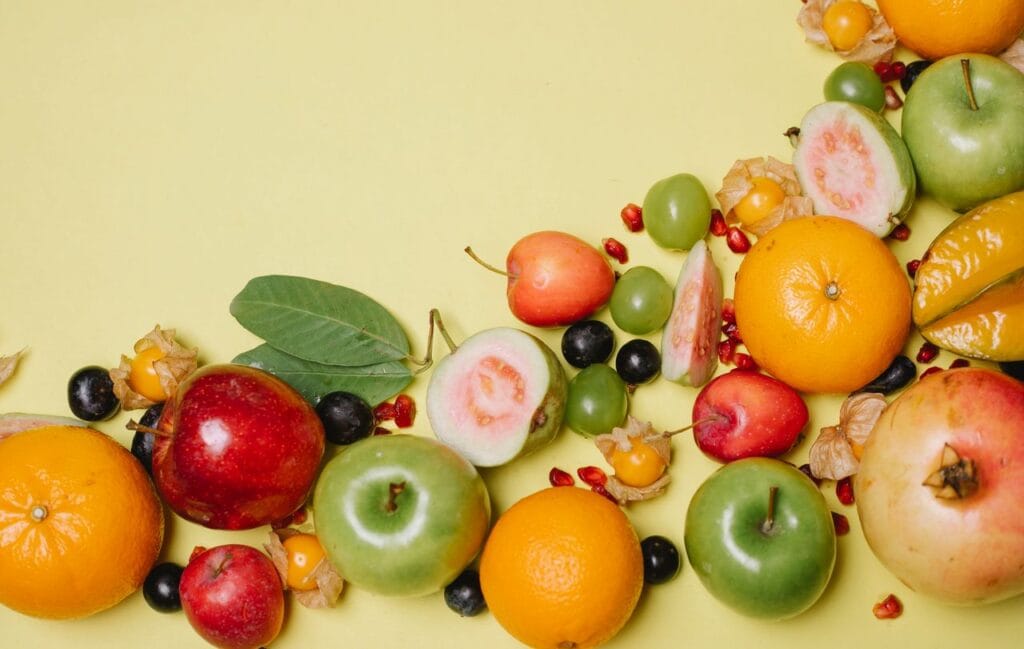
Best Fruits for Weight Loss in India (Science-Backed + Reality Check)
You’ve probably heard this at least once: “Just eat more fruits and vegetables.”
And while that advice is well-meaning, it leaves out the part that actually matters — which fruits, how much, and how to eat them without accidentally undoing your progress.
Not all fruits are created equal when it comes to weight loss. Some are low in calories but high in fiber, keeping you full for hours. Some have a glycemic index so high they barely differ from a slice of cake. And a few fruits — the ones that get unfairly banned from every diet plan — are actually totally fine in reasonable amounts.
This guide cuts through the noise. No crash-diet rules, no fruit-phobia. Just clear, science-backed answers about which fruits genuinely support weight loss — with a dedicated reality check for the ones that cause unnecessary panic.
Want full calorie, fiber, and micronutrient profiles for every fruit? → Explore Vitaroxi’s Fruits Nutrition Facts database (60+ fruits)
Why Fruits Can Help You Lose Weight
Before the list, a quick look at why certain fruits work:
Fiber keeps hunger in check. Most weight-loss-friendly fruits are high in dietary fiber — especially soluble fiber, which slows digestion, stabilizes blood sugar, and delays the return of hunger. When your hunger is steady, you naturally eat less. → Calculate your daily fiber target with Vitaroxi’s Fiber Calculator
High water content = low calorie density. Fruits with 85–95% water content (like watermelon and papaya) let you eat a satisfying volume of food for very few calories. This matters more than it sounds — your brain registers fullness partly by stomach stretch, not just calories.
Natural sugars ≠ added sugars. Whole fruit comes packaged with fiber, which slows the absorption of its natural sugars. This is fundamentally different from the same sugar dissolved in juice or a soft drink, where nothing slows the spike.
The key number to watch isn’t just calories — it’s the Satiety-to-Calorie ratio. The best weight-loss fruits give you the most fullness per calorie eaten.
9 Best Fruits for Weight Loss in India
These fruits are ranked by their overall value for weight management: fiber content, glycemic index, calorie count, and real-world availability across Indian markets.
1. Guava (Amrood) — The Underrated Weight-Loss Champion
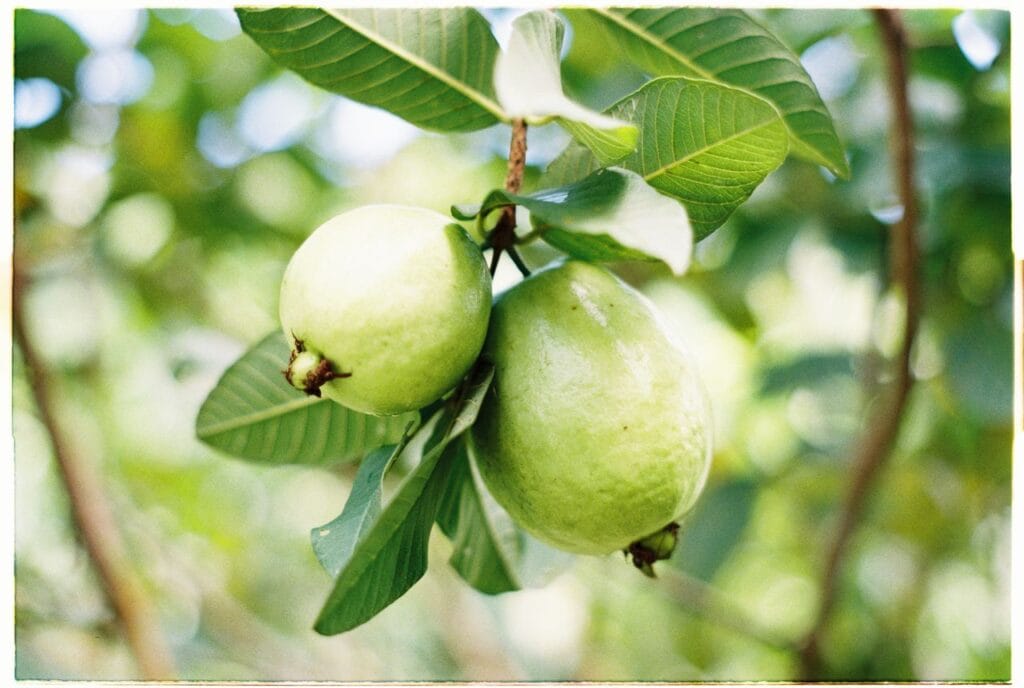
If there’s one fruit that’s criminally underrated in Indian weight-loss conversations, it’s the Guava
- Calories: ~68 kcal per 100g
- Fiber: ~5.4g per 100g (one of the highest among common Indian fruits)
- Glycemic Index: ~12 (extremely low)
Guava’s combination of very high fiber and very low GI makes it almost ideal for weight management. The fiber slows digestion substantially, and the low GI means there’s no dramatic blood sugar spike-and-crash cycle that triggers hunger again quickly.
It’s also rich in Vitamin C — one guava typically provides more Vitamin C than an orange. Available year-round in most Indian markets at affordable prices, it checks every practical box.
How to eat it: Whole with the skin on (that’s where a lot of the fiber sits). Skip the chaat masala-and-salt combo if you’re watching sodium — the guava itself is already flavourful.
2. Papaya (Papita) — The Digestive Powerhouse
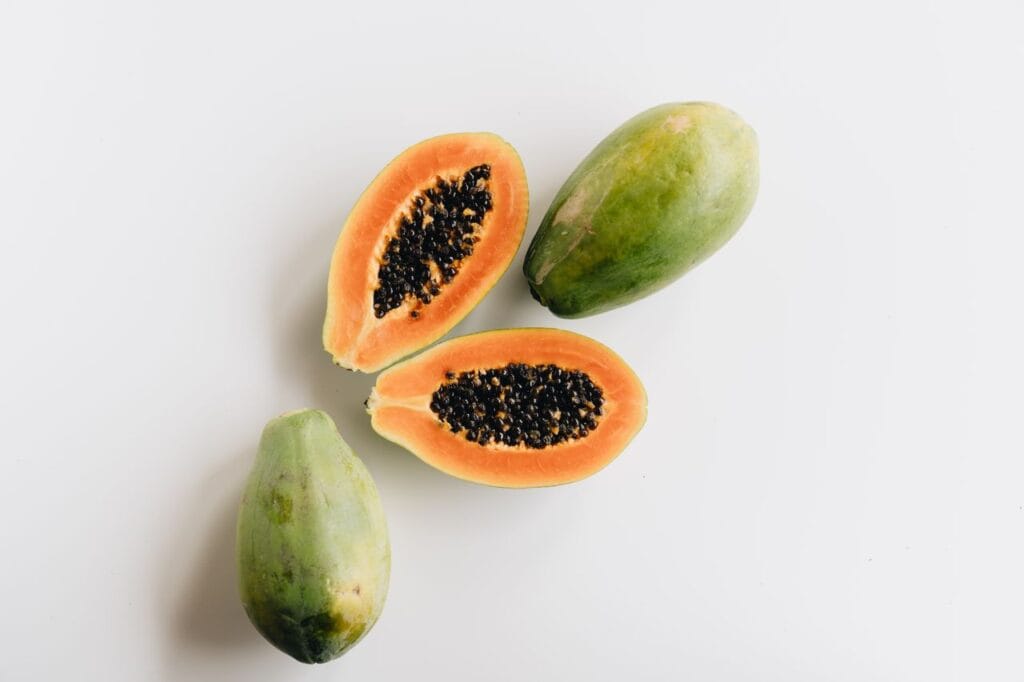
Papaya is a staple weight-loss fruit for good reason.
- Calories: ~43 kcal per 100g (one of the lowest among common fruits)
- Fiber: ~1.8g per 100g
- Water Content: ~88%
- GI: ~56–60 (ripe); ~38 for raw/semi-ripe
The GI of papaya rises significantly as it ripens — raw papaya scores as low as 38, while the fully ripe orange-fleshed papaya you buy in the market is closer to 56–60. Still solidly in the moderate range, and the low calorie count means the Glycemic Load per serving remains manageable.
The enzyme papain in papaya is what makes it stand out beyond just calories. Papain aids protein digestion, reduces bloating, and supports gut health — and a smoothly functioning digestive system is foundational to healthy weight management. Chronic bloating and poor digestion can mask your actual progress and make calorie regulation harder.
Papaya is also rich in Vitamin A and C, and widely available year-round in India at very low cost.
How to eat it: Plain, as a breakfast fruit or mid-morning snack. Avoid papaya with heavy cream or sugar-based toppings.
3. Watermelon (Tarbooz) — High Volume, Minimal Calories
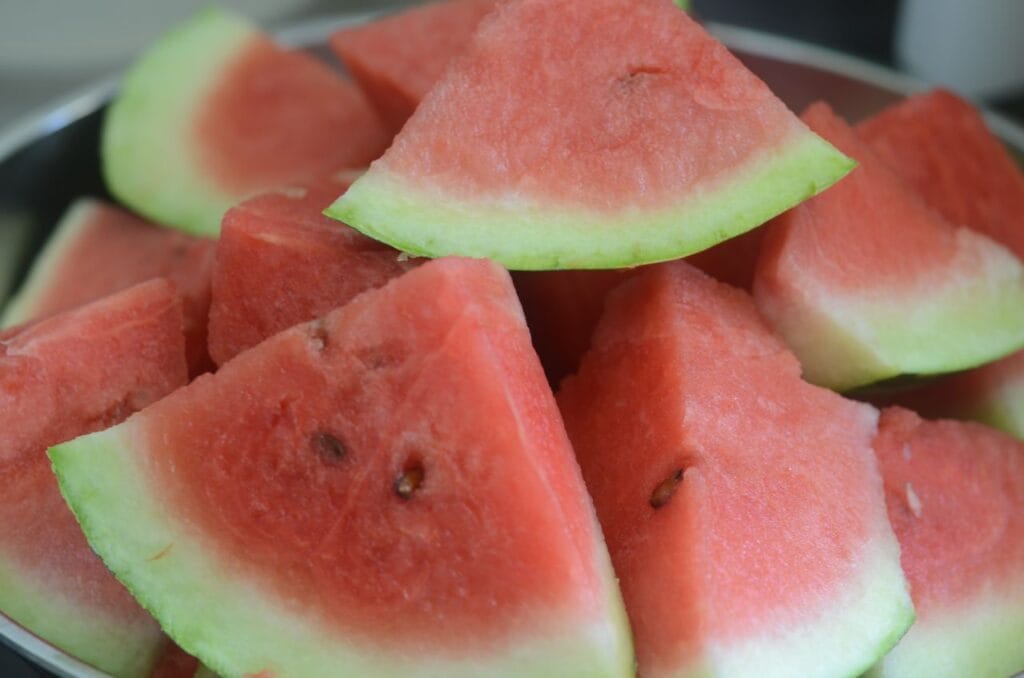
Watermelon is ~92% water. Per 100g, it contains only about 30 kcal — making it one of the lowest calorie-density foods in existence.
- Calories: ~30 kcal per 100g
- Fiber: ~0.4g per 100g
- GI: ~72 (moderate-high, but GL is low due to water content)
Here’s the thing about watermelon’s “high GI” — the Glycemic Load, which accounts for actual portion size and water content, is low (around 4–5 for a standard serving). This means watermelon, despite its GI number, doesn’t cause a significant blood sugar response in normal servings.
Watermelon is especially useful in Indian summers as a high-volume, filling snack that keeps total calorie intake low without the effort of calorie counting.
4. Apple — The Satiety Classic
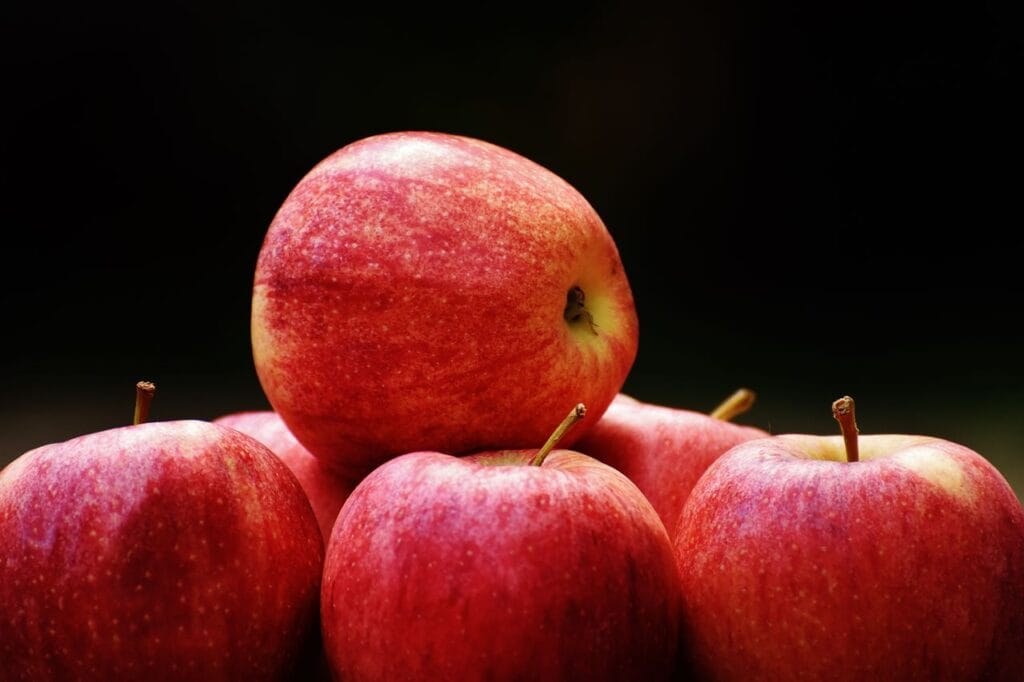
The “an apple a day” cliché exists for a reason.
- Calories: ~52 kcal per 100g
- Fiber: ~2.4g per 100g (including ~1.2g of pectin — soluble fiber)
- GI: ~36 (low)
Pectin, the soluble fiber in apple skin, forms a gel in your digestive tract that slows gastric emptying — translating to prolonged fullness. Multiple studies have found that people who eat whole apples before meals consume significantly fewer calories during that meal.
For Indian buyers: Shimla apples and Kashmiri apples are the most common variety and work equally well. Always eat with the skin — peeling removes most of the pectin.
5. Pear (Nashpati) — Fiber-Dense and Underappreciated
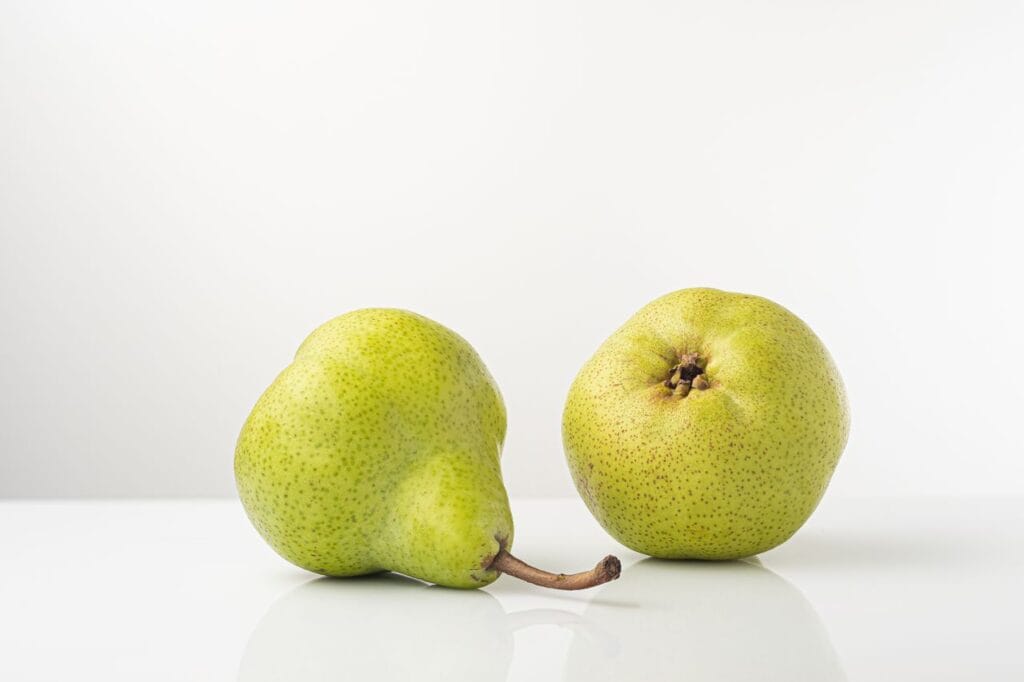
Pear consistently outperforms apple in total fiber content and is one of the most filling fruits per calorie.
- Calories: ~57 kcal per 100g
- Fiber: ~3.1g per 100g
- GI: ~38 (low)
Pears are available across India from October to February. Like apples, most of the fiber is in the skin — so skip peeling if you want the full benefit.
6. Amla (Indian Gooseberry) — Small Fruit, Big Impact
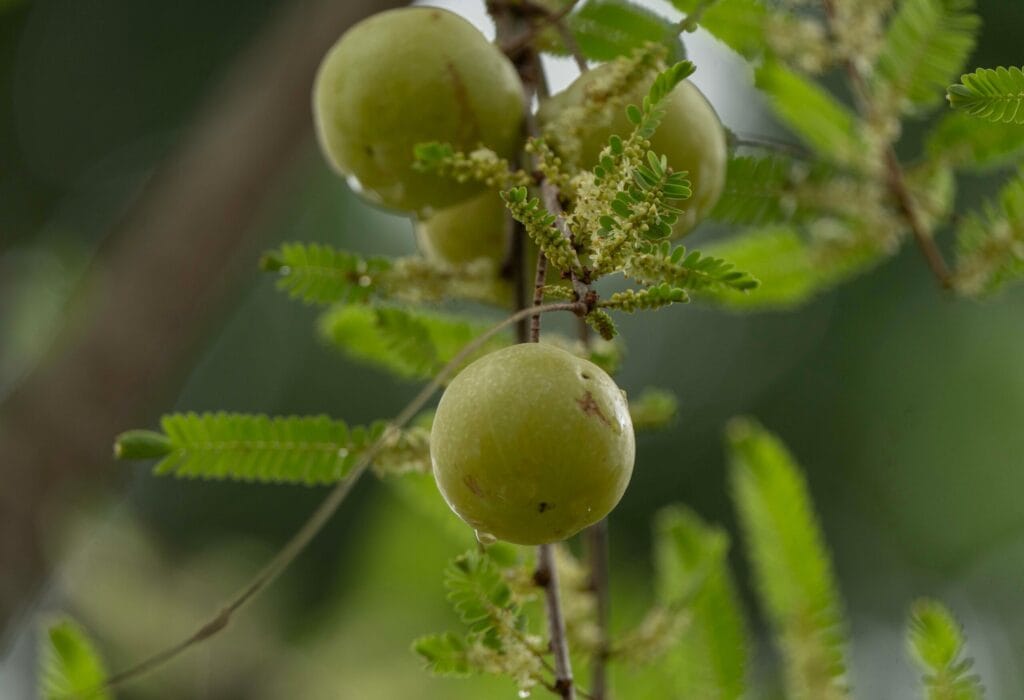
Amla isn’t commonly eaten as a standalone snack, but it deserves a spot on this list for metabolic reasons.
- Calories: ~58 kcal per 100g
- Vitamin C: ~445–600mg per 100g (the highest of any commonly available fruit globally)
- Fiber: ~3.4g per 100g
- GI: ~15–25 (very low)
Vitamin C is directly involved in the synthesis of carnitine — the compound your body uses to transport fatty acids into cells for burning. Low Vitamin C status can literally slow fat oxidation. This doesn’t make amla a “fat burner,” but getting adequate Vitamin C from whole food sources like amla is genuinely supportive of weight management. The 3.4g fiber per 100g also makes it one of the better fiber sources in the Indian fruit basket.
→ Read the complete Amla Nutrition Facts — Calories, Vitamin C & Benefits
How to eat it: Raw with a pinch of black salt, as amla juice (fresh, not bottled), or as amla murabba in very small amounts (high sugar — use sparingly).
Can’t get fresh amla year-round in your city? Organic amla powder is a practical alternative that retains most of the Vitamin C content. → Search: Organic Amla Powder on Amazon India
7. Jamun (Indian Blackberry) — A Good Seasonal Choice, Not a Magic Bullet
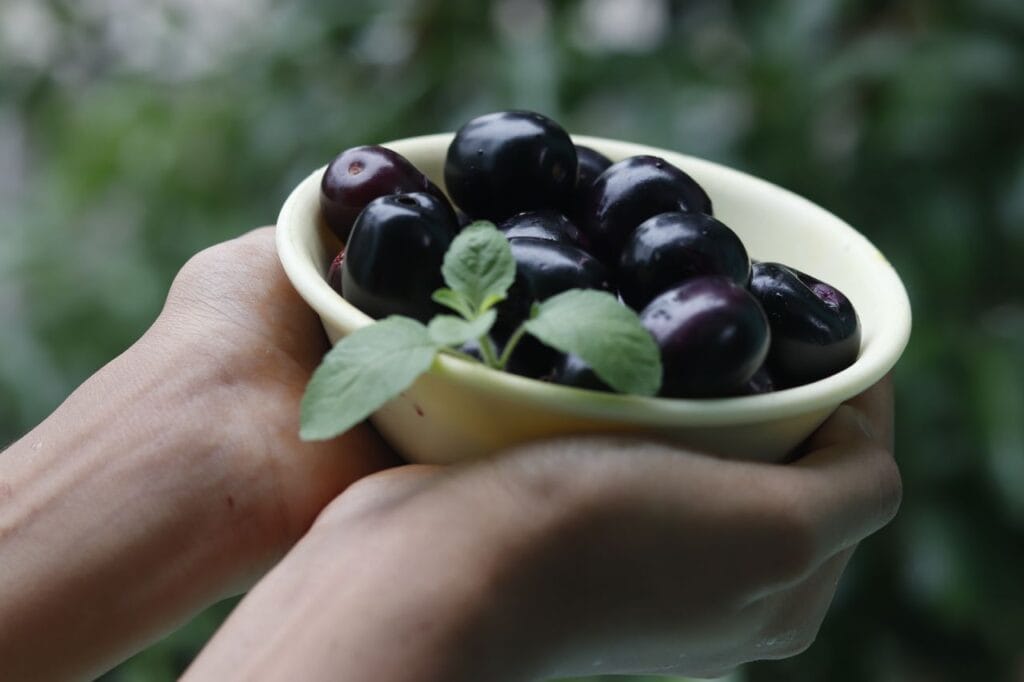
Jamun earns its spot here — but with a more honest description than you’ll find most places. You’ll see dozens of websites calling it “high in fiber” and listing it among the top weight-loss fruits. The fiber claim is misleading: the actual edible fruit pulp contains only about 0.9–1.8g fiber per 100g — similar to papaya, and well below apple, pear, or guava. The high-fiber data that gets widely quoted comes from jamun seeds, which most people don’t eat.
- Calories: ~62 kcal per 100g
- Fiber: ~0.9–1.8g per 100g (fruit pulp — moderate, not high)
- Glycemic Index: ~25–35 (low)
What jamun genuinely offers is a very low GI and the presence of two compounds — jamboline and jambosine — that are believed to slow starch-to-sugar conversion in the digestive tract. This is plausible and consistent with its traditional use in Ayurveda for blood sugar management, but it’s worth knowing that, as of the most recent reviews, human studies are still limited and preliminary. The mechanism is real; the human evidence is not yet robust.
For a weight-loss diet, jamun is a low-calorie, low-GI seasonal fruit that’s worth eating freely when it’s available (June–August). It’s particularly relevant for people whose weight management is complicated by blood sugar instability — a common pattern in India given the high-carb dietary baseline. Just don’t expect it to do heavy lifting on its own.
→ Read the complete Jamun Nutrition Facts — Calories, GI & Benefits
Jamun season lasts only 6–8 weeks. Jamun seed powder (available year-round) is a commonly used Ayurvedic supplement for blood sugar support — though as noted above, human evidence is still preliminary. Consult a doctor before using it as a supplement. → Search: Jamun Seed Powder on Amazon India
8. Orange and Mosambi (Sweet Lime) — Filling and Fibre-Rich When Eaten Whole
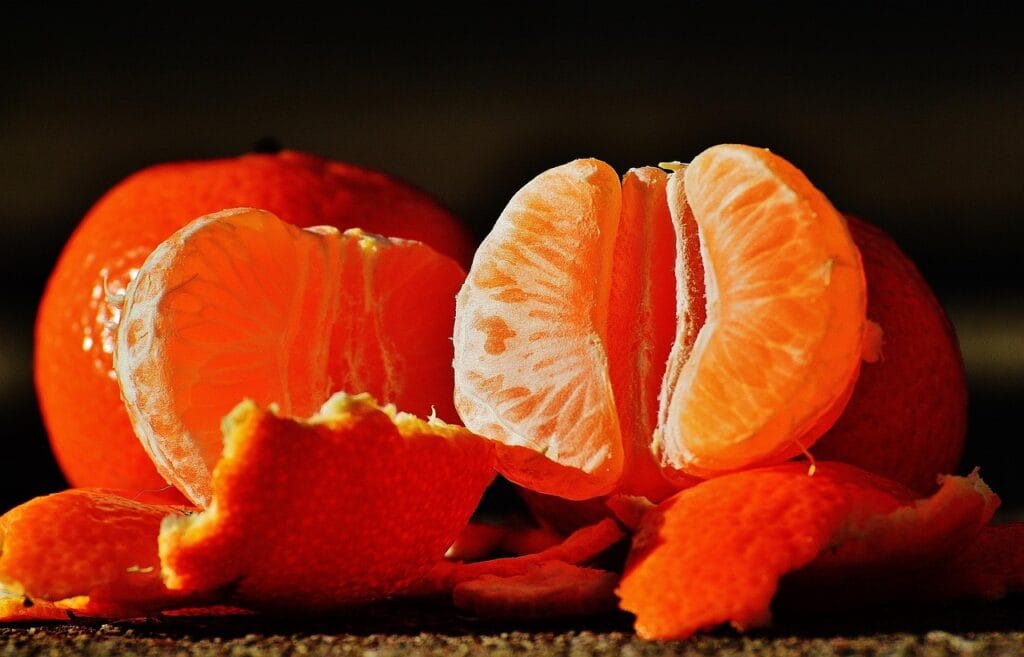
- Calories: ~47–50 kcal per 100g
- Fiber: ~2.4g per 100g
- GI: ~35–43 (low)
Oranges and mosambi are excellent weight-loss fruits — when eaten as whole fruit. The fiber content, particularly in the white pith, keeps satiety high. They also provide folate and potassium.
The critical rule: eat them, don’t drink them. More on that in the next section.
9. Pomegranate (Anar) — The Polyphenol Powerhouse
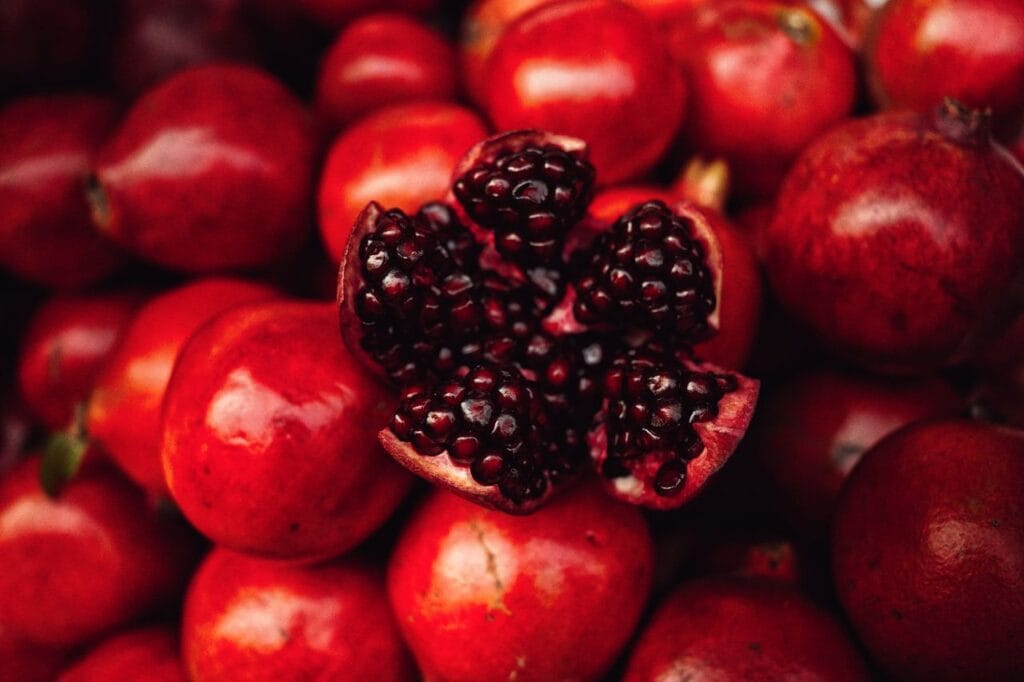
Pomegranate is the most calorie-dense fruit on this list, But its nutritional profile is strong enough that leaving it out entirely would be a mistake.
- Calories: ~83 kcal per 100g
- Fiber: ~4g per 100g
- GI: ~35–53 (low to moderate)
Pomegranate seeds are rich in punicalagins and anthocyanins — compounds that have been linked in research to reduced inflammation and improved insulin sensitivity. At 4g of fiber per 100g, it actually beats apple and orange on that front.
The key is portion awareness. A small bowl of anar seeds (~100g) is a satisfying snack with genuinely useful fiber and polyphenols. Where people trip up is eating pomegranate as juice — a standard glass of anar juice has very little of the fiber but all of the sugar.
Seasonal note: Best from October to January across most of India. Nashik (Maharashtra) and Solapur varieties are widely available and nutritionally similar.
How to eat it: Fresh seeds as a standalone snack, stirred into plain curd (which adds protein and further lowers the glycemic impact), or as a salad topping. Skip anar juice entirely if weight loss is the goal.
Quick Reference: Fruit Calories & Fiber at a Glance
| Rank | Fruit | Cal/100g | Fiber/100g | GI | GL (~150g serving) |
|---|---|---|---|---|---|
| 1 | Guava (Amrood) | 68 kcal | 5.4g | ~12–24 | ~3 Low |
| 2 | Papaya (Papita) | 43 kcal | 1.8g | ~56–60† | ~7 Low |
| 3 | Watermelon (Tarbooz) | 30 kcal | 0.4g | ~72 | ~5 Low |
| 4 | Apple | 52 kcal | 2.4g | ~36–44 | ~6 Low |
| 5 | Pear (Nashpati) | 57 kcal | 3.1g | ~33–38 | ~5 Low |
| 6 | Amla | 44 kcal | 3.4g | ~15–25 | ~2 Low |
| 7 | Jamun | 62 kcal | 0.9–1.8g | ~25–35 | ~4 Low |
| 8 | Orange / Mosambi | 47 kcal | 2.4g | ~40–43 | ~5 Low |
| 9 | Pomegranate (Anar) | 83 kcal | 4.0g | ~35–53 | ~8 Low–Moderate |
GL = Glycemic Load per standard serving. Low GL = under 10 — the more practical measure than GI alone.
Want deeper nutrition data for every fruit above? → Vitaroxi Fruits Nutrition Facts Database — 60+ fruits with complete macro, micro & GI profiles
Portion guessing is the #1 reason fruit calories add up faster than expected. A kitchen food weighing scale removes the guesswork entirely. → Search: Digital Kitchen Weighing Scale on Amazon India
Reality Check: The Fruits That Get Unfairly Banned
Every Indian diet plan seems to come with a hit list — fruits you’re told to avoid entirely. Let’s look at which of these bans are legitimate, and which are overcorrections.
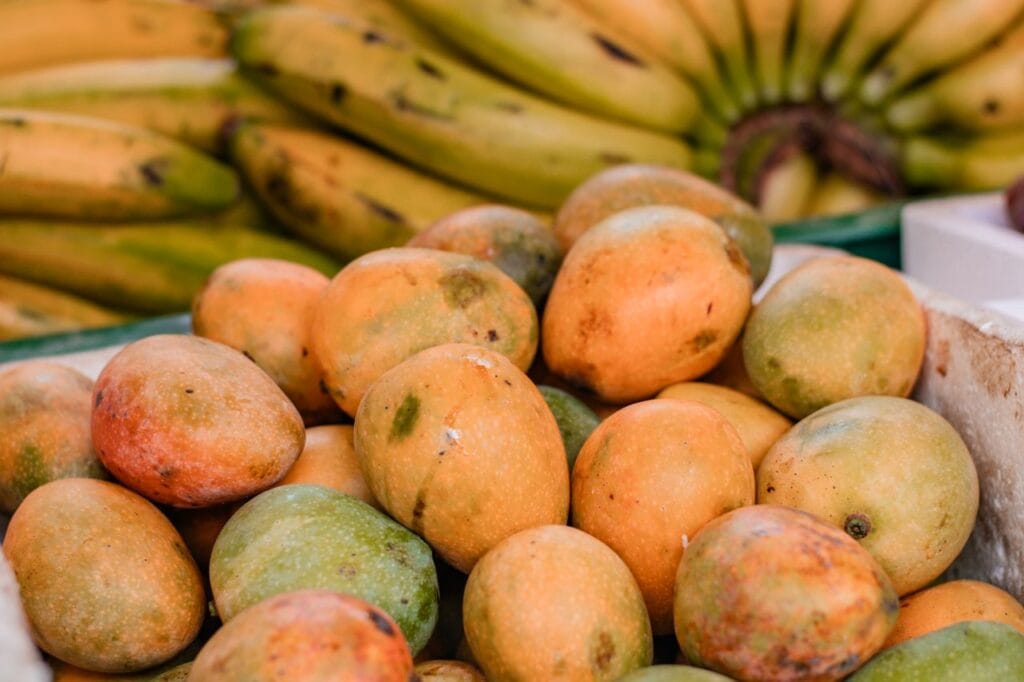
Banana: Not the Enemy
One medium banana (~120g) has about 105 calories and 3g of fiber. That’s actually a reasonable snack. The problem isn’t the banana — it’s eating two or three in one sitting and assuming it’s a light option because “it’s just fruit.”
Unripe and semi-ripe bananas also contain resistant starch, which acts as a prebiotic, feeds gut bacteria, and has a lower GI than fully ripe bananas. If you’re watching carbs, choose slightly underripe bananas.
Verdict: One banana a day is completely fine in a weight-loss diet. Ban the excess, not the fruit.
Mango: Seasonal Indulgence, Not a Fat Trap
Yes, mangoes are higher in natural sugar and calories (~60 kcal per 100g) than most fruits on this list. But mango season in India lasts 6–8 weeks. Eating 1 small mango a day during peak season is not going to cause weight gain if the rest of your diet is sensible.
The problem is mango in other forms: aamras, mango lassi, mango ice cream, and bottled mango juice — where sugar has been added on top of the fruit’s natural sugars. Those are the real culprits.
Verdict: Whole mango, 1 serving/day, during season = fine. Mango-flavored products year-round = problem.
Sapota / Chickoo : This One Has Limits
Sapota (Chickoo) is genuinely calorie-dense at ~95 kcal per 100g, with high natural sugar content and a high GI (~55–65). Unlike the banana or mango ban (which is overcorrection), keeping chickoo to 1 small piece occasionally is a reasonable approach during active weight loss. After reaching your goal weight, there’s no reason to avoid it.
Verdict: Moderate Sapota during active weight loss. It’s the one fruit where the caution is somewhat justified.
Fruit Habits That Quietly Work Against Weight Loss
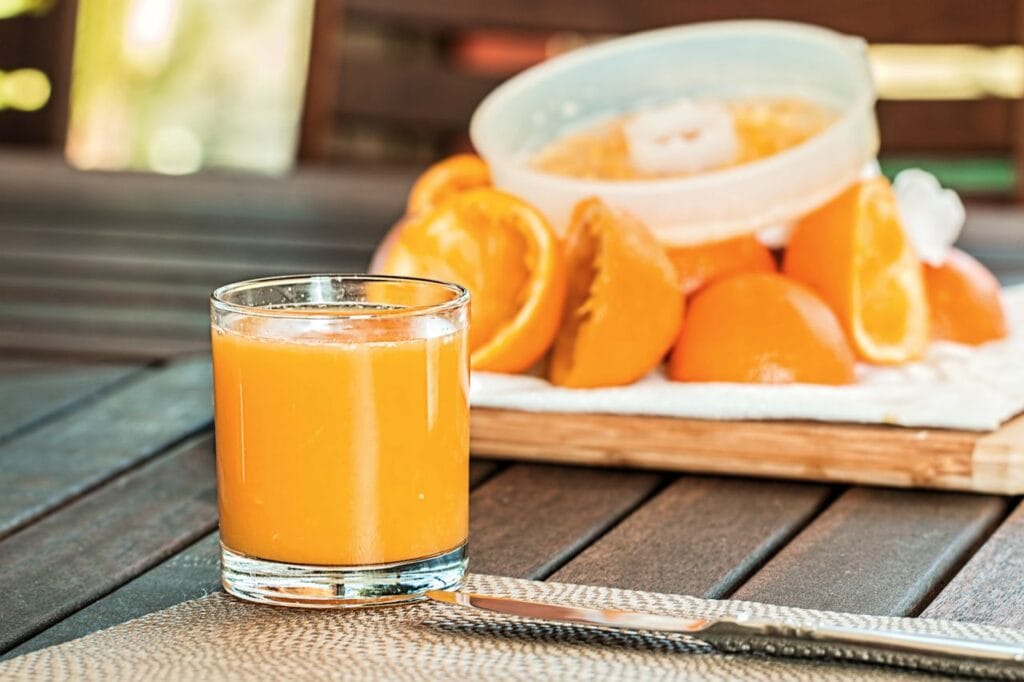
Eating the right fruits isn’t enough if these habits are in the picture:
1. Drinking fruit instead of eating it. Fresh orange juice has 3–4 oranges worth of sugar and virtually none of the fiber. The fiber in whole fruit is what controls the blood sugar response. Without it, you’re essentially drinking sugar water with vitamins. This applies to all “fresh juice” — the juicing process removes or breaks down most of the fiber.
2. Treating dried fruit as the same as fresh fruit. Raisins, dry dates, and dried apricots are calorie-concentrated versions of their fresh counterparts. 100g of fresh grapes is ~69 kcal. 100g of raisins is ~299 kcal. The portion size math changes drastically.
3. Eating fruit with or after heavy meals. Fruit moves through the stomach faster than protein or fat due to its simple sugar structure and water content. When eaten immediately after a large, heavy meal, the delayed gastric emptying can cause some mild gas or discomfort in sensitive individuals — though the popular idea that fruit literally “ferments” inside the stomach is not accurate (the stomach’s acidity prevents fermentation). The more practical reason to eat fruit separately is for weight management: fruit consumed as a standalone snack 30–45 minutes before a meal has been shown to reduce appetite and total calorie intake at that meal, which is the real benefit you lose when it’s eaten at the end of a large plate of food.
4. Adding sugar, honey, or condensed milk. This one should be obvious, but fruit chaat with condensed milk, banana smoothies with 3 spoons of honey, or fruit salads drizzled with sugar syrup — these undo the calorie advantage of the fruit itself.
Not sure how many calories you’re actually working with in a day? → Use Vitaroxi’s Calorie Calculator to find your daily target
If you genuinely need to juice fruits for a medical or dental reason, a cold-press juicer preserves slightly more nutrients than centrifugal models — though this does not restore the lost fiber. → Search: Cold Press Juicer on Amazon India
When Is the Best Time to Eat Fruits for Weight Loss?
Morning (best): Fruit on an empty stomach allows for optimal nutrient absorption and fiber benefits without interference from other foods.
Pre-meal snack (~30 min before lunch/dinner): The fiber from fruit taken before a meal slows gastric emptying and reduces overall calorie intake at that meal.
Mid-morning or mid-afternoon snack: Replaces biscuits, namkeen, or other high-calorie snacking — the most practical real-world benefit for most people.
Avoid: Late at night. Not because “fruit turns into fat after 8 PM” (that’s a myth), but simply because most people’s evening hunger is better served by protein-based snacks that sustain overnight satiety.
FAQs
Q1: Which fruit has the lowest calories for weight loss?
Watermelon (tarbooz) has the lowest calorie density at ~30 kcal per 100g due to its very high water content. Papaya (~43 kcal/100g) is a close second and offers more fiber and digestive benefits.
Q2: Can I eat fruits every day while trying to lose weight?
Yes. 2–3 servings of whole fruit per day is well within the range supported by research for weight loss and general health. The emphasis is on whole fruit — not juice, not dried fruit, not fruit-flavored products.
Q3: Is banana bad for weight loss?
No. One medium banana per day is approximately 105 calories with 3g of fiber. It becomes a problem only in excess. Slightly underripe bananas also have more resistant starch, which has a lower glycemic impact.
Q4: Which Indian seasonal fruit is best for weight loss?
Guava (October–March) is the best everyday option with ~5.4g fiber per 100g and a very low GI of ~12–24. For rainy, jamun (June–August) is a useful low-calorie, low-GI seasonal fruit — worth eating freely in season, though its weight-loss role is more modest than often claimed. Pomegranate (October–January) is strong in winter for its 4g fiber per 100g and polyphenol content.
Q5: Is eating fruit at night bad for weight loss?
The idea that fruit “converts to fat” specifically at night is a myth. However, late-night eating of any food is associated with higher overall calorie intake. If you’re hungry at night, a protein-based snack is a better choice for satiety through to morning.
Q6: Should I avoid fruits with high sugar content?
Not necessarily. The total fiber and Glycemic Load of the fruit matters more than its sugar content in isolation. Mango has more sugar than apple, but one serving of mango in a balanced diet is not a problem. The real concern is fruit products — juices, dried fruits, and sweetened preparations.
Q7: How many fruits should I eat per day for weight loss?
2–3 servings of whole fruit per day is the practical sweet spot. A serving is roughly one medium-sized fruit (one apple, one guava, one small mango) or 150–200g of cut fruit.
The Bottom Line
Weight loss doesn’t require a complicated fruit strategy. It requires eating the right things consistently — and that’s exactly where fruit earns its place.
Start with what’s already around you. Guava at your local market for ₹40/kg does more for your fiber intake than most supplements. Papaya for breakfast keeps calories low without leaving you hungry an hour later. A handful of jamun when it’s in season, pomegranate through winter, watermelon through summer — you’re already eating seasonally without thinking about it. That’s the strategy.
Fruit is not a shortcut and it is not a problem. Used well — whole, portioned, seasonal — it is one of the quietest and most consistent tools in an Indian weight-loss diet. Not because of any single compound or mechanism, but because it fills you up, keeps blood sugar steady, and makes the rest of the day easier to manage. That is enough.
References
- ICMR-NIN Indian Food Composition Tables (IFCT 2017) — Primary data source for calorie, fiber, and micronutrient values for Indian fruits (amla, jamun, guava, papaya). → ICMR-National Institute of Nutrition, India
- USDA FoodData Central — Supplementary nutritional data for apple, pear, watermelon, orange, pomegranate. → https://fdc.nal.usda.gov
- University of Sydney GI Database (Glycemic Index Research Service) — Reference for GI values of fruits cited in this article. → https://glycemicindex.com
- Harvard T.H. Chan School of Public Health — The Nutrition Source: Glycemic index and glycemic load — Used for watermelon GL clarification. → Carbohydrates and Blood Sugar • The Nutrition Source
- Khan F., et al. “Nutritional Evaluation of Jamun Fruit and Development of Value-added Product Squash.” Acta Scientific Nutritional Health, 8.5 (2024): 30–34. — Fiber content of jamun fruit pulp (1.81g/100g). → actascientific.com/ASNH/ASNH-08-1374.php
- Dr. Rajiv Kovil, Zandra Healthcare — Fact Check: Can consuming jamun seeds lower your blood sugar spike? The Week, July 27, 2026. — Source for “limited human evidence” statement on jamun blood sugar compounds. → theweek.in — Jamun seed fact check
- Fitelo — “Is Jamun Good for Weight Loss? Here’s What Science Says!” — Supporting context for jamun’s calorie and GI profile. → fitelo.co — Jamun weight loss
- WHO — Diet, Nutrition and the Prevention of Chronic Diseases (WHO Technical Report Series 916) — Basis for 400g/day fruit + vegetable recommendation referenced in the Vitaroxi Fruits DB. → WHO TRS 916