
Jamun (Black Plum): Nutrition Facts, 6 Real Benefits & Honest Science
You eat jamun. You look at your tongue. It’s purple.
That’s the jamun experience for most of us in India. Someone at home always said it’s good for sugar. The vendor outside put rock salt on it. And somehow, every monsoon, a small paper cup of jamun felt like a tradition.
But what is jamun actually doing for your body?
Let’s keep it simple and honest. No big words. No confusing science. Just the real facts about jamun benefits — and a few things people get wrong about it.
What Is Jamun? (More Than Just a Purple Fruit)
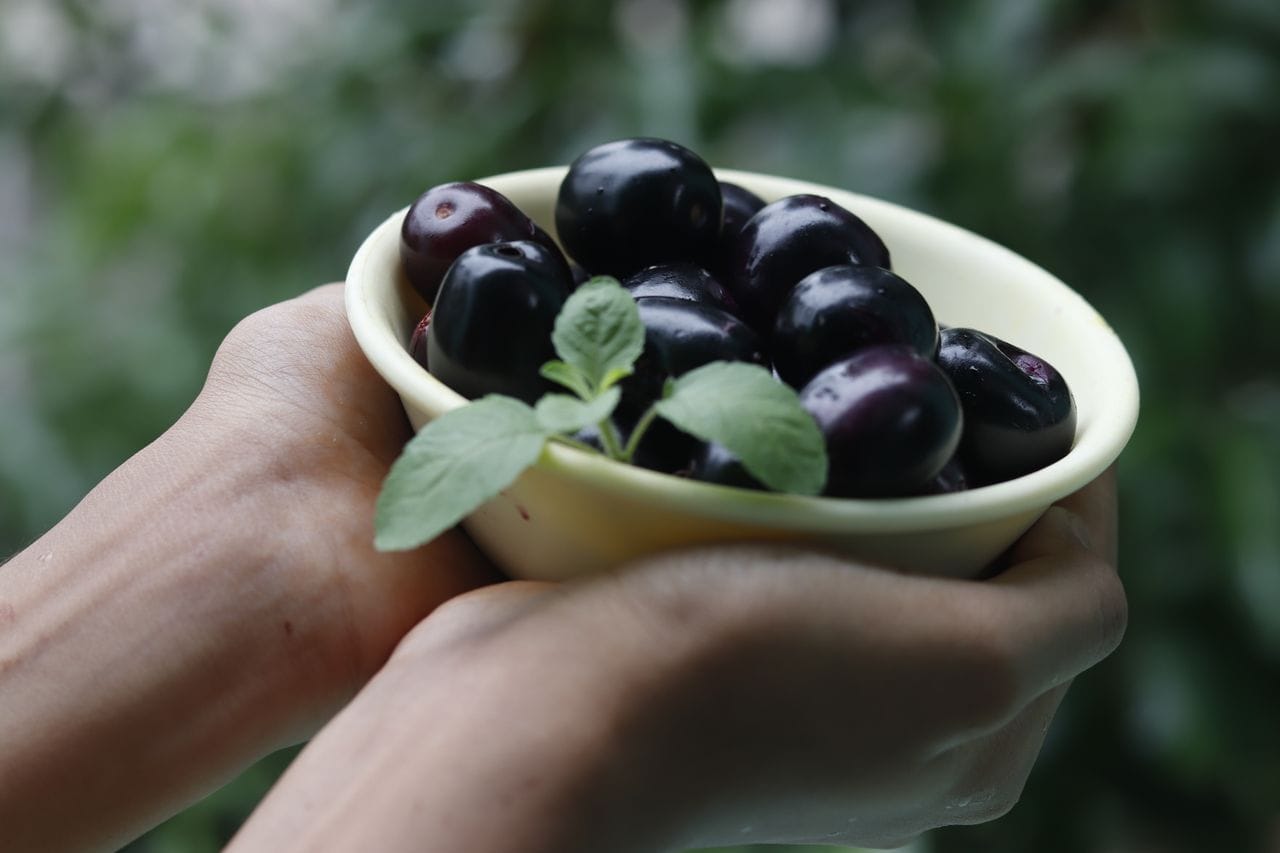
Jamun is a small, dark purple fruit that grows in India. Its scientific name is Syzygium cumini. You may also hear it called black plum or kala jamun.
It comes in the monsoon season — roughly June to August. After that, it’s gone for the year.
The deep purple colour of jamun is not just about looks. It means the fruit has a special group of nutrients inside — we’ll get to that in a moment.
Jamun Nutrition Facts (Per 100g)
| Nutrient | Amount per 100g |
|---|---|
| Calories | 62 kcal |
| Carbohydrates | 14.0 g |
| Sugars (natural) | 14 g |
| Dietary Fiber | 0.9 g |
| Protein | 0.7 g |
| Fat | 0.3 g |
| Vitamin C | 18 mg (20% of RDA) |
| Iron | 1.2 mg |
| Calcium | 15 mg |
| Phosphorus | 15 mg |
| Potassium | 79 mg |
| Water Content | 83 g |
A typical single serving is about 80–100g (one medium cup of jamun), making it a low-calorie, moderately hydrating fruit. Nothing extreme — but a few numbers here are worth paying attention to.
Why Is Jamun So Special? Two Things Worth Knowing
Anthocyanins — The Reason It’s Purple
The purple-black colour in jamun comes from natural compounds called anthocyanins. These are found in blueberries and purple cabbage too.
These compounds act as antioxidants. They protect your body from damage caused by pollution, stress, and unhealthy food.
Jamun is one of the best local sources of these compounds in India — especially during monsoon.
Jamboline — Found in the Seeds
Jamun seeds have a special compound called jamboline. This is the reason people say jamun is good for sugar (diabetes). We will look at what’s true and what’s not in the benefits section below.
6 Jamun Benefits — Simple and Honest
1. Jamun is Full of Antioxidants — And Not Just One Type
When you eat jamun, your body gets four different protective compounds — all at once.
That purple colour is not just a colour — it’s protection. The pigment that makes jamun dark purple is called Anthocyanins. It protects your heart, brain, and eyes from everyday damage caused by pollution, stress, and unhealthy food.
The skin fights swelling inside your body. Jamun skin has a compound called Gallic Acid. It reduces inflammation and helps keep your liver healthy.
It slows down cell damage over time. Jamun also has something called Ellagic Acid. It protects your cells from breaking down too fast. Early research also links it to cancer protection — though scientists are still studying this and more proof is needed.
It naturally helps with allergies and body pain. The fourth compound is Quercetin. It reduces swelling in the body and is good for the heart. You find it in many healthy foods — and jamun has it too.
Most fruits give you one or two of these. Jamun gives you all four — fresh, local, and available at your nearby market for just ₹20–₹50 a cup during monsoon.
2. Jamun is Smart for Blood Sugar — But It's Not a Medicine
This is the most talked-about benefit of jamun. And it’s partly true — but also partly wrong. Let us explain both.
What is true:
- Jamun has a very low GI (Glycemic Index) of about 25. GI tells you how fast a food raises your blood sugar.
- Low GI means jamun does not spike your blood sugar quickly.
- So for people with diabetes or prediabetes, jamun is a better fruit choice than mango or banana.
What is NOT true:
- Jamun does not treat diabetes.
- Eating jamun will not bring your sugar levels down on its own.
- Do not stop your medicines just because you are eating jamun.
Simple takeaway: If you have sugar (diabetes), jamun is a safe fruit to enjoy. It won’t harm you. But it’s not a cure — it’s just a better choice.
 If you are managing blood sugar, a glucometer (blood sugar testing device) is your real tool. Jamun just makes your snack choices smarter.
3. Jamun Gives Your Body Some Iron
Every 100g of jamun gives you 1.2mg of iron. That is a decent amount from a fruit.
Jamun also has Vitamin C. Vitamin C helps your body absorb iron better. So both work together.
One thing to know: The iron in jamun is plant-based iron. Your body absorbs it less easily than iron from meat or eggs. So if a doctor has told you that your hemoglobin is low, jamun alone will not fix it. But it can be a helpful addition to your food.
4. Jamun Helps With Digestion and Stomach Problems
Jamun is gentle on the stomach. It has been used in Indian home remedies for loose motions and stomach infections for hundreds of years.
It has a mild property that helps tighten the stomach lining. This is why eating jamun can help with diarrhoea or an upset stomach.
It also has some natural anti-bacterial properties.
Quick note: Jamun is a low-fiber fruit, so don’t expect it to fix constipation. For that, pair it with other fiber-rich foods.
5. Jamun Builds Immunity — Especially in Monsoon
One cup of jamun gives you nearly 20% of your daily Vitamin C need.
Vitamin C keeps your immune system strong. It also helps your skin heal and stay healthy.
Monsoon is when infections go up — cold, flu, stomach bugs. Jamun grows naturally in this exact season. Eating it regularly during monsoon is one of the smartest things you can do for your immunity.
6. Jamun is Good for Your Heart
Jamun ticks many boxes for a healthy heart:
- Very low in calories and fat
- Zero cholesterol
- Has potassium — which helps relax your blood vessels and keep blood pressure in control
- The anthocyanins in jamun (the purple pigment) help prevent bad cholesterol (LDL) from oxidising — oxidised LDL is one of the main reasons arteries get blocked over time
It’s not a medicine for heart disease. But as a daily fruit, it’s one of the better choices you can make.
Jamun Seed Powder — Does It Really Work?
You’ve seen it in shops. “Jamun seed powder for diabetes.” Sometimes sold online for ₹200–₹800.
Here’s the honest answer:
What is true: The seeds of jamun have jamboline in higher amounts than the fruit itself. Some studies on animals (rats, mice) show it can help reduce blood sugar.
What is not clear: Studies on real people are very few, very small, and not strong enough to give a firm answer. No government health body has approved it as a diabetes treatment.
Our simple advice:
- If you want to try it, it is unlikely to cause harm in small amounts.
- But do not use it to replace your diabetes medicines.
- Talk to your doctor first.
The product market is much bigger than the actual science here. Be careful with big claims.
How to Eat Jamun
With salt (namak): The most common way. A pinch of rock salt or black salt cuts the sharp taste and makes it delicious.
Jamun juice: Blend jamun with water, strain, add lime and kala namak. Very refreshing in monsoon.
Jamun popsicle: Blend, strain, and freeze. A healthy dessert with no added sugar.
Jamun murabba: Preserved in sugar syrup. More sugar, but tasty. Eat in small amounts.
Jamun vinegar: A traditional fermented preparation. Good for gut health if you can find it.
One thing to avoid: Drinking water right after eating jamun. Many people feel discomfort in the stomach when they do this. Wait 30 minutes.
Who Should Be Careful With Jamun
- Pregnant women: A normal amount is fine. But don’t eat huge quantities or use seed powder without asking your doctor.
- Diabetics on medicine: The fruit is safe. But don’t reduce your medicine dose just because you ate jamun.
- People with constipation: Jamun can make constipation worse. Drink more water if you eat it.
- After surgery: Jamun may slightly thin the blood. Ask your doctor if you’ve had surgery recently.
- Small children: Don’t give whole jamun to very young children. It can be a choking risk. Give juice or puree instead.
Common Questions About Jamun
Is jamun good for sugar (diabetes)?
Yes, jamun is a safe and smart fruit for diabetics. It has a low GI of about 25 and doesn't raise blood sugar quickly. But it does not treat diabetes. Keep taking your medicines.
Can I eat jamun every day?
Yes. One cup (80–100g) daily during jamun season (June–August) is perfectly fine for most people.
What nutrients are in jamun per 100g?
62 kcal, 14g carbs, 18mg Vitamin C, 1.2mg iron, 0.7g protein, 0.3g fat.
Does jamun seed powder work for blood sugar?
Some animal studies show it may help. But strong human studies are not there yet. Don't replace your medicine with it. Talk to a doctor first.
Why does jamun turn the tongue purple?
Natural pigments in jamun (called anthocyanins) stick to your tongue for a short time. It is completely safe and fades in about an hour.
How much jamun should I eat at one time?
bout 80–100g (one small cup) is good. Eating too much at once — especially on an empty stomach — can cause nausea in some people.
Is jamun better than blueberries?
Blueberries have slightly more antioxidants. But jamun is fresh, local, affordable, and available in India during monsoon. For Indian people, jamun is the easier and smarter choice.
Final Word
The people who told you jamun was good for you weren’t wrong.
They didn’t know the compound names. They didn’t read studies. But every monsoon, they kept eating it — and it turns out, the science agrees with them.
You don’t need to remember every compound in this article. Just remember one thing: jamun is genuinely good for you, naturally grown in India, and costs almost nothing at your local market.
Two months a year. That’s all you get.
Don’t miss it.
Sources
- ICMR-NIN — Indian Food Composition Tables (IFCT 2017)
- USDA FoodData Central — Java Plum (Syzygium cumini)
- Srivastava S. et al. — Jamun: A review of its food and medicinal uses — Food & Nutrition Research
- Ghosh D. et al. — Antidiabetic activity of plant alkaloids from Jamun — Journal of Ethnopharmacology
- Ayyanar M. & Subash-Babu P. — Syzygium cumini: A review of phytochemical constituents and traditional uses — Asian Pacific Journal of Tropical Biomedicine
This article is for information only. It is not medical advice. Please talk to a doctor for personal health guidance.

Excellent, what a weblog it is! This weblog
gives helpful information to us, keep it up.
Thanks!