How Many Amla Should You Eat in a Day?
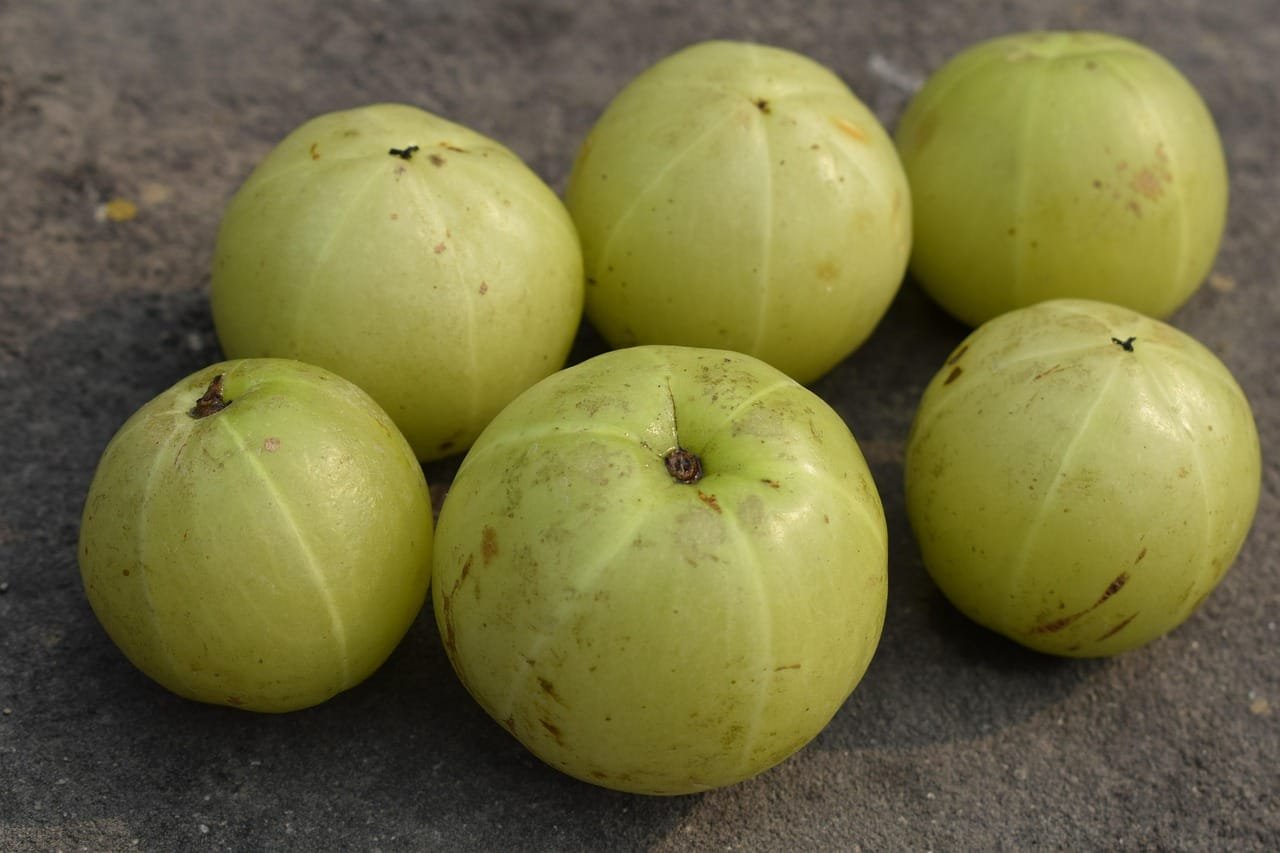
For most healthy adults, 1–2 fresh amla per day is a practical amount. Some people can comfortably eat 3, but there is no official ICMR or WHO guideline that says you need a specific number of amla each day.
One medium Chakaiya amla, weighing about 33 g, provides roughly 83 mg of vitamin C. That is already enough to meet the ICMR-NIN 2020 recommended intake for adult men (80 mg) and more than the recommended 65 mg for adult women.
So, if you are eating amla mainly for vitamin C, one medium amla already goes a long way. Eating more can add fibre and plant compounds, but more is not automatically better.
How many amla should you eat in a day?
There is no scientifically established number such as “2 amla every day” that applies to everyone. A practical range can be understood from the fruit’s nutrition, portion size, and how well you tolerate it.
| Amount | A practical way to look at it |
|---|---|
| 1 amla | A substantial source of vitamin C |
| 2 amla | A practical daily amount for most people |
| 3 amla | Reasonable if you tolerate them well |
| More than 3 | Usually unnecessary for most people |
Why 1–2 amla is usually enough
One medium Chakaiya amla contains about 83 mg of vitamin C based on its approximate 33 g weight and the IFCT 2017 value of 252 mg vitamin C per 100 g.
That means:
- 1 amla: about 83 mg vitamin C
- 2 amla: about 166 mg vitamin C
- 3 amla: about 249 mg vitamin C
The ICMR-NIN 2020 recommended intake is 80 mg/day for adult men and 65 mg/day for adult women.
You do not need to reach a very high vitamin C intake by eating large quantities of amla. Once your overall diet already provides enough vitamin C, additional amla mainly adds more food, fibre and other plant compounds rather than proportionally greater benefits.
What does research say about daily amla intake?
Human research has studied amla extracts more often than whole fresh amla.
One randomized, double-blind, placebo-controlled crossover trial in healthy adults used 500 mg of a standardized amla extract daily for 18 weeks. The study reported improvements in several markers related to oxidative stress and blood lipids, with no major safety concerns reported during the study period.
Another clinical trial investigated 1,000 mg/day of amla extract in people with metabolic syndrome.
These studies are useful for understanding how amla extracts have been studied in humans, but they cannot be converted directly into a specific number of fresh amla. An extract is processed and concentrated differently from the whole fruit.
For whole fresh amla, there are no large clinical trials establishing that everyone should eat a particular number every day.
That is why 1–2 fresh amla per day is better presented as a practical dietary amount, not a clinically established dose.
How much vitamin C is in one amla?
The amount depends on the variety and size of the fruit.
Using a medium Chakaiya amla of about 33 g as a practical example, and the IFCT 2017 value of 252 mg vitamin C per 100 g, one fruit provides approximately 83 mg of vitamin C.
That is enough to cover the ICMR-NIN 2020 recommended intake for an adult man and exceeds the recommendation for an adult woman.
This is why you do not need to eat several amla simply to get your daily vitamin C.
Does eating more amla give more benefits?
More amla gives you more nutrients and plant compounds, but the benefit does not necessarily increase in proportion to the number of fruits.
For example, going from one to two amla roughly doubles the amount of vitamin C you consume from amla. Going from two to five does not mean you will receive five times the health benefit.
Vitamin C absorption also becomes less efficient as the amount consumed in a single dose increases. Your body regulates absorption and excess vitamin C is largely eliminated in urine.
The practical takeaway is simple:
Eat enough amla to fit comfortably into your diet. There is no nutritional reason for most people to force themselves to eat large quantities every day.
What about amla juice, powder and murabba?
The answer changes depending on the form of amla.
Fresh raw amla
This is the form used for the nutrition calculations in this article. It provides vitamin C along with fibre and other naturally occurring plant compounds.
For a full breakdown of amla’s nutritional profile, see Amla Nutrition Facts, Calories & Vitamin C.
Amla juice
Juice does not necessarily provide the same nutritional profile as the whole fruit. Processing and storage can reduce vitamin C, and juice may contain less fibre than whole amla.
If you make fresh amla juice, consuming it soon after preparation is preferable to storing it for long periods.
Amla powder
Amla powder is more concentrated by weight, but its nutritional composition depends on processing and storage. You should not assume that a certain number of grams of powder is exactly equivalent to one fresh amla.
Amla murabba and candy
These products are usually prepared with substantial amounts of sugar, and cooking can reduce vitamin C. They should not be treated as nutritionally equivalent to fresh amla.
Can eating too much amla cause problems?
For most healthy people, moderate amounts of fresh amla are unlikely to cause problems. However, eating large amounts can be uncomfortable for some people.
Acidity and stomach discomfort
Amla is acidic and astringent. Several fruits at once, particularly on an empty stomach, may cause acidity, stomach discomfort or loose stools in sensitive people.
If amla bothers your stomach, try eating a smaller amount with a meal instead.
Kidney stones
The concern about vitamin C and kidney stones is mainly associated with high-dose vitamin C supplementation, rather than normal amounts of whole fruit.
Very high supplemental vitamin C intake can increase urinary oxalate in some people. This is different from eating one or two fresh amla as part of a normal diet.
People with a history of calcium oxalate kidney stones should avoid unnecessarily high-dose vitamin C supplements and should discuss concentrated amla products with their healthcare professional.
Medicines
Amla may affect blood glucose and platelet activity. If you take medicines for diabetes or medicines that affect blood clotting, particularly anticoagulants or antiplatelet drugs, it is sensible to discuss regular high-dose amla supplements or concentrated extracts with your doctor.
This is more relevant to concentrated products and large regular amounts than to occasionally eating a fresh amla.
Who should be more careful with amla?
You do not need to avoid amla simply because it is acidic or high in vitamin C. However, a little more care makes sense if you:
- Have GERD or frequent acidity
- Have a history of calcium oxalate kidney stones
- Take medicines that lower blood glucose
- Take anticoagulant or antiplatelet medicines
- Are using concentrated amla extracts rather than the whole fruit
For these situations, the amount and form of amla matter more than simply asking whether amla is “safe.”
So, how many amla should you eat in a day?
For most healthy adults, 1–2 fresh amla per day is a sensible everyday amount.
If you enjoy them and have no digestive problems, 3 amla can also fit into a normal diet. You do not need to eat more simply to increase your vitamin C intake.
One medium Chakaiya amla of about 33 g provides roughly 83 mg of vitamin C, already meeting the ICMR-NIN 2020 recommendation for adult men and exceeding the recommendation for adult women.
Bottom line: one amla is nutritionally meaningful, two is a practical daily amount, and three is generally plenty for most people.
Sources
- National Institute of Nutrition, ICMR. Indian Food Composition Tables 2017 (IFCT 2017). Hyderabad: NIN; 2017.
- ICMR-NIN Expert Group. Nutrient Requirements for Indians: RDA and EAR 2020. Hyderabad: NIN; 2020.
- Usharani P, et al. Clinical evaluation of Emblica officinalis Gaertn (Amla) in healthy human subjects. Phytotherapy Research. 2019. PMC6926135.
- Massey LK, et al. Effect of vitamin C supplements on urinary oxalate and pH in calcium stone-forming patients. Kidney International. 1998.
- Gurm H, et al. Vitamin C-induced oxalate nephropathy: a case report. Journal of Community Hospital Internal Medicine Perspectives. 2012. PMC3970339.
- Tewari R, Kumar V, Sharma HK. Physical and chemical characteristics of different amla cultivars. Journal of Food Science and Technology. 2019. PMC6423159.