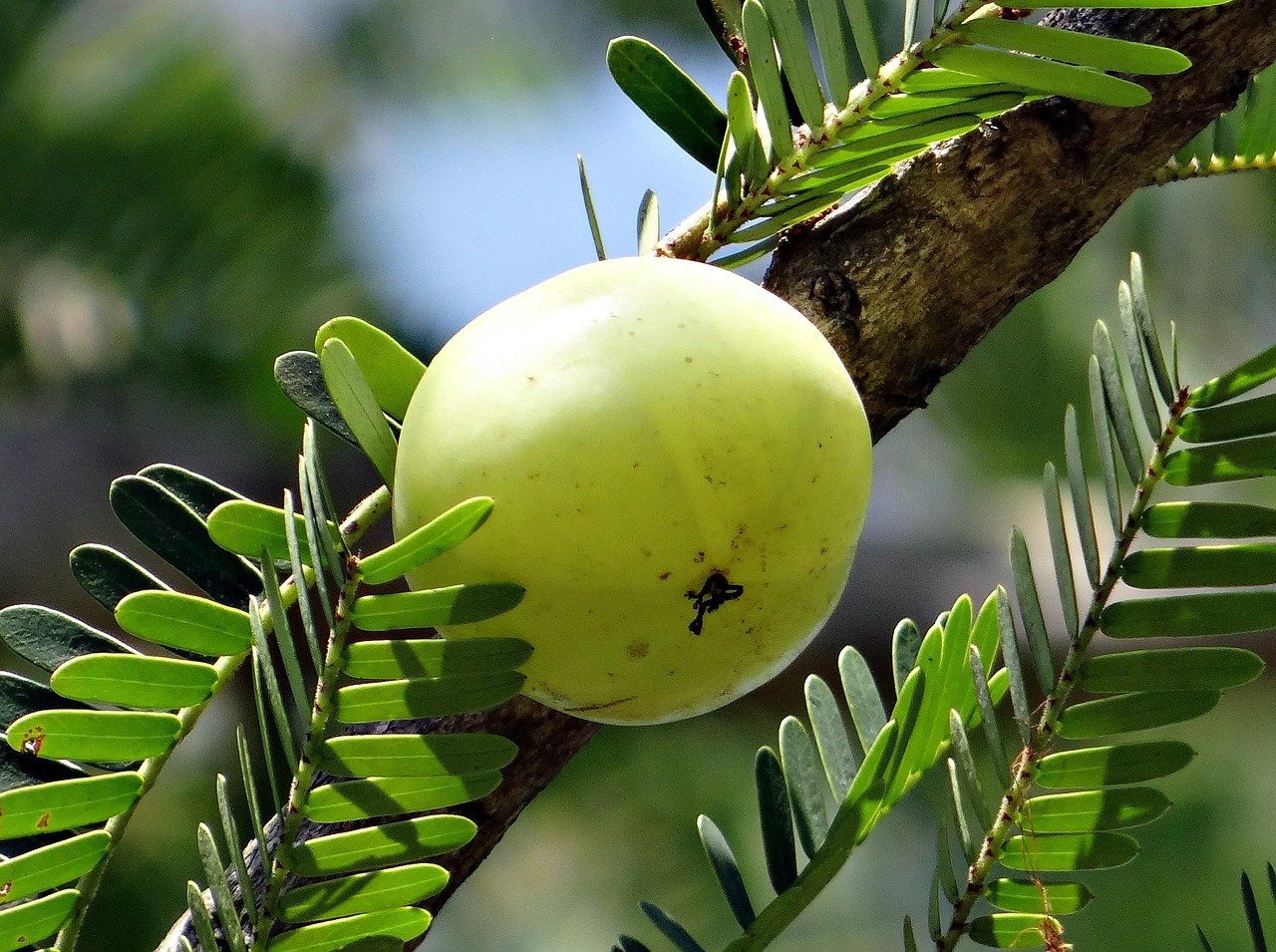
How Much Vitamin C Is in 1 Amla?
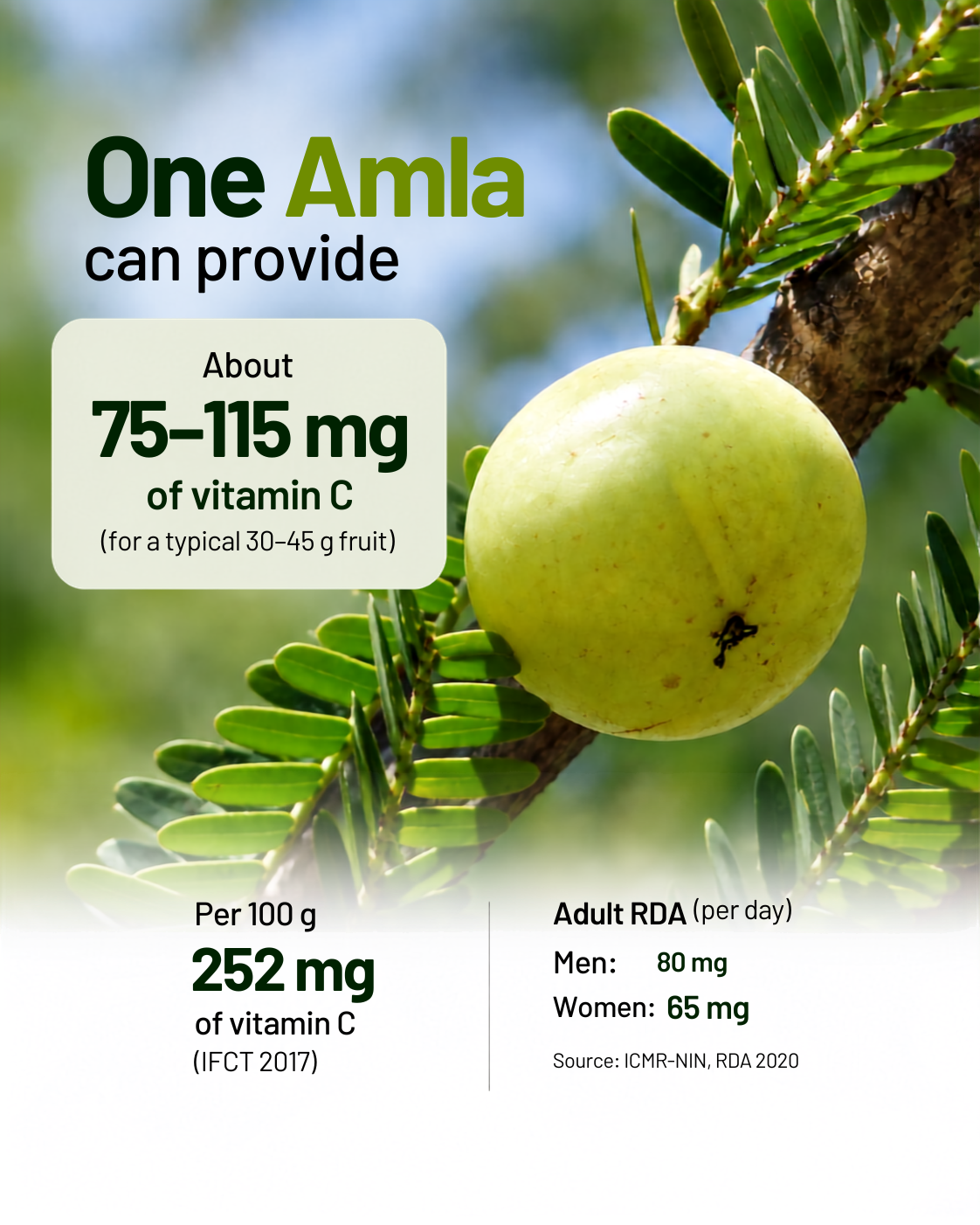
One medium market amla (about 30–45 g) gives you roughly 75–115 mg of vitamin C — meeting or exceeding the daily requirement for adult men in a single fruit. Per 100 g, IFCT 2017 measures fresh amla (Emblica officinalis) at 252 mg of ascorbic acid, averaged across samples from five Indian growing regions.
How Much Vitamin C Is in 100 g of Amla?
Fresh amla contains 252 mg of vitamin C per 100 g, according to IFCT 2017 — among the highest values for fruits measured in the database.
Source: Indian Food Composition Tables 2017, NIN-ICMR (Code E021, n = 5 regions)
The ±30.4 mg standard deviation matters. It's not measurement noise; it reflects real variation between the samples included in the database. An amla grown in one region can differ from another in ascorbic acid content. The 252 mg figure is a representative average, not a guaranteed per-fruit number.
How Much Vitamin C Is in 1 Amla?
One amla fruit contains roughly 75–115 mg of vitamin C for a typical market fruit, scaling with size and variety.
Amla fruit weight varies considerably by cultivar. Research on commercial varieties shows substantial differences in fruit size. Using IFCT 2017's 252 mg per 100 g baseline:
Variety weight data: varietal research including Tewari et al. 2019 (PMC6423159) and CISH field evaluations.
The most common variety at Indian markets, Chakaiya, typically weighs around 31–35 g, giving about 78–88 mg of vitamin C per fruit. That alone meets the adult female RDA (65 mg) and nearly meets the male RDA (80 mg). Two Chakaiya amla clear both.
Is That a Lot of Vitamin C?
By Indian nutritional standards, yes. One amla covers the daily requirement with room to spare.
The ICMR-NIN 2020 Recommended Dietary Allowances for vitamin C:
Source: Nutrient Requirements for Indians, ICMR-NIN 2020
One medium market amla (Chakaiya, ~33 g, ≈83 mg vitamin C) provides roughly 104% of the adult male RDA and 128% of the adult female RDA. A large commercial fruit (NA-7 or Banarasi, ~45 g, ≈113 mg) pushes that to 141% and 174% respectively. Vitamin C is water-soluble, so your body excretes what it doesn't use; the amount provided by these fruits is within normal dietary intake.
Is Amla the Highest-Vitamin-C Fruit? No. Amla is one of the richest natural sources of vitamin C, but it is not generally considered the highest-vitamin-C fruit. Barbados cherry, also known as acerola (Malpighia glabra), typically contains much more vitamin C than amla. Published values for acerola vary substantially by variety and maturity, with some literature reporting around 1,500–4,500 mg per 100 g, compared with approximately 252 mg per 100 g for fresh amla according to IFCT 2017.
For practical Indian diet purposes, however, amla remains an exceptionally concentrated and widely consumed source of vitamin C.
Why do older sources cite 500–700 mg? Older studies and nutrition references have reported substantially higher vitamin C values for amla. More recent literature also shows considerable variation between cultivars, with published values ranging from roughly 193 to 720 mg per 100 g across different studies.
Differences can arise from the variety tested, growing conditions, maturity, sample selection, and analytical method. IFCT 2017 provides a standardized reference value of 252 mg per 100 g, which is the value used throughout this article for diet calculations.
Raw amla retains the most vitamin C. Ascorbic acid degrades with heat, light, and oxidation. Cooking amla, whether into murabba, juice, or dried powder, can reduce the vitamin C substantially. If you're eating amla specifically for its vitamin C, raw is the most effective form.
Amla Nutrition per 100 g (IFCT 2017)
Source: IFCT 2017, NIN-ICMR (Code E021, n = 5 regions)
At 24 kcal per 100 g and 7.75 g of dietary fiber, amla has an unusually high fiber-to-calorie ratio for a fruit. Its iron content, at 1.25 mg, is also notable. While it cannot treat iron deficiency on its own, it provides a meaningful contribution for a fruit so low in calories.
For the complete profile, including B vitamins, carotenoids, polyphenols, amino acids, and mineral breakdown, see the Amla Nutrition Facts, Calories & Vitamin C page.
Amla vs Other Vitamin C-Rich Fruits
All values from IFCT 2017, fresh/raw.
*IFCT 2017 measured lemon juice, not whole lemon pulp.
Guava is the closest common alternative, roughly 85–88% of amla's vitamin C per 100 g, and considerably more palatable for people who find amla too astringent. Citrus fruits like lemon and orange are real vitamin C sources, but at 43–48 mg per 100 g they deliver about one-sixth of what amla does per 100 g. A whole orange covers roughly half the adult male RDA. One medium amla covers it entirely.
Sources
Tewari R, Kumar V, Sharma HK. Physical and chemical characteristics of different cultivars of Indian gooseberry (Emblica officinalis). J Food Sci Technol. 2019;56(3):1641–1648. PMC6423159.
Review literature on the nutritional composition of amla and variation in reported vitamin C values.