15 Vitamin D Rich Foods in India: IU Values + Daily Needs
India has a nutritional paradox that few countries can claim: one of the highest reported rates of vitamin D deficiency in the world, inside one of the sunniest countries on earth. Several Indian studies and reviews have reported high prevalence of vitamin D deficiency, with estimates varying widely depending on the population studied and the definition used. A 2014 review reported prevalence of 70%–100% in the general Indian population, while a later systematic review and meta-analysis estimated a pooled prevalence of about 67% among Indian participants. Source: Ritu G & Gupta A, “Vitamin D deficiency in India: prevalence, causalities and interventions,” Nutrients, 2014.
This post lists 15 vitamin D-rich foods available in India, with approximate IU values and sources. But it begins with two subjects that are generally ignored in such articles: the actual quantity needed (and why there is a gap between ICMR and international guidelines) and why Indians are deficient despite the sun.
Disclosure: This section contains affiliate links. Vitaroxi may earn a commission if you purchase through these links, at no additional cost to you.
Table of Contents
How Much Vitamin D Do You Need Each Day?
The short answer: 600 IU (15 mcg) of vitamin D per day for most healthy Indians, according to the current ICMR-NIN 2020 recommendations.
The ICMR-NIN Nutrient Requirements for Indians (2020) sets the RDA for vitamin D at 600 IU (15 mcg) per day for adults, with the same RDA applying to adult men and women. The 2020 recommendation is also 600 IU for children and adolescents, pregnant women, and lactating women.
For reference, the Institute of Medicine (IOM/US) also sets an adult RDA of 600 IU (15 mcg) per day up to age 70, increasing to 800 IU (20 mcg) after age 70. The ICMR-NIN 2020 recommendation therefore aligns with the IOM recommendation for adults up to 70, while using a single 600 IU RDA across the adult age groups.
One important distinction: the RDA is a daily intake target for healthy individuals, not a treatment dose for vitamin D deficiency. Someone with confirmed deficiency may require a different supplementation regimen under medical guidance.

Why Are Indians So Deficient Despite Living in a Sunny Country?
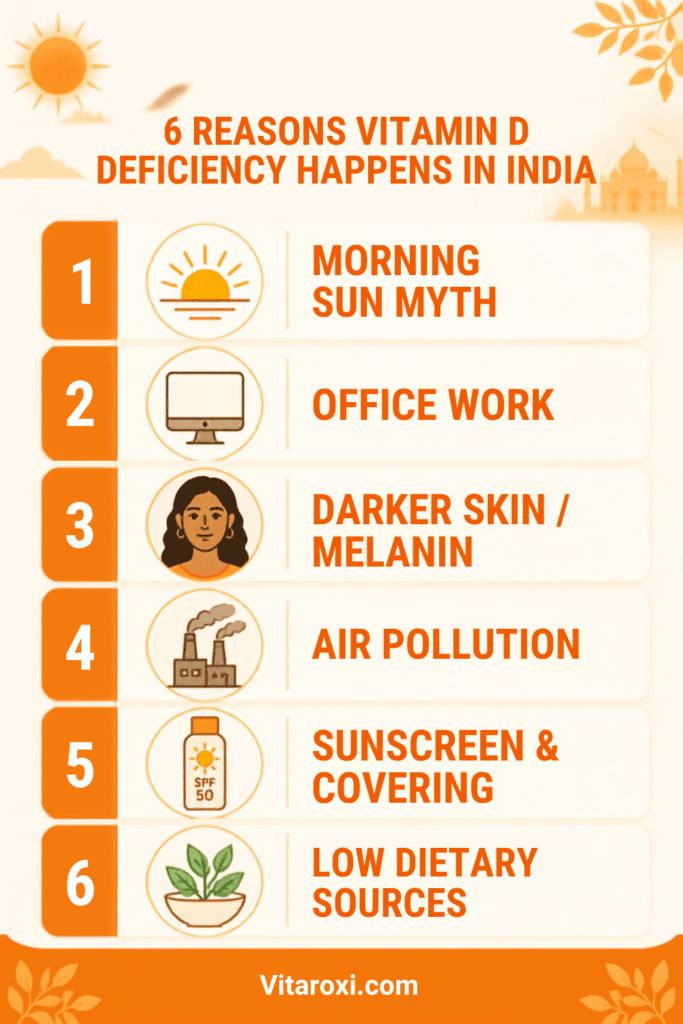
Six structural factors help explain why vitamin D deficiency can remain common even in a sun-rich country like India, and simply eating more eggs is not enough to address all of them.
1. The morning sunlight myth: A widely repeated claim holds that early morning sun is the “best” time for vitamin D. In reality, vitamin D synthesis depends on UVB radiation (wavelength 290–315 nm), which varies considerably with the time of day, season, latitude, weather, and atmospheric conditions. UVB levels are generally higher around the middle of the day than in the early morning. People who regularly go outside very early may therefore receive less UVB exposure than they assume. Source: Holick MF, “Vitamin D Deficiency,” NEJM, 2007.
2. Office and indoor culture: The structural shift toward desk jobs, air-conditioned offices, and covered commutes means that many urban residents spend much of the day indoors, including during periods when UVB exposure may be more effective. Glass windows also block most UVB radiation. Sitting beside a sunny office window therefore does not provide the same vitamin D benefit as direct outdoor exposure.
3. Darker skin tone requires more time: Melanin reduces the penetration of UVB into the skin and can slow the cutaneous synthesis of vitamin D3. People with darker skin may therefore require greater UVB exposure than people with lighter skin to produce a similar amount of vitamin D. The amount of exposure needed varies considerably between individuals and depends on factors such as skin pigmentation, season, location, clothing, and exposed skin area. Source: Ritu & Gupta, Nutrients, 2014.
4. Air pollution in metropolitan cities: Air pollution can reduce the amount of UVB radiation reaching the ground by scattering and absorbing sunlight. This may further limit vitamin D-producing UVB exposure in heavily polluted environments. Research from Delhi has also reported an association between atmospheric pollution and vitamin D status, particularly among young children. Source: Agarwal KS et al., “The impact of atmospheric pollution on vitamin D status of infants and toddlers in Delhi, India,” Archives of Disease in Childhood, 2002.
5. Sunscreen and coverage clothing: Sunscreen can reduce the amount of UVB reaching the skin and therefore has the potential to reduce vitamin D production. The effect observed in controlled studies can be substantial, although real-world effects vary depending on how much sunscreen is applied, how often it is reapplied, and how much skin is covered. Clothing that covers much of the skin can similarly reduce UVB exposure. Cultural preferences, heat-protective clothing, and efforts to avoid tanning may therefore contribute to lower sunlight exposure for some people. Source: Holick MF, NEJM, 2007.
6. Diet and limited vitamin D food sources: Sunlight is an important source of vitamin D because relatively few foods naturally contain substantial amounts of it. Eggs provide some vitamin D, but they are not a major source compared with foods such as fatty fish and fortified products. Dietary patterns also vary widely across India, and people who consume little or no fish, eggs, dairy, or fortified foods may have fewer dietary sources available. India’s food-fortification landscape also differs from that of countries with more extensive vitamin D fortification programs, making diet an additional factor worth considering alongside sunlight exposure.
Can Food Alone Fix Vitamin D Deficiency?
The direct answer: for many Indians with vitamin D deficiency, food alone may not be enough.
The ICMR-NIN guidelines recognize sunlight as an important source of vitamin D, while dietary sources can also contribute to intake [Source: ICMR-NIN, 2020]. However, naturally occurring vitamin D is found in relatively few foods, and the amount provided by a typical serving may not be enough to correct an existing deficiency. Food contributes; it may not be sufficient on its own.
The practical hierarchy:
- Sunlight: Regular outdoor exposure can support vitamin D production, although the amount needed varies with skin tone, location, season, time of day, clothing, and other factors.
- Food sources: Include the options below as dietary sources of vitamin D, rather than relying on them alone to correct a deficiency.
- Fortified foods: Where available, fortified milk, dairy products, cereals, or other foods can provide an additional and more consistent dietary source.
- Supplementation: If deficiency is confirmed, supplementation may be recommended by a healthcare professional based on factors such as blood test results and individual needs.
Vitamin D2 vs. Vitamin D3: Does the Form in Your Food Actually Matter?
Vitamin D is not a single compound. Two main forms are relevant in the diet, and the difference between them matters, particularly for vegetarians, supplement choices, and reading food labels correctly.
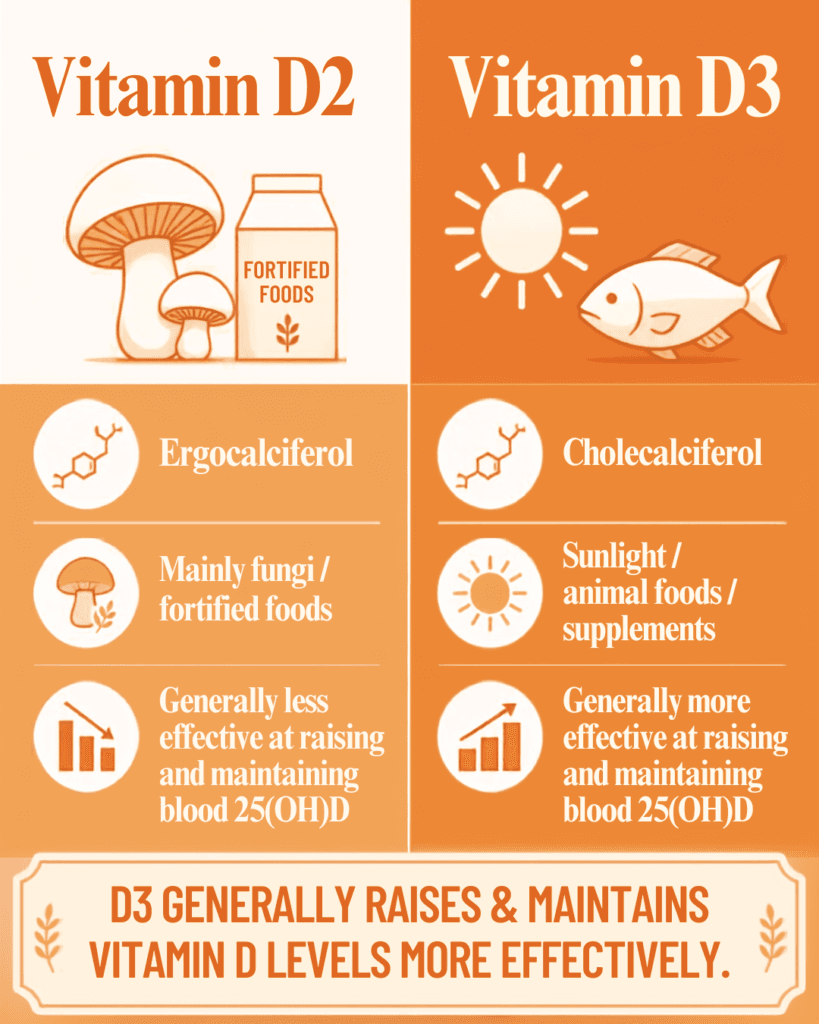
Vitamin D2 (Ergocalciferol): Produced by fungi and some plants when ergosterol is exposed to ultraviolet light. In food, D2 occurs naturally in certain UV-exposed mushrooms. It is also used in some fortified foods and supplements and is often considered a vegetarian-friendly form of vitamin D.
Vitamin D3 (Cholecalciferol): This is the form produced naturally in human skin following UVB exposure. It is also found in foods such as fatty fish and egg yolks. D3 is widely used in vitamin D supplements and can be produced from animal or non-animal sources, depending on the product.
Why D3 may be more effective than D2
Research has found that vitamin D3 can raise and maintain serum 25-hydroxyvitamin D levels more effectively than vitamin D2 in some supplementation studies. Heaney et al. (2011), for example, found that D3 was approximately 87% more potent than D2 in raising and maintaining serum 25(OH)D concentrations and produced greater vitamin D storage in the body under the study conditions. Source: Heaney RP et al., Journal of Clinical Endocrinology & Metabolism, 2011. An earlier study by Armas et al. (2004) also found substantially greater and more sustained increases in 25(OH)D following D3 compared with D2 after single high doses. Source: Armas LA et al., JCEM, 2004.
The practical takeaway is simple: when a food or supplement label lists vitamin D, check whether the source is D2 or D3. D3 has generally shown greater potency in studies comparing the two forms, although the actual effect depends on factors such as dose, baseline vitamin D status, and the individual.
Which form does each Indian food provide?
| Vitamin D Form | Indian Food Sources | Key Note |
|---|---|---|
| D3 (Cholecalciferol) | Fatty fish such as hilsa, mackerel, sardines and salmon; egg yolk; fish liver oils | Animal-derived food sources; D3 is the form naturally produced by human skin |
| D2 (Ergocalciferol) | Certain UV-exposed mushrooms | A naturally occurring fungal source of vitamin D |
| D2 or D3 (varies by product) | Fortified milk and some other fortified foods | Check the label for "ergocalciferol" or "cholecalciferol"; FSSAI regulations permit vitamin D fortification using these forms in specified foods |
| D3 | Vitamin D3 supplements | The source of D3 can vary by manufacturer, so check the product information if vegetarian or vegan sourcing matters |
The vegetarian D3 question: what about lichen-sourced D3?
For strict vegetarians and vegans, the source of vitamin D3 can be an important consideration. Some vitamin D3 supplements are produced from animal-derived sources, while others use non-animal sources such as lichen.
Lichen-derived D3 provides cholecalciferol, the same chemical form of vitamin D3 produced in human skin. This makes it an option for people looking for a non-animal source of D3. Research on vitamin D production in plants and fungi has documented the presence and biosynthesis of vitamin D compounds in these organisms. Source: Jäpelt RB & Jakobsen J, “Vitamin D in plants: a review of occurrence, analysis, and biosynthesis,” Frontiers in Plant Science, 2013.
In India, non-animal vitamin D3 products are available through some supplement brands and online retailers, although availability and formulations can change. If vegetarian or vegan sourcing is important, check the product label and manufacturer’s information rather than assuming that every D3 supplement is animal-derived or vegetarian.
Reality check: D2 can be a vegetarian-friendly source of vitamin D, while D3 has generally shown greater effectiveness in raising vitamin D levels in comparative studies. For people who prefer a non-animal source, lichen-derived D3 provides another option. Always check the product’s current ingredients and source information before buying.
Looking for a vegetarian vitamin D3 option? Lichen-sourced D3 is available in India, including products that combine vitamin D3 with vitamin K2. [Check current vitamin D3 + K2 options]
15 Vitamin D Rich Foods in India: Vitamin D Content and Practical Sources
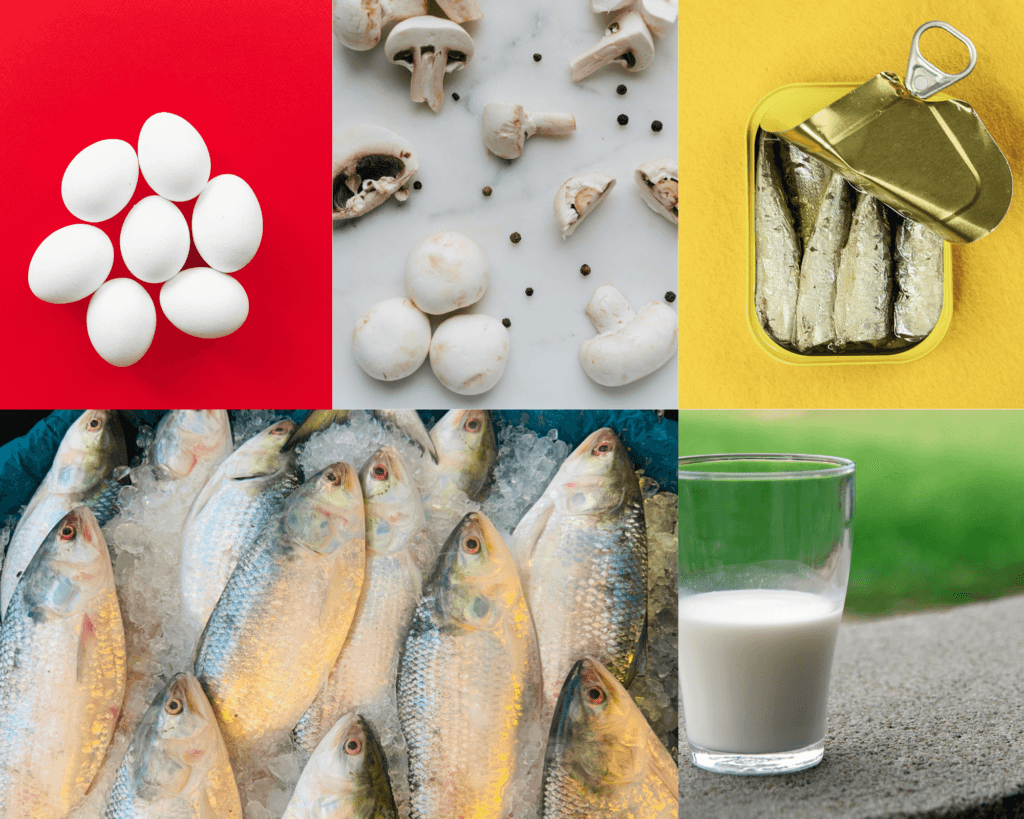
The values below are based on established food-composition databases and published research, with values generally given per 100 g of food unless otherwise stated. Vitamin D content can vary depending on the species, growing conditions, processing, fortification level, brand, and preparation method. Where these factors can affect the reported value, the figures should be treated as a guide rather than an exact number. For fortified foods in particular, the actual amount can vary by product, so check the current nutrition label when available. Sources include USDA FoodData Central, IFCT 2017, and published Indian research where indicated.
| # | Food | Vitamin D Content | Common Indian Names | Source | Realistic Availability |
|---|---|---|---|---|---|
| 1 | Hilsa (Ilish) | ~570–648 IU/100 g* | Ilish (Bengali/Odia) | Study (CIFT)* | East India, coastal Odisha and West Bengal |
| 2 | Mackerel | ~360 IU/100 g | Bangda (Marathi/Konkani), Ayala (Malayalam) | USDA FDC | Coastal West & South India; also available frozen |
| 3 | Sardines | ~193 IU/100 g | Mathi (Malayalam), Tarle (Kannada/Marathi), Chala (Telugu) | USDA FDC | Coastal areas and canned products nationally |
| 4 | Tuna | ~120–270 IU/100 g, depending on type | Choora/Kera (Malayalam/Tamil) | USDA FDC | Widely available in urban markets, especially canned |
| 5 | Surmai (Kingfish/Seer) | ~200–280 IU/100 g* | Surmai (Hindi), Vanjaram (Tamil/Telugu), Anjal (Malayalam) | Study (CIFT)* | Coastal Maharashtra, Goa, Kerala and Tamil Nadu |
| 6 | Salmon | ~526 IU/100 g* | Salmon | USDA FDC | Mainly imported; metro and premium retail |
| 7 | Cod Liver Oil | ~450 IU per 5 ml* | Cod liver oil | USDA FDC | Pharmacies, health stores and online retailers |
| 8 | Rohu | ~100–200 IU/100 g* | Rohu/Rohit (Hindi/Odia/Bengali) | Study (CIFT)* | Widely available across eastern, northern and central India |
| 9 | Egg Yolk | ~37 IU per yolk* | Anda (Hindi), Mutta (Malayalam/Tamil), Kodi Guddu (Telugu) | USDA FDC | Widely available across India |
| 10 | UV-Exposed Mushrooms | ~400–2,000+ IU/100 g* | Dhingri (oyster), Khumb (button) | Cardwell et al., 2018 | More common in metro and Tier-1 markets |
| 11 | Fortified Cow's Milk | ~40–80 IU/100 ml* | Fortified doodh | Product label | Selected packaged milk brands |
| 12 | Fortified Soy Milk | ~100–120 IU/100 ml* | Soya milk | Product label | Mainly urban and metro markets |
| 13 | Fortified Wheat Atta | ~20–40 IU/100 g* | Fortified gehu ka atta | FFRC/FSSAI standard | Selected fortified products |
| 14 | Fortified Breakfast Cereals | ~40–100 IU per serving* | Various branded cereals | Product label | Mainly urban supermarkets and online retailers |
| 15 | Regular Button Mushrooms | ~7 IU/100 g* | Khumb (Hindi) | USDA FDC | Available in many Tier-1 and Tier-2 cities |
1. Hilsa (Ilish) — One of India's Richest Vitamin D Fish
Hilsa is one of the richest dietary sources of vitamin D among fish commonly consumed in India. As a fatty fish, its oily flesh naturally stores fat-soluble vitamins, including vitamin D3. Available Indian seafood analyses place hilsa among the highest-vitamin D fish in the Indian diet, with reported values in the 570–648 IU per 100g range.
For context, a 150g serving could theoretically provide approximately 850–970 IU of vitamin D. Hilsa is culturally central to Bengali and Odia cuisine, making it a realistic dietary source rather than a niche recommendation. Seasonal availability and price fluctuations remain practical considerations.
2. Mackerel (Bangda / Ayala)
Mackerel is one of the most affordable fatty fish available along India’s coastline. USDA FoodData Central reports approximately 360 IU of vitamin D per 100g for Atlantic mackerel. While Indian mackerel is a different species and may not contain identical amounts, it is generally regarded as a nutritionally similar fatty fish.
A medium serving of mackerel can provide a substantial amount of dietary vitamin D, often matching or exceeding the ICMR adult RDA. Mackerel remains a staple across Maharashtra, Goa, Karnataka, Kerala, and Tamil Nadu, making it one of the most practical vitamin D-rich foods available to coastal populations.
3. Sardines (Mathi / Tarle / Chala)
Sardines are among the most underrated vitamin D-rich foods available in India. Small, oily, and relatively inexpensive, they are widely consumed across Kerala, coastal Karnataka, Maharashtra, and Tamil Nadu. Canned sardines are also available nationally, making them accessible even for inland populations.
USDA FoodData Central reports approximately 193 IU of vitamin D per 100g for sardines canned in oil (drained). A typical serving can provide a meaningful contribution toward daily vitamin D intake. Importantly, vitamin D remains relatively stable during commercial canning and storage.
4. Tuna (Fresh or Canned)
Tuna is one of the most accessible vitamin D-rich seafood options available nationwide. Vitamin D content varies considerably by species.
Light tuna (skipjack): approximately 120–140 IU per 100g
Albacore (white tuna): approximately 235–270 IU per 100g
A standard can of tuna can provide a meaningful amount of dietary vitamin D depending on species and serving size. Fresh tuna is widely available in coastal markets, while canned tuna offers longer shelf life and greater availability in inland cities.
When comparing products, check whether the label specifies “light tuna” or “albacore tuna,” as vitamin D levels may differ substantially.
5. Surmai (Kingfish / Seer Fish / Vanjaram / Anjal)
Surmai is a premium fish widely consumed across western and southern India. Published Indian fish composition studies place its vitamin D content in the range of approximately 200–280 IU per 100g.
A typical 150g serving may provide roughly 300–420 IU of vitamin D. Unlike imported fish such as salmon, surmai is already integrated into local food systems and remains a realistic option for households that regularly consume seafood.
6. Salmon
Salmon appears on nearly every global vitamin D food list for good reason. USDA FoodData Central reports approximately 526 IU of vitamin D per 100g for certain salmon entries.
A 150g serving can provide nearly 800 IU of vitamin D. However, salmon remains primarily an imported product in India and is generally more expensive than commonly available domestic fish. For most Indian households, fish such as hilsa, mackerel, or sardines may be more practical choices.
7. Cod Liver Oil
Cod liver oil occupies a unique position between food and supplement. A single teaspoon (approximately 5ml) provides around 450 IU of vitamin D according to USDA FoodData Central.
It is widely available through pharmacies, health stores, and online retailers. Cod liver oil can also provide a substantial amount of vitamin A, so excessive intake may not be appropriate for everyone. Anyone considering regular use should follow label instructions and seek professional advice when necessary.
Considering cod liver oil? [Check cod liver oil options]
8. Rohu (Rohit / Labeo rohita)
Rohu is among the most widely consumed freshwater fish in India. Because it contains less fat than oily marine fish such as hilsa or mackerel, its vitamin D content is generally lower, with available estimates placing it in the range of approximately 100–200 IU per 100g,
Its importance lies in accessibility. Rohu is widely available across northern, eastern, and central India, including areas where marine fish may be difficult to obtain. Catla (Catla catla) has a broadly similar nutritional profile and can often be considered a comparable alternative.
9. Hen's Egg Yolk
Most of the vitamin D in an egg is found in the yolk. USDA FoodData Central reports approximately 37 IU of vitamin D per large yolk, equivalent to roughly 218 IU per 100g of yolk.
Two eggs can contribute approximately 70–80 IU of vitamin D, making eggs a useful dietary contributor, although not a complete solution for deficiency on their own.
Vitamin D content can also vary depending on the hen’s diet and living conditions. Studies have shown that eggs from hens with outdoor access may contain higher vitamin D levels than eggs from fully indoor production systems.
10. UV-Exposed Mushrooms — The Vegetarian Option
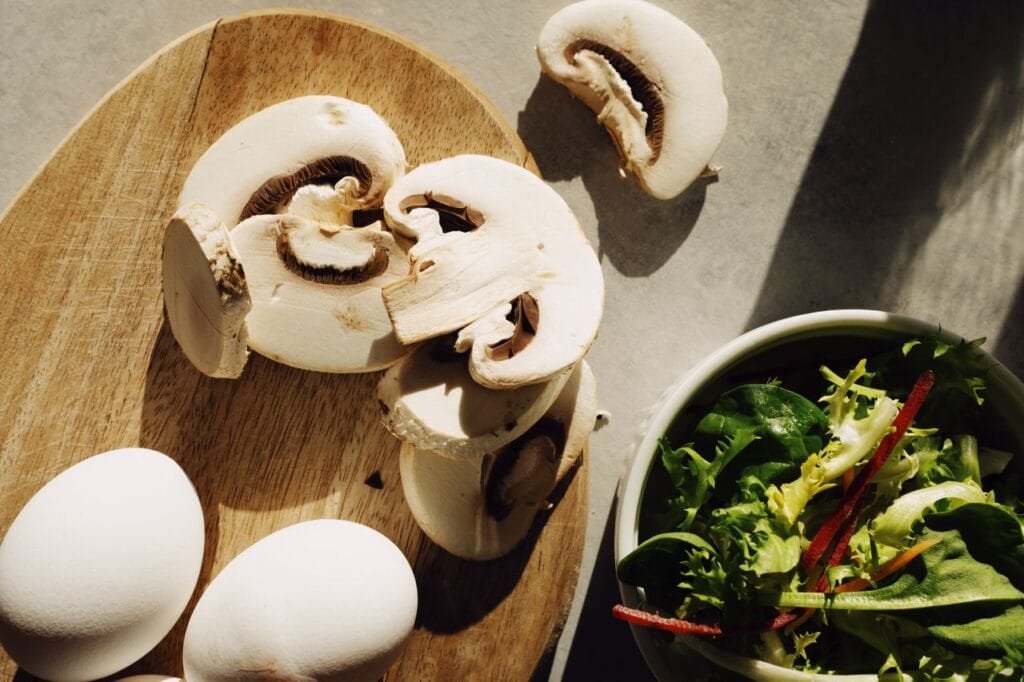
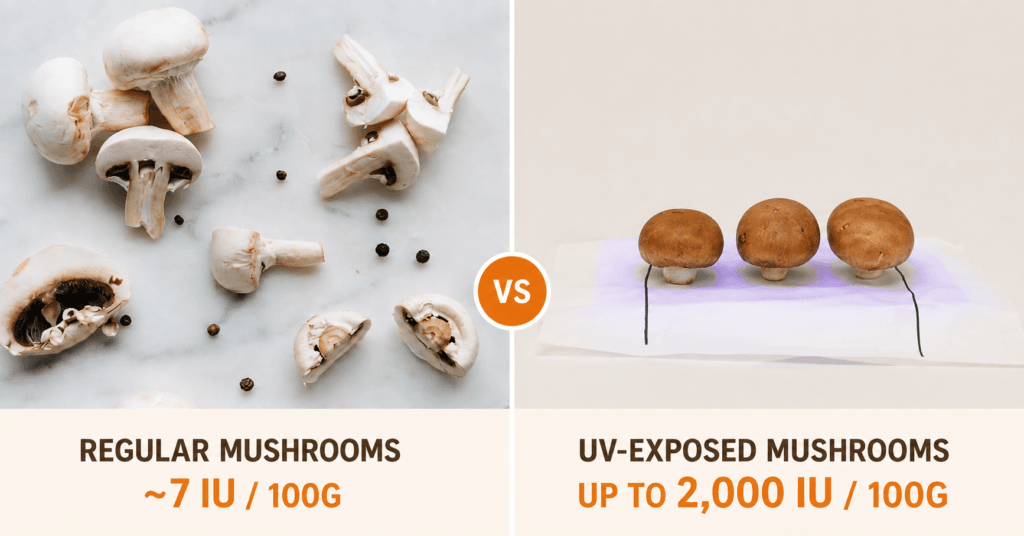
UV-exposed mushrooms are one of the few meaningful non-animal food sources of vitamin D. Mushrooms naturally contain ergosterol, which can be converted into vitamin D2 (ergocalciferol) when exposed to ultraviolet light.
Depending on species and UV treatment conditions, vitamin D content can range from approximately 400 IU to more than 2,000 IU per 100g.
However, availability remains limited in India. Commercially UV-treated mushrooms are largely confined to specialty retailers, premium grocery stores, and select online platforms in major cities. They are not yet a mainstream product across most of the country.
By contrast, regular button mushrooms without UV treatment contain only about 7 IU of vitamin D per 100g, making them a negligible source for vitamin D purposes.
11. Fortified Cow's Milk
Unfortified cow’s milk contains only small amounts of naturally occurring vitamin D. Fortified milk, however, can provide a more meaningful contribution.
Under FSSAI regulations, manufacturers may add vitamin D to milk products, although the amount varies by product. Because fortification levels differ between brands, the nutrition label remains the most reliable source of information.
For households that regularly consume fortified milk, it can serve as a useful background source of vitamin D alongside other dietary and lifestyle strategies.
A practical question often asked is whether vitamin D remains present in dahi or paneer prepared from fortified milk. Because vitamin D is fat-soluble, a substantial portion is retained during fermentation and curdling, although the final amount depends on the product and preparation method.
12. Fortified Soy Milk
Fortified soy milk is one of the more useful vegetarian dietary sources of vitamin D available in urban India. Many commercial products contain added vitamin D, although amounts vary considerably between brands.
A serving can provide a meaningful dietary contribution, making fortified soy milk particularly relevant for vegetarians and vegans who consume few natural vitamin D sources.
Always check the nutrition label for both the amount and form of vitamin D used in the product.
13. Fortified Oil & Wheat Atta
Some branded wheat atta products may include added micronutrients as part of broader fortification initiatives. However, the nutrients added, availability, and fortification practices can vary by product and region. If you’re specifically looking for vitamin D, check the product’s nutrition label for a declared vitamin D amount.
Fortified edible oils are another dietary source worth checking. In India, some edible oils are fortified with vitamin D, either alone or as part of multi-micronutrient fortification. The amount can vary by product, so consumers should check the nutrition label rather than assuming that every edible oil is fortified.
Because the amount contributed by fortified atta or oil depends on the specific product and quantity consumed, these foods are best considered background dietary sources rather than major sources of vitamin D.
14. Fortified Breakfast Cereals
Many packaged breakfast cereals contain added vitamin D as part of their fortification program. Depending on the brand and serving size, cereals may provide a useful daily contribution.
Not all cereals are fortified, and vitamin D content can vary considerably between products. Always check the nutrition facts panel before purchase.
For households that regularly consume fortified cereals, they can offer a convenient and predictable dietary source of vitamin D.
15. Regular Button Mushrooms — An Honest Caveat
Regular button mushrooms are frequently listed among vitamin D foods, but this requires context.
USDA FoodData Central reports approximately 7 IU of vitamin D per 100g for standard button mushrooms. Without UV treatment, this amount is nutritionally insignificant for most dietary purposes.
They remain nutritious foods for many other reasons, including their content of B vitamins, selenium, potassium, and other bioactive compounds. However, unless specifically labelled as UV-treated or sun-exposed, they should not be considered a meaningful vitamin D source.
What Does a Realistic Indian Vitamin D Day Actually Look Like?
Four scenarios, built from the food values discussed above, covering some common dietary patterns across India. The IU figures are approximate and can vary by food type, brand, fortification level, serving size, and preparation. The current ICMR-NIN 2020 RDA for vitamin D is 600 IU per day for adults.
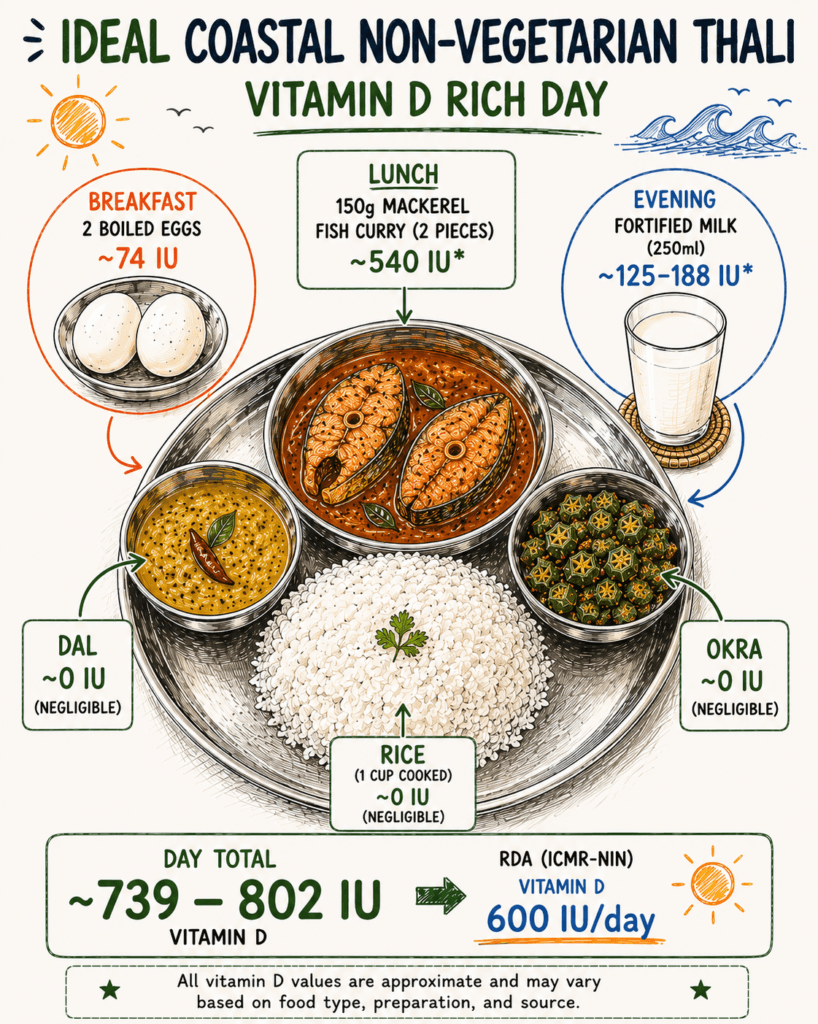
Scenario 1: Coastal non-vegetarian (Odisha, West Bengal, Kerala, coastal Maharashtra)
This is the scenario where dietary vitamin D can make a substantial contribution.
| Meal | Food | Vitamin D |
|---|---|---|
| Breakfast | 2 eggs (fried or boiled) | ~74 IU |
| Lunch | 150g mackerel fry or curry | ~540 IU* |
| Evening | 250ml fortified packaged milk | ~125–188 IU* |
| Day total | ~739–802 IU |
*Mackerel values depend on the species and database entry. The ~360 IU/100g figure used above is for Atlantic mackerel and should not automatically be treated as the value for Indian mackerel. Fortified milk values also depend on the product; FSSAI’s fortified milk standard specifies 5–7.5 µg of vitamin D per litre, equivalent to approximately 200–300 IU/L.
On hilsa days, the lunch contribution could reach approximately 855–972 IU based on the values used in the food table. With the same egg and milk servings, the daily total would be roughly 1,054–1,234 IU.
This shows how a traditional fish-based diet can provide a substantial amount of dietary vitamin D without requiring complicated meal planning. The advantage is particularly relevant in coastal communities where fatty fish are already part of the local food culture.
Scenario 2: Inland non-vegetarian (UP, MP, Chhattisgarh, interior Odisha, including the Raipur region)
This scenario corrects a widespread assumption: being non-vegetarian does not automatically mean getting enough vitamin D. Many inland non-vegetarian diets rely heavily on chicken, eggs, mutton, and freshwater fish. Chicken, however, contains relatively little vitamin D compared with fatty fish.
Typical chicken day (no fish):
| Meal | Food | Vitamin D |
|---|---|---|
| Breakfast | 2 eggs | ~74 IU |
| Lunch or Dinner | 100g chicken sabzi | ~4 IU |
| Evening | 250ml fortified packaged milk | ~125–188 IU* |
| Day total | ~203–266 IU |
This provides roughly 34–44% of the current ICMR-NIN adult RDA.
Fish day (rohu curry):
| Meal | Food | Vitamin D |
|---|---|---|
| Breakfast | 2 eggs | ~74 IU |
| Lunch | 150g rohu curry | ~150–300 IU* |
| Evening | 250ml fortified packaged milk | ~125–188 IU* |
| Day total | ~349–562 IU |
*The rohu estimate is based on the approximate range used in the food table.
A freshwater-fish day can therefore make a much larger contribution than a chicken-based day, although it may still fall short of the current 600 IU RDA depending on the food values and portions.
The important point is simple: “non-vegetarian” does not automatically mean “vitamin D sufficient.” The type of animal food matters, and fatty fish are considerably more relevant to vitamin D intake than foods such as chicken.
Scenario 3: Urban vegetarian with consistent access to fortified foods (Delhi, Mumbai, Bengaluru, Pune)
This is the more optimistic vegetarian scenario: a household that regularly buys fortified packaged foods and checks nutrition labels.
| Meal | Food | Vitamin D |
|---|---|---|
| Breakfast | 40g fortified branded cereal | ~60–80 IU* |
| Beverage | 250ml fortified packaged milk | ~125–188 IU* |
| Sabzi | 100g regular button mushrooms | ~7 IU |
| Day total | ~192–275 IU |
*Cereal values vary considerably by brand and serving size. Fortified milk values also depend on the product.
Even with deliberate use of fortified products, this example provides only around 32–46% of the current ICMR-NIN adult RDA of 600 IU. The actual intake can be lower when fortified products are replaced with unfortified alternatives.
Fortification can therefore make a useful contribution, but it should not automatically be assumed that a vegetarian diet containing a few fortified foods will provide the full vitamin D requirement. Dietary intake also varies substantially between households and regions.
Older Indian research has reported relatively low dietary vitamin D intakes among some vegetarian populations, supporting the broader point that dietary vitamin D intake can be limited when fortified foods and animal sources are uncommon Source: Mithal A et al., Osteoporosis International, 2009.
Scenario 4: Rural or semi-urban vegetarian
This represents a dietary pattern in which most foods are locally sourced and fortified packaged foods may be used less frequently.
| Meal | Food | Vitamin D |
|---|---|---|
| Meals | Local unbranded atta (no added vitamin D) | ~0 IU |
| Beverage | 250ml loose/unfortified milk | ~8–10 IU |
| Dal | rice | seasonal vegetables |
| Day total | ~8–10 IU |
Unfortified cow’s milk contains only a small amount of vitamin D. Loose milk and unfortified local products do not provide the added vitamin D found in fortified milk.
This type of diet can therefore provide very little vitamin D from food alone. However, low dietary vitamin D intake does not by itself prove vitamin D deficiency, because vitamin D status is also influenced by sunlight exposure, skin pigmentation, clothing, season, location, and other factors.
For people with limited dietary sources, regular outdoor exposure can be an important source of vitamin D. Where deficiency is confirmed, supplementation may also be considered based on individual circumstances and professional advice.
Summary across four scenarios:
| Scenario | Approx. Day Total | % of ICMR-NIN RDA (600 IU) | Main gap driver |
|---|---|---|---|
| Coastal non-veg (mackerel day) | ~739–802 IU | ~123–134% | Depends on fish species and fortified milk |
| Inland non-veg (chicken day) | ~203–266 IU | ~34–44% | Little or no fatty fish |
| Urban vegetarian (fortified-food example) | ~192–275 IU | ~32–46% | Limited number of meaningful vitamin D food sources |
| Rural/semi-urban vegetarian | ~8–10 IU | ~1–2% | Very few dietary vitamin D sources |
When Should You Consider a Vitamin D Supplement?
If a blood test (serum 25-hydroxyvitamin D) confirms vitamin D deficiency, supplementation under medical guidance is often used to correct low levels. The exact definition of deficiency varies between clinical guidelines, and Indian recommendations have not always used the same cutoffs. A 2025 Indian expert consensus notes this variation and provides updated guidance for assessing and treating vitamin D deficiency. Source: Kalra S et al., Indian Journal of Endocrinology and Metabolism, 2025.
The most commonly used form is cholecalciferol (vitamin D3), although the dose and treatment schedule depend on the severity of deficiency, age, health status, and other individual factors. High-dose regimens, including intermittent doses, may be prescribed for confirmed deficiency, but they should not be treated as a routine self-supplementation strategy.
Self-supplementation with high doses without appropriate guidance is not recommended. Vitamin D toxicity is uncommon but can occur with excessive intake, particularly from supplements. Excess vitamin D can cause hypercalcaemia and symptoms such as nausea, vomiting, weakness, excessive thirst, frequent urination, and kidney stones. The adult tolerable upper intake level is generally 4,000 IU per day from all sources, although this limit does not apply in the same way when higher doses are prescribed and monitored by a healthcare professional for treatment. Source: NIH Office of Dietary Supplements, Vitamin D Fact Sheet for Health Professionals.
The practical sequence is: assess → confirm if needed → treat appropriately → monitor when required.
Frequently Asked Questions
Which Indian vegetarian food has the highest vitamin D?
Among genuinely available options, UV-exposed mushrooms can provide some of the highest vitamin D levels, with reported values ranging from about 400 to more than 2,000 IU per 100g depending on the mushroom species and UV treatment. However, they are currently available mainly through specialty retailers and selected metropolitan markets and are not commercially mainstream across India.
For most vegetarians, fortified packaged foods such as fortified milk can be more practical dietary sources of vitamin D, although the actual amount varies by product and should be checked on the nutrition label.
Does cooking destroy vitamin D in fish?
Cooking does not necessarily destroy most of the vitamin D in fish, but the amount retained depends on the fish and cooking method. Research on vitamin D in foods has found that retention can remain high with several cooking methods, although losses can occur and results vary between foods and preparation methods. A separate study on fish found vitamin D3 retention of about 85% after pan-frying, while other cooking methods showed retention close to the original amount. Source: Jakobsen J & Knuthsen P, “Stability of vitamin D in foodstuffs during cooking,” Food Chemistry, 2014.
So, the vitamin D advantage of fish generally remains after cooking, although the exact amount reaching your plate will depend on the food and preparation method.
Is early morning sunlight the best time to get vitamin D?
No. Vitamin D production in the skin depends on UVB radiation, and UVB availability generally increases as the sun rises and is higher around the middle of the day than in the early morning. The exact period when enough UVB is available varies with latitude, season, time of day, atmospheric conditions, and other factors.
This means that going outside very early in the morning may provide less vitamin D-producing UVB exposure than going outside later in the day. Source: Ritu & Gupta, Nutrients, 2014.
How long should Indians spend in the sun for adequate vitamin D?
There is no single exposure time that works for every Indian. The amount of UVB exposure needed varies with skin pigmentation, season, latitude, time of day, clothing, exposed skin area, cloud cover, pollution, and other factors.
People with darker skin generally require more UVB exposure to produce the same amount of vitamin D as people with lighter skin. Rather than following a fixed 15–30 minute rule, consider regular outdoor exposure when UVB is available while avoiding excessive sun exposure and sunburn. Source: Ritu & Gupta, Nutrients, 2014.
Are desi eggs better than commercial eggs for vitamin D?
They can be, but it is not guaranteed. Research has shown that eggs from hens with outdoor sunlight exposure can contain substantially more vitamin D than eggs from hens kept indoors. In one study, egg yolk vitamin D3 content was three to four times higher in hens exposed to sunlight than in indoor hens. Source: Kühn J et al., Nutrition, 2014.
However, an egg being labelled “desi,” “country,” or “free-range” does not automatically mean it contains more vitamin D. The hen’s actual diet and sunlight exposure matter, and vitamin D content is not routinely standardized on Indian egg labels.
Are UV-exposed mushrooms available across India?
No. UV-exposed or specifically sun-treated mushrooms are still not a mainstream product across India. They may be available through selected specialty stores and online retailers in some metropolitan areas, but availability is much more limited than for regular button or oyster mushrooms.
Commercial availability can also change as cultivation and fortified-food products develop. For most Indian consumers, especially outside major cities, regular mushrooms should not be assumed to be a meaningful vitamin D source unless they are specifically labelled as UV-treated or vitamin D-enriched.
In Summary
The 15 foods above span a wide range of practical relevance, from hilsa, mackerel, and sardines, which can make a meaningful contribution for people who regularly eat fatty fish, to fortified milk and other fortified foods, which can provide a useful but modest background contribution. At the low end, regular mushrooms and unfortified dairy are worth including only with the understanding that their vitamin D contribution is minimal.
For many Indians, particularly those with limited dietary sources of vitamin D, food may not be enough to meet vitamin D needs on its own. The practical framework is to consider regular outdoor exposure when UVB is available, include dietary sources of vitamin D, use fortified products where available, and consider supplementation under medical guidance when deficiency is confirmed.
Key sources:
- ICMR-NIN, Nutrient Requirements for Indians, 2020
- USDA FoodData Central (FDC)
- Ritu G & Gupta A, “Vitamin D deficiency in India: prevalence, causalities and interventions,” Nutrients, 2014
- Holick MF, “Vitamin D Deficiency,” New England Journal of Medicine, 2007
- Cardwell G et al., “A review of mushrooms as a potential source of dietary vitamin D,” Nutrients, 2018
- Agarwal KS et al., “The impact of atmospheric pollution on vitamin D status of infants and toddlers in Delhi, India,” Archives of Disease in Childhood, 2002
- Jakobsen J & Knuthsen P, “Stability of vitamin D in foodstuffs during cooking,” Food Chemistry, 2014, 148:170–175
- Kühn J et al., “Free-range farming: a natural alternative to produce vitamin D-enriched eggs,” Nutrition, 2014
- Heaney RP et al., “Vitamin D3 is more potent than vitamin D2 in humans,” Journal of Clinical Endocrinology & Metabolism, 2011
- Armas LA et al., “Vitamin D2 is much less effective than vitamin D3 in humans,” Journal of Clinical Endocrinology & Metabolism, 2004
- Mithal A et al., “Global vitamin D status and determinants of hypovitaminosis D,” Osteoporosis International, 2009
- Jäpelt RB & Jakobsen J, “Vitamin D in plants: a review of occurrence, analysis, and biosynthesis,” Frontiers in Plant Science, 2013
- Kalra S et al., “Diagnosis and management of vitamin D deficiency: an Indian expert consensus,” Indian Journal of Endocrinology and Metabolism, 2025