Apple Nutrition: Calories, Protein, Fiber, Vitamins & Health Benefits
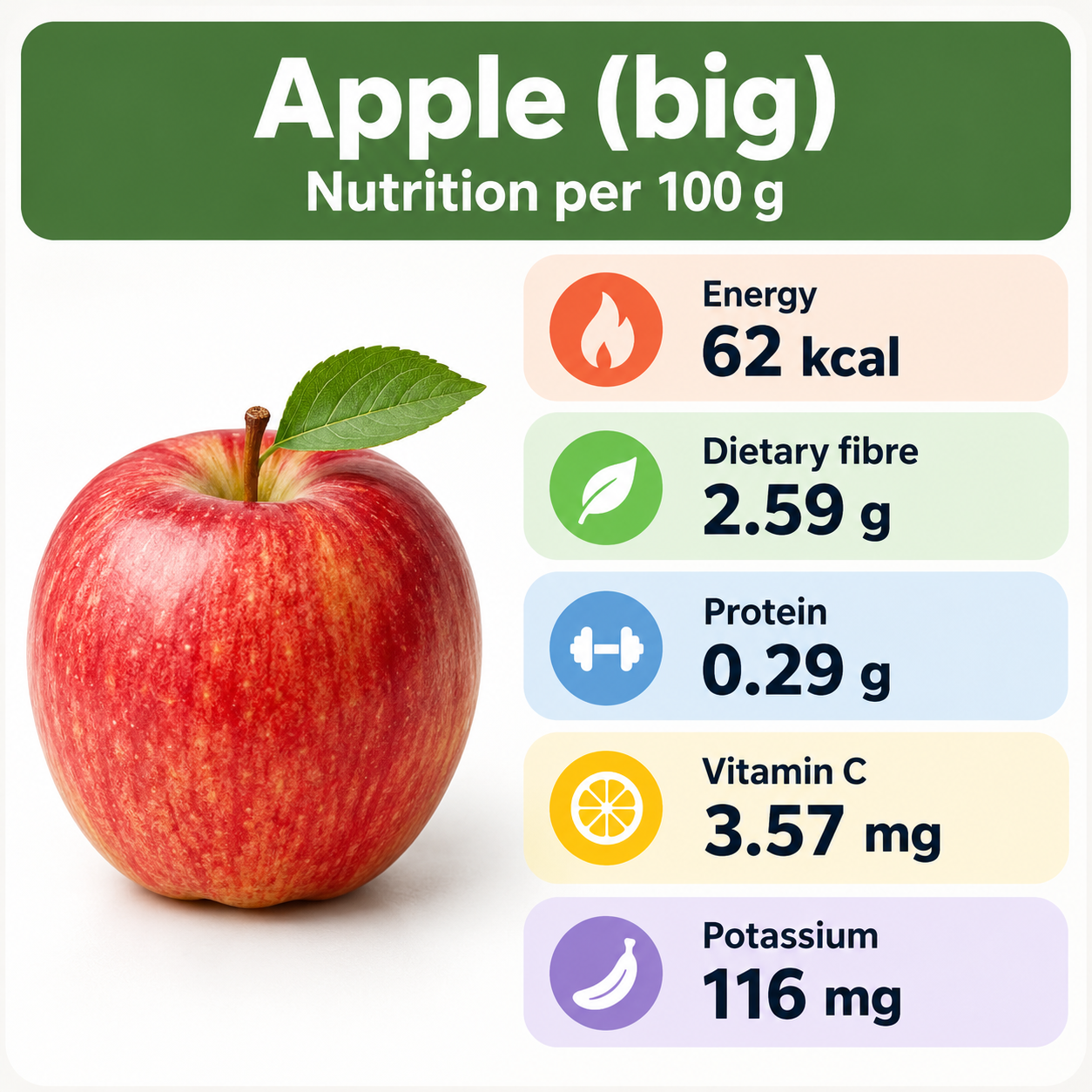
Per 100 g of edible portion, a big apple (Malus domestica) provides approximately 62 kcal, 2.59 g of dietary fibre, 0.29 g of protein and 3.57 mg of vitamin C, according to the Indian Food Composition Tables (IFCT 2017) published by ICMR–National Institute of Nutrition. Apple is a relatively low-energy fruit with high water content and a modest amount of dietary fibre. Its vitamin C content is comparatively low, particularly when compared with fruits such as guava. Unless otherwise stated, the nutrition values in this article are taken from IFCT 2017. For information not covered by the table, such as apple skin composition, apple juice and typical serving weights, the relevant alternative sources are identified separately.
Apple nutrition at a glance
Per 100 g of edible portion, Apple, big (IFCT food code E001) provides 62 kcal, 13.11 g of available carbohydrate, 2.59 g of dietary fibre and 0.29 g of protein. It also contains about 83 g of water, making it a water-rich fruit with relatively low energy content. Most of its energy comes from carbohydrates, including naturally occurring sugars; protein and fat contribute very little.
Source: ICMR–National Institute of Nutrition (NIN), Indian Food Composition Tables 2017 (IFCT 2017), food code E001, Apple, big (Malus domestica), mean values from six regions. Energy is reported as 261 kJ in the source and converted to approximately 62 kcal using 1 kcal = 4.184 kJ. View the official IFCT publication.
These values are for 100 g of edible apple, not one whole apple. The amount you get from a single apple depends on its size and the weight of its core.
To compare apple with other fruits using the same measurement basis, explore Vitaroxi's Fruits Nutrition Facts database.
Calories in 100 g of apple
According to ICMR–NIN's Indian Food Composition Tables 2017 (IFCT 2017), the energy content of apple ranges from approximately 51 to 64 kcal per 100 g across four listed apple entries. The big apple entry provides 62 kcal, while the green apple entry provides 51 kcal. These figures reflect the samples analysed for the database; they do not establish that every green apple is lower in calories than every other apple.
The green apple entry contains about 11 kcal and 2.46 g less available carbohydrate per 100 g than the big apple entry. Its fibre content, however, is nearly the same: 2.54 g compared with 2.59 g. The small apple entry has less fibre per 100 g, at 2.06 g. These differences are useful for comparing the database entries, but they should not be treated as fixed nutritional differences between all apples of these types.The Kashmir entry is based on just one region, so its figures offer a limited reference rather than a reliable estimate of variation across Kashmir-grown apples.
USDA FoodData Central lists approximately 52 kcal per 100 g of raw apple with skin, compared with 62 kcal for the big apple entry in IFCT 2017. The difference may reflect variations in the samples analysed and the methods used to calculate or report nutrient values. The carbohydrate figures also need careful comparison: USDA reports total carbohydrate, whereas IFCT lists available carbohydrate separately from dietary fibre. These values are therefore not directly equivalent. For this article, IFCT 2017 remains the primary source for Indian apple nutrition data, while USDA FoodData Central serves as a secondary reference for international comparison.
Calories in 1 small, medium and large apple
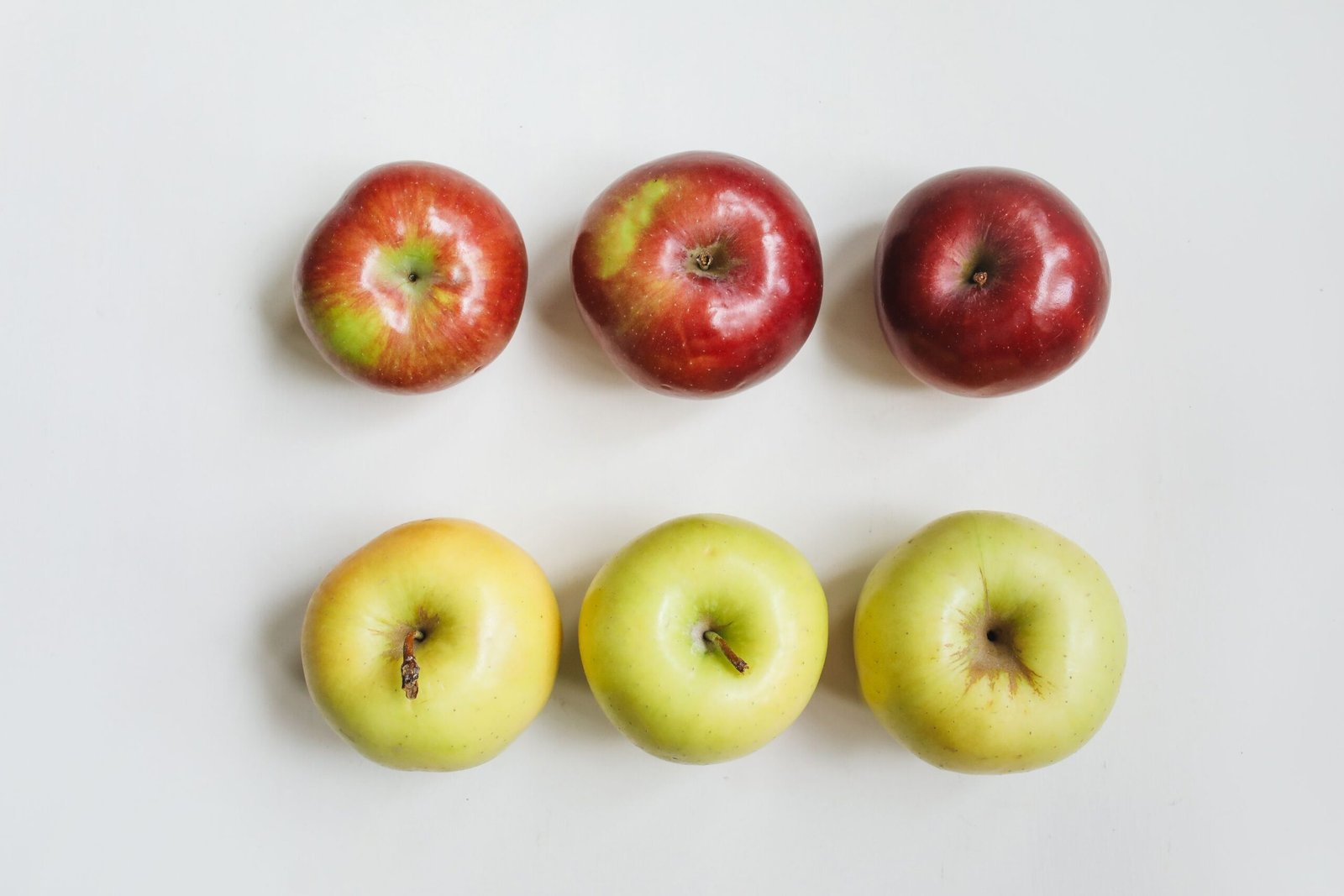
The calories in an apple depend on its edible weight. Using IFCT 2017's value of 62 kcal per 100 g, a small apple weighing 149 g provides about 92 kcal, a medium apple weighing 182 g provides 113 kcal, and a large apple weighing 223 g provides 138 kcal. Using USDA's value of 52 kcal per 100 g, the same weights provide approximately 77, 95 and 116 kcal, respectively. The table below uses IFCT's big apple entry for carbohydrate, fibre and free sugars; these nutrients are estimates scaled to each serving weight, not separate measurements of small, medium and large apples.
Reference weights are USDA serving sizes for small (2¾-inch), medium (3-inch) and large (3¼-inch) apples. Nutrition estimates are for the edible portion and are rounded; actual values vary with apple weight and composition.
These sizes are useful for estimating calories, but apples sold in Indian markets may not match USDA's reference weights. For a more accurate estimate, weigh the edible portion after removing the core. You can then use Vitaroxi's Calorie Calculator or Macronutrient Calculator to see how the apple fits into your daily intake.
Apple protein, carbs, sugar and fibre
Apple is primarily a carbohydrate source, providing 13.11 g of available carbohydrate, 2.59 g of dietary fibre, 0.29 g of protein and 0.64 g of fat per 100 g, according to IFCT 2017. Its sugars are mainly fructose (8.36 g), followed by glucose (1.03 g) and sucrose (0.14 g). Of the total dietary fibre, 1.43 g is insoluble and 1.16 g is soluble. These values show that apple contributes some fibre to the diet but very little protein, so it should not be counted on as a meaningful protein source. For help estimating your daily protein needs, try Vitaroxi's Protein Intake Calculator.
Vitamins and minerals in apples
Apples provide a range of vitamins and minerals, but their contribution is modest for most micronutrients. Per 100 g, Apple, big (IFCT food code E001) contains 3.57 mg of vitamin C, 116 mg of potassium, 13.68 mg of calcium, 8.09 mg of magnesium and 0.26 mg of iron. It also contains small amounts of B vitamins, vitamin E, vitamin K and beta-carotene.
Potassium is the most notable mineral in this profile, at 116 mg per 100 g, while sodium is very low at 1.43 mg. Apple also contains smaller amounts of phosphorus (10.44 mg), zinc (0.09 mg), copper (0.04 mg) and manganese (0.05 mg). Although these nutrients contribute to the overall diet, apple is not a particularly rich source of iron or calcium.
ICMR–NIN's 2020 recommendations set the daily vitamin C allowance at 80 mg for adult men and 65 mg for non-pregnant, non-lactating adult women. On that basis, 100 g of apple supplies about 4.5% of the men's RDA and 5.5% of the women's RDA. A medium apple weighing 182 g provides approximately 6.5 mg of vitamin C, or around 8% and 10% of those respective recommendations.
Apple is therefore not among the strongest fruit sources of vitamin C. For comparison, IFCT 2017 reports 42.72 mg per 100 g for orange pulp and 214 mg per 100 g for white-flesh guava. If vitamin C is your priority, guava is a much richer option; apple is better appreciated as part of a varied diet that also supplies fibre and other nutrients.
Apple with skin vs peeled apple
Eating an apple with its skin provides considerably more fibre than eating it peeled. USDA FoodData Central lists 2.4 g of fibre per 100 g of raw apple with skin, compared with 1.3 g without skin—a difference of about 46%. The peeled entry also has slightly less potassium and vitamin C, although the size of these differences depends on the food entries being compared.
Source: USDA FoodData Central, raw apple with skin and raw apple without skin. Values are per 100 g.
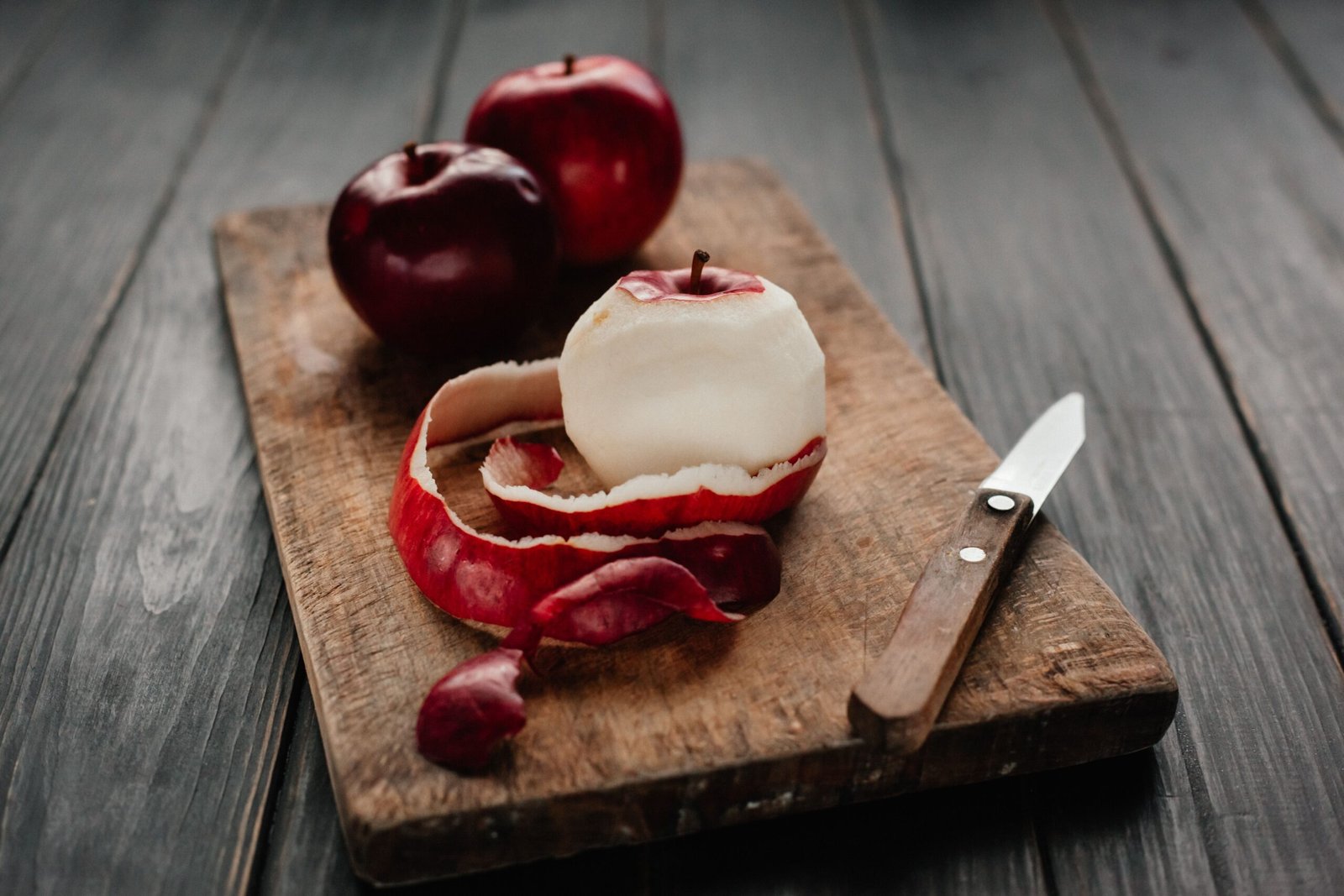
IFCT 2017 does not provide a separate nutrient profile for apple skin and flesh, so this comparison uses USDA data rather than the Indian food-composition tables used elsewhere in this article. For most people, washing an apple thoroughly under running water and eating it with the skin is a practical way to retain more of its fibre. Peeling it is still an option if you prefer the texture or need to avoid the skin.
Does apple help with fibre intake?
Yes, apple can make a useful contribution to your daily fibre intake, although it won't cover a large share of your needs on its own. A medium apple weighing 182 g provides approximately 4.7 g of fibre, based on the IFCT 2017 value of 2.59 g per 100 g. That's about 12% of a 40 g daily target, using the reference of 40 g per 2,000 kcal cited in Indian dietary guidance.
Apple also contains both soluble and insoluble fibre: per 100 g, it provides 1.16 g of soluble fibre and 1.43 g of insoluble fibre. Compared with other fruits in IFCT 2017, white-flesh guava provides considerably more fibre (8.59 g per 100 g), followed by custard apple (5.10 g) and pear (4.48 g). Apple contains more fibre per 100 g than banana (1.94 g) and orange pulp (1.29 g), making it a reasonable everyday option, particularly when eaten with its skin.
If your usual diet is low in fibre, increase your intake gradually and drink enough water. For more options, explore Best Fibre-Rich Foods for Digestion and use Vitaroxi's Daily Fibre Intake Calculator to estimate your daily target.
Is apple good for weight management?
Apple can fit well into a weight-management diet because it provides relatively few calories for its weight and contains plenty of water. A medium apple weighing 182 g provides around 113 kcal, or less than 6% of a 2,000 kcal daily intake. Its whole-fruit form also matters: chewing solid apple may help you feel fuller than drinking apple juice.
A study by Flood-Obbagy and Rolls, published in Appetite in 2009, tested this effect in 58 adults. Participants consumed apple segments, applesauce, apple juice with added fibre, apple juice without added fibre, or no preload before a lunch. The 266 g apple preload contained 125 kcal. Compared with the no-preload condition, eating apple reduced total energy intake from the preload plus lunch by 15% (about 187 kcal). Whole apple also produced greater fullness and lower energy intake than the other apple forms. Read the study on PubMed.
However, this was a short-term, single-meal experiment, not a trial of weight loss over several months. It shows that eating whole apple before a meal can reduce energy intake at that meal under the study conditions; it does not prove that eating an apple every day leads to long-term weight loss.
The practical takeaway: Apple does not burn fat. It can support weight management when it replaces a more calorie-dense snack or helps you feel satisfied with less food. Simply adding an apple to your usual intake, without adjusting anything else, does not guarantee a calorie deficit. For more fruit options, see 9 Best Fruits for Weight Loss in India.
Apple vs banana vs orange nutrition comparison
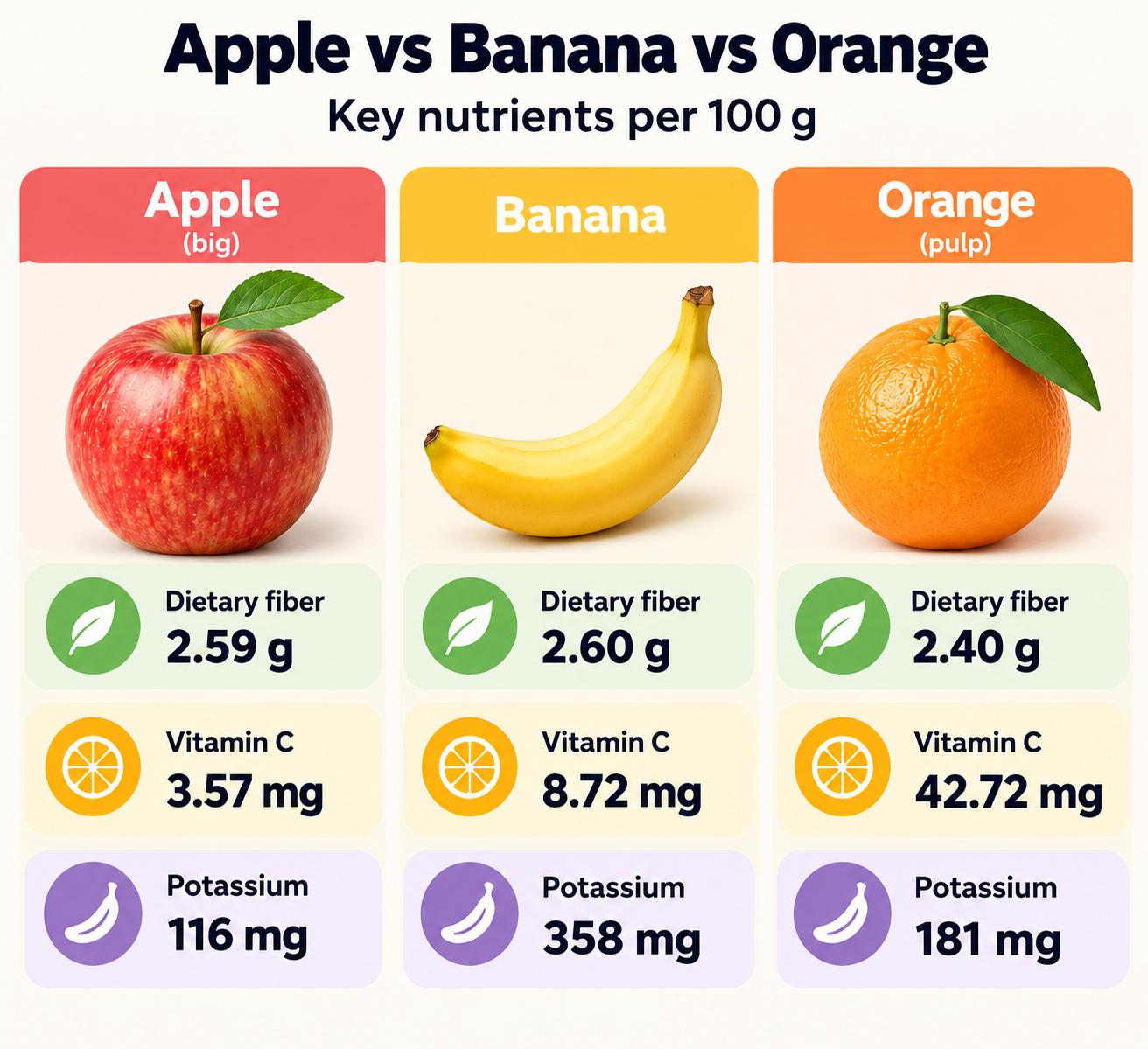
Apple, banana and orange each offer a different nutritional advantage. Per 100 g, the IFCT 2017 big apple entry provides the most dietary fibre of the three (2.59 g), orange pulp contains substantially more vitamin C (42.72 mg), and ripe Robusta banana provides the most energy (105 kcal) and potassium (306 mg). The best choice depends on what you want from your fruit, rather than one fruit being nutritionally superior in every way.
Nutrition comparison per 100 g
Source: ICMR–NIN, Indian Food Composition Tables 2017. Values are per 100 g of edible portion for the specified food entries.
Which fruit should you choose? Apple is a good everyday snack if you want more fibre, a relatively low-calorie option and a fruit that's easy to carry. Orange is the better choice when vitamin C is your priority, while banana provides more energy and potassium per 100 g, making it a convenient option before or after exercise. All three can fit into a balanced diet; the best choice depends on your nutritional needs, portion size and personal preference.
Remember that these figures compare equal weights, not typical whole fruits. A banana, apple and orange can have different edible weights, so their actual calories and nutrient contributions will vary by size. To compare other foods using the same nutrient measures, try Vitaroxi's Food Comparison Tool.
Whole apple vs apple juice
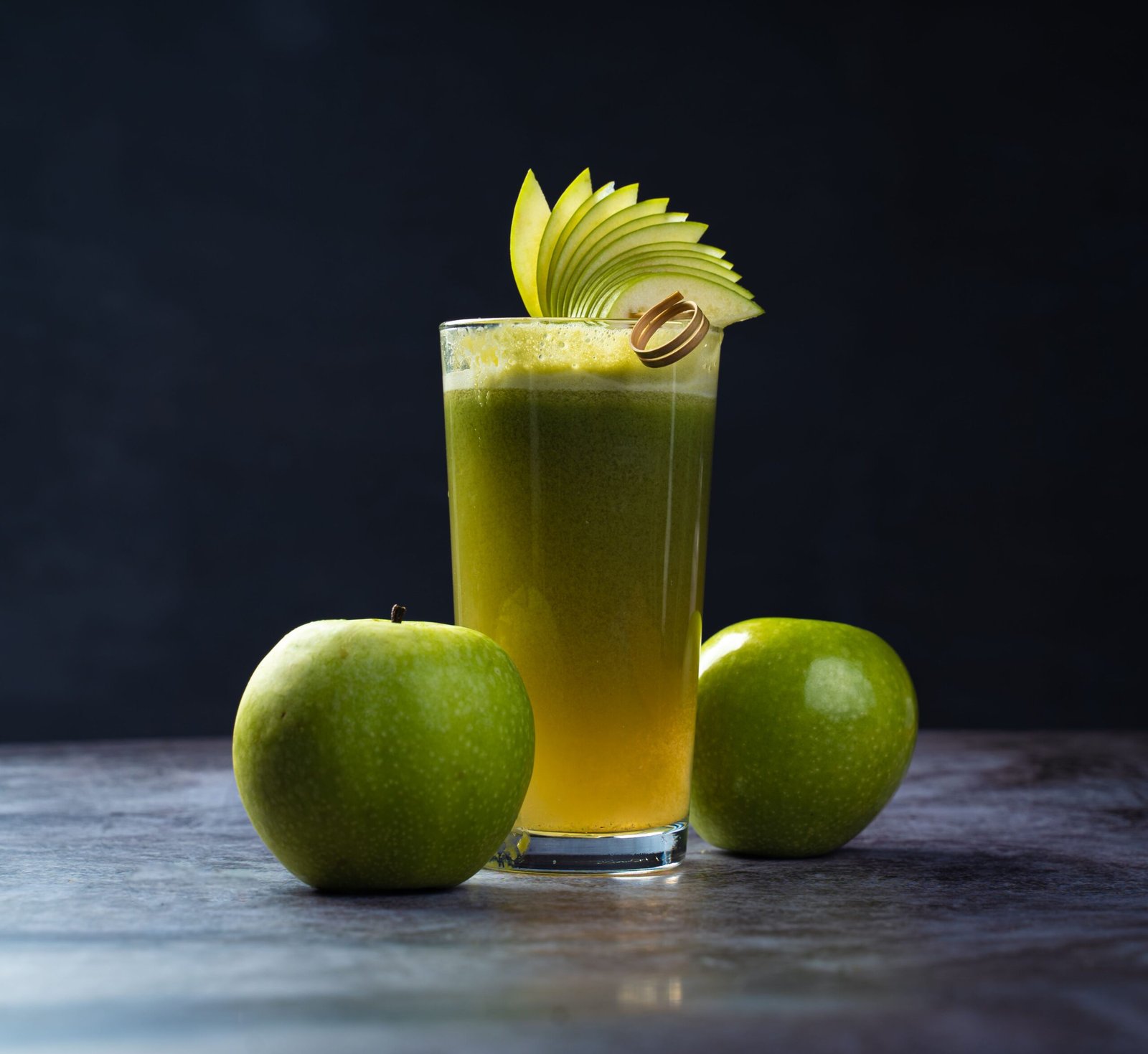
Whole apple is generally the better everyday choice if you want more fibre and a more filling snack. A medium apple weighing 182 g provides approximately 113 kcal and 4.7 g of fibre, while a 248 g cup of unsweetened apple juice provides around 114 kcal but only 0.5 g of fibre. The juice also contains about 23.9 g of total sugars, compared with 17.3 g of free sugars reported for the apple in IFCT 2017. These sugar figures come from different food-composition sources and categories, so they are not directly equivalent. ICMR–NIN recommends choosing whole fresh fruit rather than juice as part of a balanced diet because whole fruit retains its fibre.
Whole apple vs unsweetened apple juice
A medium apple contains approximately 17.3 g of free sugars based on IFCT 2017, while a 248 g cup of unsweetened apple juice contains about 23.9 g of total sugars according to USDA FoodData Central. Because these figures represent different sugar categories from different databases, they should not be treated as a direct comparison. The clearer nutritional difference is fibre: the whole apple provides about 4.7 g, compared with roughly 0.5 g in the juice.
Research also suggests that the form in which you consume apple can affect fullness. In a 2009 study published in Appetite, 58 adults consumed apple segments, applesauce, apple juice with added fibre, or apple juice without added fibre before lunch. The whole-apple preload reduced total energy intake from the preload plus lunch by 15% compared with no preload, and participants reported greater fullness after eating apple segments. Adding fibre to juice did not produce the same effect. This was a single-meal study, however, and does not prove that choosing whole apples leads to long-term weight loss. Read the study on PubMed.
The practical takeaway: Choose whole apples more often when fibre and fullness matter. Unsweetened apple juice can still fit into your diet, but it contains very little fibre and is easy to drink quickly. Packaged fruit drinks and nectars may contain added sugar, so check the ingredient list and nutrition label rather than assuming all apple-based drinks are nutritionally equivalent.
How to include apples in an Indian diet
ICMR–NIN’s My Plate for the Day recommends 100 g of fresh fruit daily for a reference 2,000 kcal diet. A small apple weighing around 149 g exceeds that amount, although actual edible weight varies with the core and the apple's size. Apple is a convenient option, but rotate it with other seasonal fruits to get a broader range of nutrients, particularly vitamin C.
- As a snack: Eat a washed apple with its skin as a mid-morning or evening snack.
- With a protein-rich food: Pair apple slices with roasted chana or a measured portion of peanut butter for a more filling snack. See 10 Pocket-Friendly High Protein Foods in India and Peanut Butter Benefits.
- Grated into curd: Mix grated apple into plain curd with a little roasted cumin for a sweet-and-tangy accompaniment.
- As apple chaat: Combine apple cubes with lemon juice, chaat masala and a small pinch of black salt.
- At breakfast: Add chopped apple to oats or dalia, or stew it with cinnamon when you want a naturally sweet addition.
- In a tiffin: Pack apple slices with a squeeze of lemon juice to help slow browning.
For a broader view of how fruit fits into your daily meals, read Vitaroxi's Balanced Diet for Indians guide and use the Nutrient Gap Calculator to identify nutrients your usual diet may be lacking.
Frequently asked questions
How many calories are in one apple?
A medium apple weighing 182 g provides approximately 113 kcal using the IFCT 2017 value of 62 kcal per 100 g. A small apple (149 g) provides about 92 kcal, while a large apple (223 g) provides around 138 kcal. Actual calories depend on the apple's edible weight and composition.
How much fibre is in an apple?
A big apple contains 2.59 g of fibre per 100 g, so a medium apple weighing 182 g provides approximately 4.7 g of fibre. IFCT 2017 reports 1.16 g of soluble fibre and 1.43 g of insoluble fibre per 100 g, meaning roughly 45% of its total fibre is soluble.
Is apple juice as healthy as a whole apple?
Whole apple is generally the better choice when fibre and fullness matter. A medium apple provides approximately 4.7 g of fibre, while a 248 g cup of unsweetened apple juice contains only about 0.5 g. The juice can provide similar calories but is easier to consume quickly and contains much less fibre.
How much protein is in an apple?
Apple provides only 0.29 g of protein per 100 g. A medium apple contains approximately 0.5 g of protein, so it contributes very little to your daily protein needs. Pair it with roasted chana, peanuts or curd for a more substantial snack.
Does apple contain vitamin C?
Yes, but it is not particularly rich in vitamin C. IFCT 2017 lists 3.57 mg per 100 g of big apple. A medium apple provides around 6.5 mg, compared with 42.72 mg per 100 g in orange pulp. Guava is another much richer source of vitamin C.
Is it better to eat an apple with or without the skin?
Eating an apple with its skin generally provides more fibre. USDA FoodData Central lists 2.4 g of fibre per 100 g of raw apple with skin, compared with 1.3 g without skin. Wash the apple thoroughly under running water before eating it.
Can people with diabetes eat apples?
Many people with diabetes can include whole apples in their diet, provided the portion fits their carbohydrate plan. A medium apple provides approximately 23.9 g of available carbohydrate based on IFCT 2017. Although apple has a reported glycemic index of around 36, individual blood-glucose responses can vary. A doctor or dietitian can help determine an appropriate portion.
Sources and references
ICMR–National Institute of Nutrition (NIN). Indian Food Composition Tables 2017 (IFCT 2017). Used for apple nutrition values (food codes E001–E004) and comparisons with banana, orange, guava, pear and custard apple. Read IFCT 2017.
USDA FoodData Central. Used for comparisons of raw apples with and without skin, and unsweetened apple juice. Search USDA FoodData Central.
Atkinson FS, Brand-Miller JC, Foster-Powell K, Buyken AE, Goletzke J. International tables of glycemic index and glycemic load values 2021: a systematic review. The American Journal of Clinical Nutrition. Read the publication on PubMed.
Muraki I, Imamura F, Manson JE, et al. Fruit consumption and risk of type 2 diabetes: results from three prospective longitudinal cohort studies. BMJ. 2013;347. Read the study and published correction.
Flood-Obbagy JE, Rolls BJ. The effect of fruit in different forms on energy intake and satiety at a meal. Appetite. 2009;52(2):416–422. Read the study on PubMed.
ICMR–NIN. Dietary Guidelines for Indians 2024. Used for guidance on fruit consumption and choosing whole fruit over juice. Read the guidelines.
ICMR–NIN. Nutrient Requirements for Indians: Recommended Dietary Allowances and Estimated Average Requirements. 2020. Used for the relevant adult vitamin C and dietary fibre recommendations.
This article is intended for educational purposes and is not a substitute for individualised medical advice.