How Much Protein Do You Need Per Day?
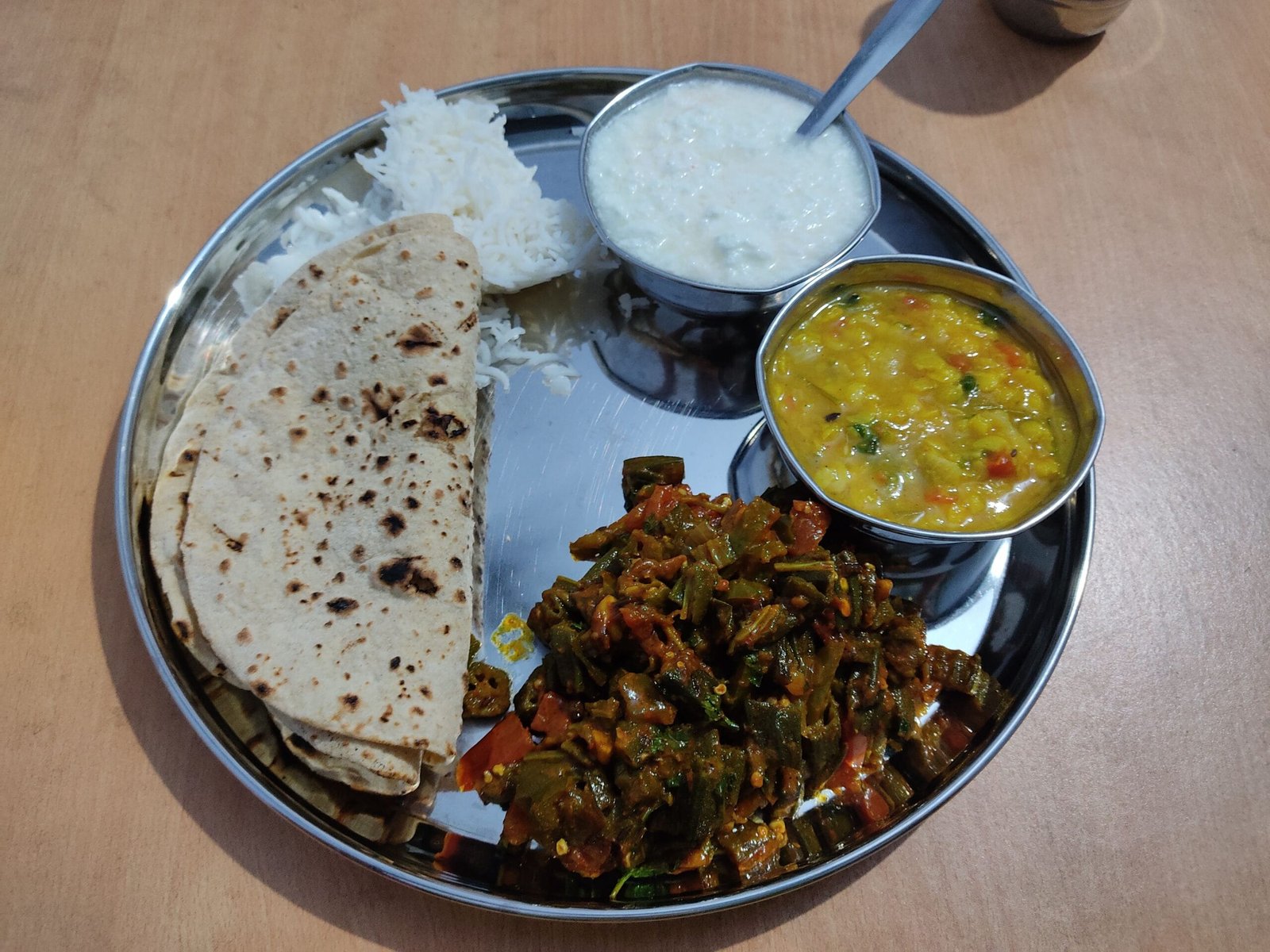
Most Indian meals contain some protein. Dal, roti, rice, vegetables, curd, milk, eggs and other common foods all contribute to your daily intake. So it is possible to meet your protein needs on a typical Indian diet. The harder question is whether you are actually getting enough, day after day.
A dal-chawal meal may look balanced, but how much protein does it really provide? What about idli-sambar, roti-sabzi, or a full day of eating on a vegetarian diet? Once you calculate the actual protein in these meals and compare it with what your body needs, the picture can be quite different from what you might expect.
Your protein requirement is not the same as everyone else’s. It depends mainly on your body weight, age, activity level and dietary pattern. This guide breaks down how much protein you need per day, how much common Indian foods and meals actually provide, and practical ways to increase your intake without having to completely change the way you eat.
Affiliate Disclosure: Some links on this page may be affiliate links. If you purchase through these links, Vitaroxi may earn a small commission at no additional cost to you. We only recommend products that we believe may be useful to our readers; an affiliate relationship does not influence our nutritional information or recommendations.
Table of Contents
How Much Protein Do You Need Per Day?
For a healthy Indian adult, the ICMR-NIN Recommended Dietary Allowance (RDA) for protein is 0.83 g per kg of body weight per day. This is the 2020 recommendation and is based on the protein requirements of healthy adults consuming good-quality protein. It is also consistent with the FAO/WHO/UNU framework used to establish protein requirements.
That works out to approximately:
- 60 kg: 50 g protein/day
- 70 kg: 58 g protein/day
- 75 kg: 62 g protein/day
- 80 kg: 66 g protein/day
Your basic calculation is:
Daily protein requirement (g) = Body weight (kg) × 0.83
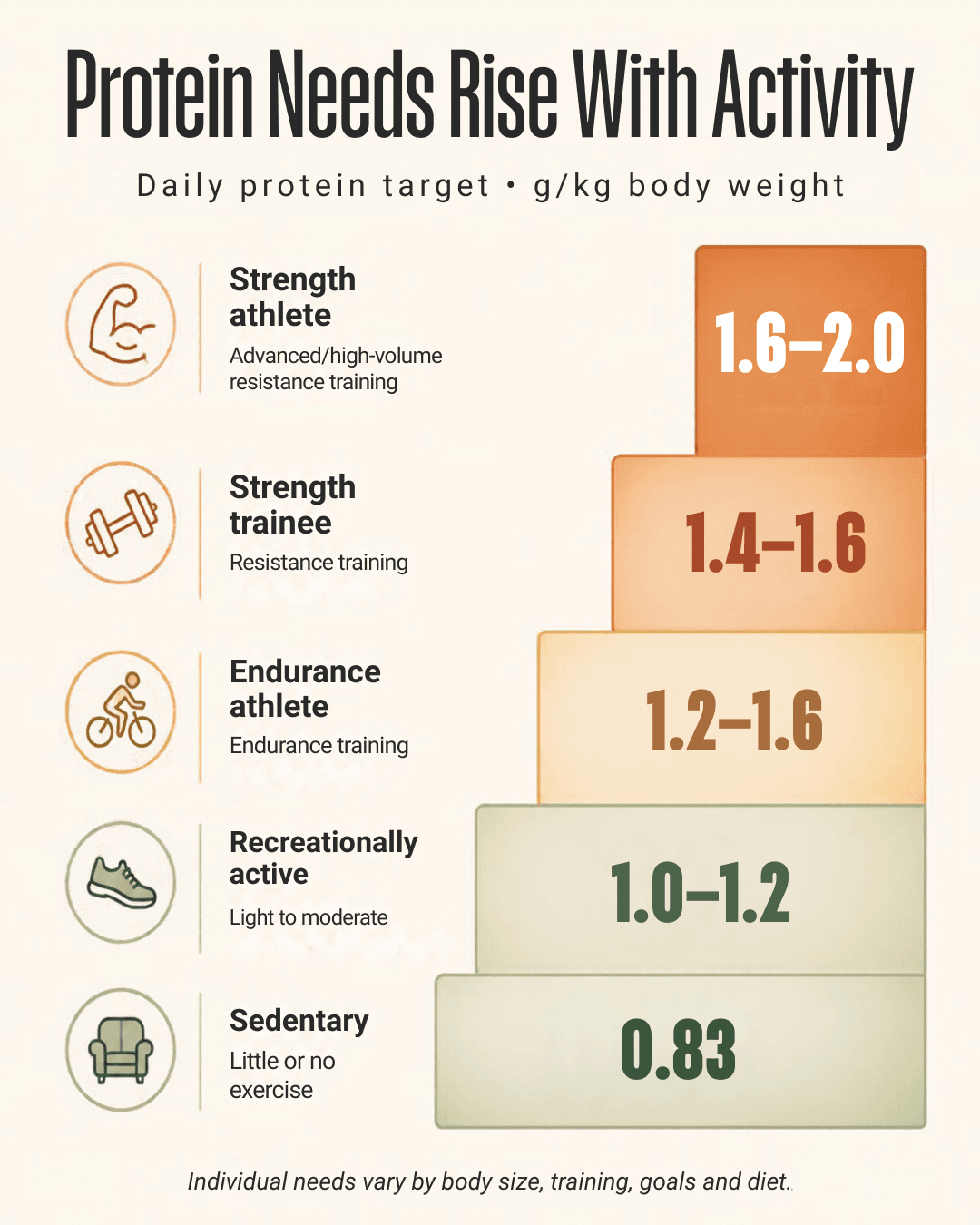
This is a useful starting point for a healthy adult. But it is not the right target for everyone. Your protein needs can be higher if you exercise regularly, are trying to build or preserve muscle, are older, or are going through a life stage such as pregnancy or lactation.
There is also an important point for Indian diets: ICMR-NIN notes that people consuming a predominantly cereal-based diet with lower-quality protein may require 1.0 g/kg/day, while good protein quality can be supported by combining cereals, legumes and milk in an appropriate dietary pattern.
Protein Requirements by Group
| Group | Practical Protein Target | Example: 60 kg | Example: 75 kg |
|---|---|---|---|
| Healthy adult | 0.83 g/kg/day | ~50 g | ~62 g |
| Recreationally active / regular exercise | 1.0–1.2 g/kg/day | ~60–72 g | ~75–90 g |
| Endurance training | 1.2–1.6 g/kg/day | ~72–96 g | ~90–120 g |
| Strength / resistance training | 1.4–2.0 g/kg/day | ~84–120 g | ~105–150 g |
| Older adults | 1.0–1.2 g/kg/day | ~60–72 g | ~75–90 g |
The exercise ranges above are sports-nutrition targets, not ICMR-NIN RDAs. Protein needs among exercising people vary with training volume, intensity, total energy intake and whether the goal is muscle gain, maintenance or recovery. Sports-nutrition guidance generally places exercising adults around 1.4–2.0 g/kg/day, with higher intakes more relevant to strength and resistance training.
Higher intakes (>2.0 g/kg/day) may be appropriate in specific situations, such as aggressive calorie restriction or advanced resistance training, and are best individualized with a qualified dietitian or sports nutrition professional.
For older adults, 1.0–1.2 g/kg/day is commonly suggested by expert groups and research to help support muscle maintenance, although this should not be presented as the ICMR-NIN RDA. People with kidney disease or other medical conditions may need individualized advice from a doctor or dietitian.
Pregnancy and Lactation
Protein requirements also increase during pregnancy and lactation. According to the ICMR-NIN 2020 recommendations, the additional protein requirement is approximately:
| Life Stage | Additional Protein Requirement |
|---|---|
| Pregnancy - 2nd trimester | +9.5 g/day |
| Pregnancy - 3rd trimester | +22 g/day |
| Lactation - 0–6 months | +16.9 g/day |
| Lactation - 6–12 months | +13.2 g/day |
These amounts are additional requirements, not total daily protein targets.
A Note on ICMR-NIN Figures vs. Individual Needs
The 0.83 g/kg/day RDA is a population reference value for healthy adults. ICMR-NIN’s 2020 report uses reference body weights of 65 kg for adult men and 55 kg for adult women, which is why its table gives different absolute daily protein values for men and women.
For an individual, calculating from your actual body weight is usually more useful. For example, a 70 kg adult would have a basic RDA-based target of about 58 g of protein per day.
However, the RDA should not automatically be treated as the ideal target for someone who trains regularly. If you lift weights, run frequently, play sport, or are actively trying to build or preserve muscle, a higher protein intake may be appropriate.
Use the Vitaroxi Protein Calculator to estimate your personalised daily protein target based on your body weight, activity level, and dietary preference, rather than relying on population averages. Then use the Nutrient Gap Calculator to check whether protein is your main shortfall or whether you may also be falling short on other nutrients, which can happen with restrictive diets.
Protein Quality: Why the Type of Protein Matters
Getting enough protein is important, but the quality of that protein matters too. Two foods can provide the same amount of protein while differing in their essential amino acid profile and digestibility.
One way to understand this is through protein quality scores.
PDCAAS and DIAAS: What Do the Numbers Mean?
PDCAAS (Protein Digestibility-Corrected Amino Acid Score) is one of the most widely used methods for comparing protein quality. It considers both the essential amino acid profile and protein digestibility. The score is capped at 1.0.
A score close to 1.0 generally indicates that the protein meets the reference amino acid requirements used by the method, while lower scores indicate that one or more essential amino acids are relatively limited.
DIAAS (Digestible Indispensable Amino Acid Score) is a newer method recommended by FAO. Instead of using overall protein digestibility, it evaluates the digestibility of individual indispensable amino acids. Unlike PDCAAS, DIAAS is not capped at 1.0. (FAO, 2013)
For a general reader, PDCAAS is easier to understand. The approximate values below are useful for comparison, but they should not be treated as fixed numbers for every variety, product or preparation method.
| Food | Approx. PDCAAS | General Quality |
|---|---|---|
| Egg | ~1.0 | Very high |
| Milk / dairy | ~1.0 | Very high |
| Whey protein | ~1.0 | Very high |
| Soy protein | ~1.0 | Very high |
| Chicken / fish | ~0.9-1.0 | High |
| Dal / pulses | ~0.5-0.7 | Moderate |
| Peanuts | ~0.5 | Moderate |
| Rice | ~0.4-0.5 | Lower |
| Wheat | ~0.4-0.5 | Lower |
Approximate PDCAAS values are shown for comparison only. Values can differ depending on the specific food, variety, processing method and reference amino acid pattern. Sources include FAO protein-quality reports and published protein-quality data.
Does This Mean Plant Protein Is Poor Quality?
No.
A lower score for an individual plant protein does not mean that the food is nutritionally poor or that your body cannot use its protein. It means that, compared with the reference pattern, one or more essential amino acids are present in relatively smaller amounts.
This becomes important when a diet relies heavily on one type of plant food. Eating a variety of protein sources helps provide a better overall amino acid balance.
Why Dal and Rice Work Well Together
This is where the familiar dal + rice combination makes sense.
Cereals such as rice and wheat are relatively low in lysine, while pulses such as dal are relatively lower in methionine and other sulfur-containing amino acids. Combining these foods helps balance their amino acid profiles.
So, for example:
Rice → relatively lower in lysine
Dal → relatively lower in methionine
Together → a more balanced amino acid pattern
This is called protein complementarity.
However, there is an important distinction: improving protein quality does not automatically mean the meal contains a large amount of protein. A bowl of dal with rice can provide a useful combination of amino acids, but the total protein still depends on how much dal and rice you actually eat.
That is why both factors matter:
Protein adequacy = enough total protein + a good overall amino acid balance
You do not need to calculate PDCAAS or DIAAS for every meal. For everyday eating, the practical approach is to include a variety of protein sources such as dal, beans, soy foods, dairy, eggs, fish, meat, nuts and seeds, according to your dietary preference.
Why Some Indian Diets Fall Short of Protein in Practice
This is worth being direct about: it is possible to meet your protein requirements on an Indian diet, but the actual amount you get depends heavily on what you eat, how much you eat, and how your meals are structured.
A diet can look balanced on the plate and still provide less protein than you need, particularly when cereals make up most of the meal and protein-rich foods are served in smaller portions.
The Volume Problem in a Standard Dal-Chawal Meal
Take a typical home-style meal:
| Food | Standard Serving | Protein (IFCT 2017) |
|---|---|---|
| Cooked rice | 200-250 g (1 medium bowl) | ~5-6 g |
| Cooked toor/moong dal | 80-100 g (1 small katori) | ~5.6-7.6 g |
| Sabzi / vegetable | 100 g | ~1-3 g |
| Total | ~12-17 g |
Food data: IFCT 2017, NIN. Values are approximate and can vary with the specific food, recipe, water content and serving size.
Two meals with a similar composition would provide roughly 24–34 g of protein. A 60 kg sedentary adult has an ICMR-NIN RDA of about 50 g/day, based on 0.83 g/kg/day. For someone who is physically active and has a higher protein target, the gap can be considerably larger.
This does not mean that two dal-chawal meals automatically make a person’s diet protein-deficient. Breakfast, snacks, milk, curd and other foods throughout the day also contribute protein. The example simply shows how a meal that looks nutritionally balanced can still be relatively modest in protein.
The problem is not the foods themselves. Rice, dal and vegetables can all be part of a healthy diet. The issue is the proportion and total amount of protein-rich foods. If the plate contains substantially more rice than dal, increasing the dal or adding another protein source can make a noticeable difference to the day’s total.
Other Contributing Factors
Non-vegetarian foods may not be part of the diet. Religious, ethical, cultural or personal preferences can lead people to avoid eggs, chicken, fish and meat. These foods are concentrated sources of high-quality protein, so excluding them means other protein sources need to make up the difference. These diets can still provide adequate protein, but they require more attention to food variety and portions
Pulses may be eaten in relatively small portions. Dal is an important protein source in Indian diets, but a small bowl does not contain the same amount of protein as a large serving. Pulses also have a different essential amino acid profile from cereals. ICMR-NIN notes that cereals tend to be lower in lysine, while pulses are relatively lower in methionine and cysteine. Combining the two improves the overall amino acid pattern.
Protein-rich vegetarian foods may not always be practical for every household. Milk and curd are common options, while paneer, tofu, soy products, nuts and seeds can provide additional protein. However, price, availability, food preferences and cooking habits can influence how frequently these foods are included.
People often do not know their actual protein intake. Someone may eat mostly home-cooked food and consider their diet healthy without ever calculating how much protein their meals provide. Once you know your own requirement and compare it with the protein in your regular meals, it becomes much easier to identify where you may need more.
The Practical Takeaway
You do not need to replace traditional Indian food to increase your protein intake.
Instead, look at the overall pattern of your day:
- Keep rice, roti and other cereals if you enjoy them.
- Include adequate portions of dal, beans or other pulses.
- Add milk, curd or other dairy if they fit your diet.
- Consider soy foods such as tofu or soy chunks.
- Include eggs, fish or meat if you eat them.
- Combine cereals and pulses regularly to improve the overall amino acid profile.
ICMR-NIN specifically notes that an appropriate combination of cereals and pulses can meet the requirements for essential amino acids. Its 2024 guidelines give a 3:1 cereal-to-pulse ratio by raw food weight as one example of a combination that can meet essential amino acid requirements.
The goal is not to label Indian food as “low protein.” The better question is:
Does the way you actually eat provide enough protein for your body weight, activity level and goals?
Protein Content of Common Indian Foods
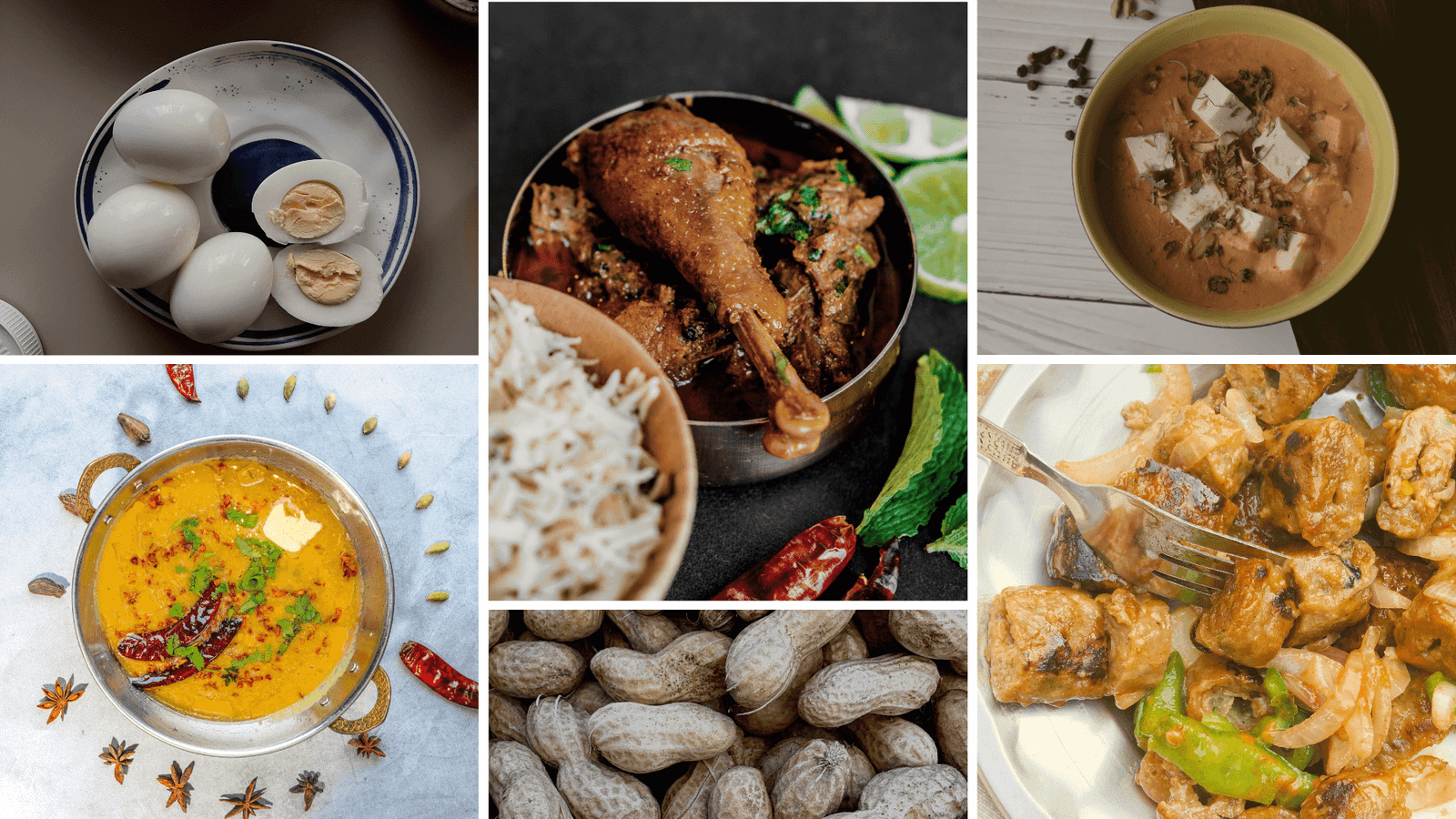
Protein values are primarily based on the Indian Food Composition Tables (IFCT) 2017, NIN/ICMR. Where IFCT does not provide a suitable food or preparation form, values may be supplemented with USDA FoodData Central or other authoritative food-composition databases. Protein-quality information such as PDCAAS/DIAAS is sourced separately from scientific literature.
Values are generally expressed per 100 g edible portion. Cooking changes protein concentration by weight: grains and pulses generally become less protein-dense per 100 g after absorbing water, while meats may become more protein-dense when cooking causes water loss.
Animal-Based
| Food | Protein_per_100g | Common_Serving | Approx_Protein |
|---|---|---|---|
| Whole egg (raw) | 13.3 g | 1 large egg (~50 g) | 6.6 g |
| Chicken breast (skinless) | 21.8 g | 100 g | 21.8 g |
| Rohu fish | 19.7 g | Medium fillet (~120 g) | 23.7 g |
| Pomfret (black) | 18.9 g | 1 medium piece (~100 g) | 18.9 g |
| Pomfret (white) | 19.0 g | 1 medium piece (~100 g) | 19.0 g |
| Catla fish | 17.9 g | Medium fillet (~120 g) | 21.5 g |
Dairy
| Food | Protein_per_100g | Serving_g_or_ml | Approx_Protein |
|---|---|---|---|
| Paneer | 18.5 | 50 | 9.3 |
| Curd / dahi | 3.0 | 150 | 4.5 |
| Full-fat cow milk | 3.3 | 250 | 8.0 |
| Skimmed milk powder | 36.0 | 30 | 11.0 |
Milk serving calculations are approximate because a millilitre-to-gram conversion depends on milk density and product composition.
Pulses — Cooked
1 katori ≈ 100 g cooked
| Dal_or_Legume | Protein_per_100g |
|---|---|
| Masoor dal | 9.0 |
| Rajma / kidney beans | 8.7 |
| Moong dal | 7.6 |
| Kala chana / black chickpea | 7.2 |
| Toor dal | 7.0 |
These are cooked-form estimates; IFCT 2017 contains corresponding pulses primarily in their listed raw/dry forms rather than providing a directly comparable cooked value for every item. The IFCT food list includes lentil dal, green gram, horse gram, rajmah, red gram and soybean entries.
Cereals and Millets
| Food | Protein_per_100g_raw | Serving_g | Approx_Protein |
|---|---|---|---|
| Rice (raw; milled) | 7.9 | 60 | 4.8 |
| Wheat atta | 10.6 | 30 | 3.2 |
| Bajra | 11.0 | 35 | 3.8 |
| Jowar | 10.0 | 35 | 3.5 |
| Amaranth / rajgira | 13.8 | 50 | 6.9 |
| Quinoa | 13.1 | 50 | 6.6 |
Millets such as bajra and jowar generally provide more protein per 100 g than raw milled rice. Amaranth and quinoa are also relatively protein-dense cereal/pseudocereal options. Protein quantity, however, should not be confused with protein quality; amino-acid composition and digestibility are separate considerations.
High-Protein Plant Sources
| Food | Protein_per_100g_raw_or_dry | Notes |
|---|---|---|
| Soybean (white) | 37.8 | Very protein-dense legume |
| Horsegram / kulthi | 21.0 | Traditional Indian pulse |
| Peanuts / groundnuts | 25.0 | Affordable and energy-dense |
| Sesame / til | 18.0 | Used in chutneys, chikki and cooking |
| Flaxseeds | 18.0 | Provides protein plus ALA omega-3 |
What About Protein Quality?
Protein quantity is only part of the picture. Protein quality depends on the essential amino-acid profile and digestibility of the protein. FAO has recommended DIAAS as an improved approach to assessing protein quality, while PDCAAS remains widely used and has important methodological limitations.
Soy protein is generally considered a high-quality plant protein. Published research has reported a PDCAAS around 1.0 for some soy protein ingredients, although the exact score can vary with the soy product and processing method.
For a fuller comparison of serving sizes, affordability and everyday Indian food choices, see Pocket-Friendly High Protein Foods in India
How to Hit Your Daily Protein Target on an Indian Diet
Step 1: Know Your Actual Number
Use the Vitaroxi Protein Calculator to estimate your daily protein target based on your body weight, activity level, and goal.
Then track what you normally eat for a few days. This gives you a realistic picture of whether your usual meals are actually providing enough protein.
Step 2: Rebalance the Dal-to-Rice Ratio
You don’t necessarily need to change what you eat — change the proportions.
For example, increasing cooked dal from one 100 g katori to two can add roughly 7–9 g of protein, depending on the type of dal and how much water it absorbs during cooking.
You don’t have to eliminate rice. Keep it as part of the meal while increasing the proportion of dal or another protein-rich food.
Step 3: Add One or Two Protein-Dense Foods Per Day
You don’t need to completely overhaul your cooking. Add one or two protein-rich foods that fit naturally into your existing diet.
- 2 eggs: About 13 g protein. Eggs are a convenient, high-quality protein source and fit easily into breakfast, lunch, or dinner.
- 100 g chicken breast: About 22 g protein based on the raw food composition data. Chicken is a practical option when you want to increase protein without adding a large amount of food.
- 100 g Rohu or Catla: Roughly 18–20 g protein per 100 g in the raw food composition data. Actual protein per 100 g after cooking can vary depending on water loss and cooking method.
- Other lean meat or fish: Chicken, fish, mutton, and other meats can substantially increase protein intake. Choose the portion and preparation according to your calorie needs and dietary preferences.
- Soy chunks: A 50 g dry serving can provide around 25 g protein when the product contains approximately 50–52 g protein per 100 g. Check the nutrition label because values vary between brands.
- A glass of milk + a katori of curd: Together, roughly 12–13 g protein, depending on the type and serving size. An easy option for lacto-vegetarians.
- 30 g peanuts: Roughly 7–8 g protein. Peanuts are affordable and convenient, although they are also relatively high in calories because of their fat content.
- Rotate your dals: Masoor, moong, toor, chana, rajma, and other legumes can all contribute meaningful amounts of protein. Varying your choices is more useful than focusing on a single “best” dal.
Step 4: Vegetarians and Vegans Need to Plan More Deliberately
A vegetarian or vegan diet can provide enough protein, but protein-rich foods need to be intentional parts of the diet.
For a vegan Indian diet, build meals around dal, beans, chickpeas, soy foods, peanuts, and other legumes. Soy foods such as tofu and soy chunks can make it easier to increase protein without dramatically increasing meal volume.
For lacto-vegetarians, milk, curd, and paneer provide additional protein options.
You don’t need to combine specific plant proteins at every meal. A varied diet across the day can provide the essential amino acids your body needs. The more common practical challenge is simply getting enough total protein, especially when meals are dominated by rice, roti, vegetables, and relatively small portions of dal.
Step 5: If You're Active, Consider a Supplement for Convenience
If you train regularly, especially for resistance training or sport, your protein needs may be higher than those of someone who is mostly sedentary. A target around 1.4–2.0 g/kg/day is commonly recommended for exercising individuals, although the right amount depends on your training, body size, goals, and overall diet.
You can reach this target through food alone, but doing so may sometimes be inconvenient—particularly if you have a large protein target, follow a vegetarian or vegan diet, or simply don’t want to eat larger portions of protein-rich foods every day.
That’s where supplements can help.
Whey protein:
A typical 30 g serving provides roughly 20–25 g of protein, although the exact amount varies by product. Whey is a convenient, high-quality protein source and is particularly rich in essential amino acids, including leucine. Research supports its usefulness alongside resistance training, although it is not essential if your diet already provides enough protein. [Whey protein powder]
Soy protein isolate:
A useful option for people following a vegetarian or vegan diet. Soy provides all essential amino acids, and research suggests soy protein can support muscle and strength adaptations with resistance training. Some studies show similar longer-term gains to whey, although whey generally provides more leucine per gram. [Soy protein isolate]
Creatine monohydrate:
Creatine isn’t a protein supplement, but it can be useful if you’re doing regular resistance or high-intensity training. A common maintenance dose is 3–5 g/day. Vegetarians may have lower muscle creatine stores because dietary creatine is found mainly in animal foods, and research suggests they can respond well to supplementation. [Creatine monohydrate]
One important point
Supplements should fill a gap, not become the foundation of your diet. If you already meet your protein target through dal, beans, soy, dairy, eggs, fish, meat and other foods, you don’t need protein powder simply because you work out.
And if you’re trying to lose weight, remember that protein supplements still contribute calories. A scoop of whey or a serving of soy protein should generally replace or fit into your existing calorie budget, rather than simply being added on top of everything you already eat.
Don't Just Add Protein—Adjust Your Portions
You don’t have to give up the foods you grew up eating just to eat more protein. Rice, roti, dal, sabzi, and other familiar foods can all stay on your plate. The key is to adjust portions rather than simply adding more food.
For example, you could increase the dal while reducing some rice, or add eggs, chicken, or fish while slightly reducing another part of the meal if you’re trying to control calories.
Remember, protein-rich foods still contain calories. Adding large portions of paneer, peanuts, milk, meat, soy, or protein powder on top of everything you already eat can push your calorie intake into a surplus. If your goal is weight loss, pay attention to both protein and total calories.
The goal isn’t simply to eat more food. It’s to get enough protein within the amount of food and calories that fit your goal.
Frequently Asked Questions
How much protein does a 60 kg Indian adult need per day?
For a generally healthy sedentary adult, a commonly used reference intake is around 0.8–0.83 g of protein per kg of body weight per day, so a 60 kg adult would need roughly 48–50 g per day; people who exercise regularly may need more, with around 1.4–2.0 g/kg/day being a practical range for many active individuals depending on their training, goals, body composition, and overall diet.
Which Indian foods are high in protein?
Good high-protein choices in an Indian diet include soybeans (about 36–38 g/100 g), lentils and dals (about 21–24 g/100 g), horse gram (about 22 g/100 g), chicken breast (about 22 g/100 g), fish such as Rohu (about 20 g/100 g), and paneer (about 19 g/100 g). Eggs provide about 13 g/100 g. These values are based mainly on IFCT 2017 food-composition data and are expressed per 100 g edible portion. The actual amount you eat will depend on the serving size and whether the food is raw or cooked.
Is dal and rice enough for daily protein needs?
Dal and rice can absolutely be part of a protein-adequate diet, but portion size matters. If meals contain a small serving of dal and a large serving of rice, vegetables, or other relatively low-protein foods, total daily protein can remain low. The combination of cereals and pulses is nutritionally useful because their amino-acid profiles complement each other, but the main goal is to get enough total protein throughout the day.
Do vegetarians need more protein than non-vegetarians?
They may need slightly more protein to account for the generally lower digestibility and protein quality of many plant foods, but there is no single fixed percentage that applies to every vegetarian. Plant proteins can be lower in some essential amino acids and are often less digestible than animal proteins, so some expert reviews suggest that vegetarians may benefit from a modestly higher protein intake than the standard adult reference level. However, a well-planned vegetarian diet containing dal, beans, soy, dairy, nuts, seeds and other varied protein sources can provide adequate protein and essential amino acids. In practical terms, a vegetarian should focus less on calculating a specific “vegetarian penalty” and more on getting enough total protein and including protein-rich foods regularly throughout the day.
How much protein do Indian athletes need per day?
There is no single protein target for every athlete. For people who train regularly, around 1.4–2.0 g/kg/day is a commonly used range, with the appropriate amount depending on the sport, training volume, body composition, and goal. For example, a 75 kg person training for strength might aim for roughly 105–150 g of protein per day, although individual requirements can vary.
Is protein powder necessary for non-athletes?
No. Most sedentary and lightly active adults can meet their protein needs through ordinary foods when meals are planned appropriately. Protein powder is mainly a convenience option for people who find it difficult to reach their target through food alone, such as those with a relatively high protein target, limited cooking time, low appetite, or difficulty eating enough protein without adding too much meal volume. If you already meet your protein needs through foods such as dal, dairy, eggs, soy, fish, or meat, there is no requirement to add a protein shake.
Sources: This article is informed by IFCT 2017 (ICMR–NIN), ICMR–NIN Dietary Guidelines for Indians (2024), WHO/FAO/UNU guidance, ISSN position stands, ACSM recommendations, and relevant peer-reviewed research, systematic reviews, and scientific literature on protein intake, protein quality, exercise, and sports nutrition. Protein values and recommendations may vary depending on the food, preparation method, individual needs, training level, and research context.