Dragon Fruit Benefits: Nutrition Facts & What Research Shows
Dragon fruit is a low-calorie, modest-fibre fruit: USDA lists 68 kcal and 1.8 g of fibre per 100 g. The strongest human evidence points to a possible gut-health effect from dragon-fruit oligosaccharides, not to a reliable blood-sugar or iron benefit. This post looks at what the USDA figures and published research actually support, and where popular claims run ahead of the science.
How much nutrition is in dragon fruit?
Raw dragon fruit gives 68 kcal per 100 g, mostly from carbohydrate, with 1.8 g of fibre and almost no fat or protein. The figures below come from the USDA FoodData Central record "Dragon fruit" (Survey FNDDS, FDC ID 2709234, published 10/31/2024). FNDDS is USDA's dietary-survey database, so these are generic survey-food values, not a laboratory analysis of one particular variety.
Vitamin C is the standout, at 19.8 mg per 100 g, or about 22% of the US adult Daily Value of 90 mg. For other fruits side by side, use the Vitaroxi food nutrition database.
Does dragon fruit lower blood sugar?
Not reliably. A 2017 systematic review of four randomized trials (36 people with prediabetes, 109 with type 2 diabetes) found a significant reduction in fasting blood glucose in the prediabetes group, but no significant effect on fasting or post-meal glucose in people with type 2 diabetes. The prediabetes result is promising, but the trials were few and small (PLoS One, 2017).
Smaller studies since then report drops. One trial in elderly people with type 2 diabetes gave 250 ml of red dragon fruit juice daily for seven days and measured lower random blood glucose (Sitanggang et al., 2025). Another compared red dragon fruit with soymilk in 54 people over seven days, using a quasi-experimental design rather than a randomized one (Jurnal Keperawatan, 2023). Their short duration and study designs mean the results need to be interpreted cautiously.
Reality check: dragon fruit is not a diabetes treatment. Its 12 g of sugar per 100 g counts, and a glass of juice is easier to overdo than a measured portion of whole fruit. If you manage blood sugar, keep portions in mind and follow your doctor's advice.
Is dragon fruit good for gut health?
Dragon-fruit oligosaccharides show potential prebiotic effects, but evidence for the whole fruit is more limited. A randomized, double-blind, placebo-controlled trial in 107 healthy adults tested dragon-fruit oligosaccharides (DFO) for four weeks. At 8 g a day, Bifidobacterium rose by 8.41% and Faecalibacterium by 1.99%, while E. coli fell by 8.44%. At 4 g a day, immunoglobulin A rose by 10.95% (Food Research International, 2023).
The important detail is the form: the trial used a purified oligosaccharide powder dissolved in water, not fresh fruit. It suggests that this fibre fraction may have prebiotic effects, but it does not show that an ordinary serving of dragon fruit delivers the same dose or results. Earlier mouse research found that the same oligosaccharides increased faecal output and sped up gut transit (Biomedicine & Pharmacotherapy, 2019).
The fruit itself supplies 1.8 g of fibre per 100 g. That is a modest contribution to your daily fibre intake, alongside dal, vegetables, millets and other fruit.
What are betalains, and does flesh colour matter?
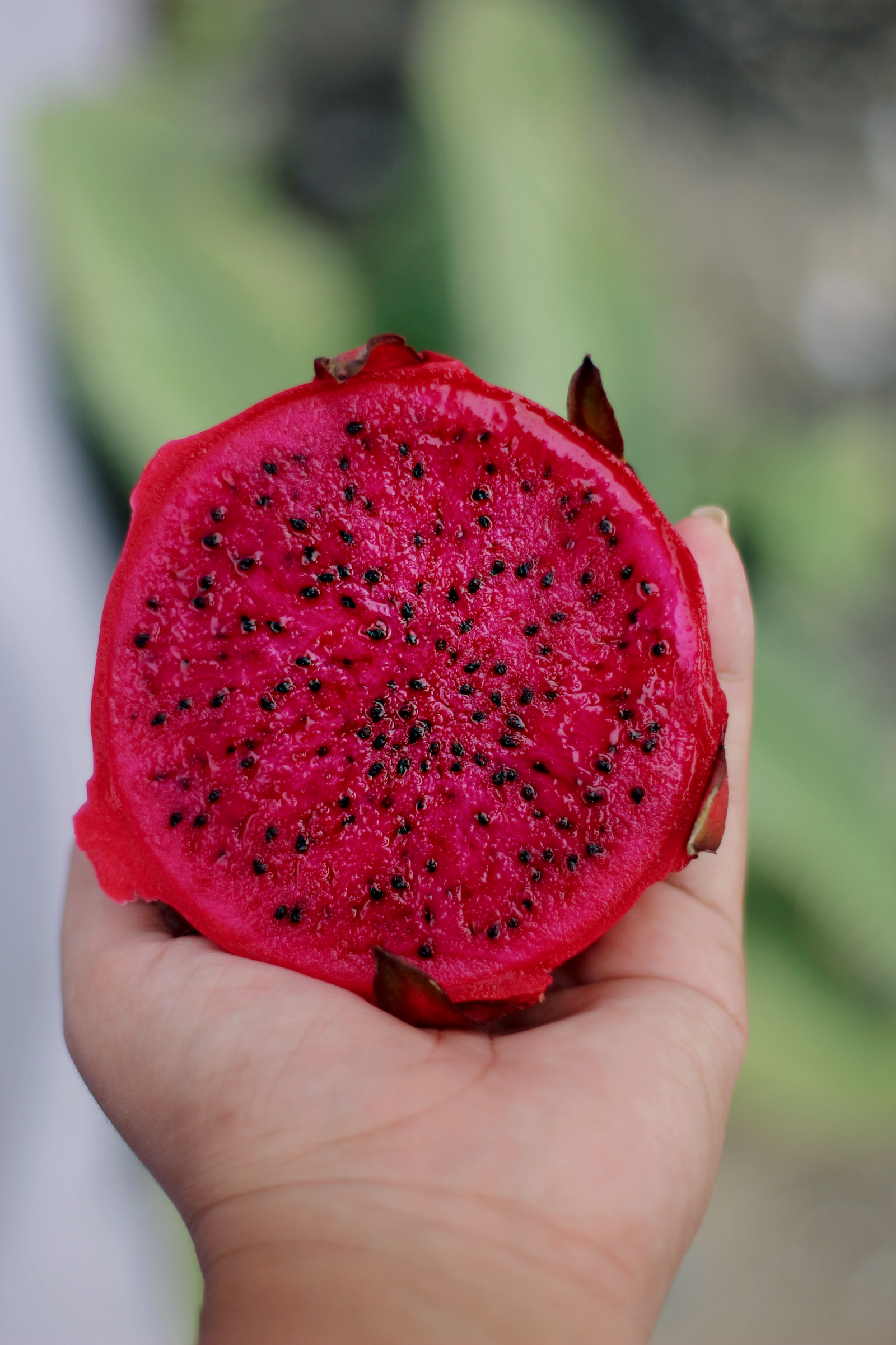
Betalains are the red-violet pigments found in red-fleshed dragon fruit, and they are also responsible for the colour of beetroot. Red-fleshed varieties generally contain more of these pigments than white-fleshed varieties. The commonly cultivated white-fleshed pitaya is often identified as Selenicereus undatus, while red-fleshed types include other species and varieties.
A 2024 narrative review discusses antioxidant, anti-inflammatory, antihypertensive, hypolipidemic and antidiabetic effects of betalains. It also notes that their stability depends on light, pH and temperature (Foods, 2024). Much of this evidence comes from laboratory and animal research, and the review covers betalains from several plants, not dragon fruit alone.
So, red flesh offers more of these pigments, but a clear health advantage over white flesh has not been established in human trials. The studies discussed above did not compare red and white dragon fruit directly.
Is dragon fruit rich in iron or protein?
No. USDA lists 0.12 mg of iron and 0.68 g of protein per 100 g. That is about 0.7% of the US adult Daily Value of 18 mg for iron, so neither is a reason to choose dragon fruit. Pages that call it "rich in iron" are not supported by this USDA record. For iron, look to foods that actually provide meaningful amounts, and check them in the Vitaroxi food nutrition database.
Reality check: dragon fruit is a pleasant, low-calorie fruit with vitamin C (19.8 mg per 100 g), potassium (206 mg) and a little fibre. It is not a protein food, an iron fix or a blood-sugar remedy. Eaten whole and in a sensible portion, it is a nice addition to your fruit rotation—not a replacement for seasonal fruits such as guava or papaya.
Sources
- USDA FoodData Central: Dragon fruit (Survey FNDDS), FDC ID 2709234, published 10/31/2024
- USDA FNDDS 2021–2023 database downloads
- Betalains: a narrative review, Foods 2024
- Dragon fruit juice and glycemic control in elderly patients with type 2 diabetes, 2025
- Dragon fruit versus soybean: impact on blood glucose, Jurnal Keperawatan 2023
The bottom line
Dragon fruit is worth enjoying for its refreshing taste, vitamin C and small contribution to your daily fibre intake. But it is not a miracle fruit: current human research does not show that eating it reliably controls blood sugar, fixes low iron or delivers the gut-health effects seen with concentrated dragon-fruit oligosaccharides. Enjoy it whole as part of a varied diet, and choose it because you like it; not because of exaggerated health claims.