
Fermented Foods & Probiotics — 40+ Nutrition Profiles
Every culture on earth figured out fermentation independently — Korea’s kimchi, Japan’s natto, Eastern Europe’s kefir, and India’s extraordinary range of dahi, idli, gundruk, and kinema. This is the most complete nutrition reference covering all of them in one place: 40+ foods, every major nutrient, probiotic strains, and bioactive compounds explained in plain language. Data sourced from USDA FoodData Central, ICMR-NIN IFCT 2017, Korean/Japanese food databases, FAO, and peer-reviewed research.
The Fermented Foods Nutrition Facts database at Vitaroxi provides a scientific deep-dive into the world’s most powerful probiotic sources. This comprehensive guide features 40+ detailed nutritional profiles across diverse categories, ranging from traditional Indian staples like Idli and Curd to global favorites like Kimchi and Kefir. Unlike basic charts, our Fermented Foods Nutrition Facts include a full breakdown of macros, micronutrients, and % RDA to help you understand the probiotics in Indian and global foods. By analyzing these Fermented Foods Nutrition Facts, you can unlock the specific gut health benefits of fermented food and use our traditional fermented food database to optimize your digestion and immunity with precision.
Introduction
Almost every food culture on earth discovered fermentation independently — and almost all of them figured out the same thing: fermented foods last longer, taste better, and do something good for the body that plain cooked food doesn’t quite replicate. Whether it’s the tangy kimchi served alongside every Korean meal, the sourdough bread that has become a staple across Europe and the Americas, the kefir that sustained nomadic communities across Central Asia, or the dahi and idli that have been part of South Asian kitchens for thousands of years — fermentation is genuinely universal.
What’s changed recently is that science has started to explain why. The gut microbiome — the trillions of microorganisms living in the digestive tract — turns out to be one of the most consequential systems in the human body, influencing digestion, immunity, inflammation, mood, and metabolic health. Fermented foods are the most direct, affordable, and natural way to support it. The WHO and FAO define probiotics as “live microorganisms that, when administered in adequate amounts, confer a health benefit on the host.” Most traditionally fermented foods deliver billions of these organisms per serving — not as a supplement, but as food.
🔍 What Makes This Database Different
Most fermented food guides cover the same short list: yogurt, kefir, kimchi, sauerkraut, natto, miso. This one goes considerably further — particularly for Indian foods, which are severely underrepresented in global nutrition databases despite India having over 250 documented fermented food preparations. Foods like gundruk, kinema, kanji, pakhala, and hawaijar are covered here in full detail alongside the internationally well-known ones. Every food is explained — no name is left without a plain-language description of what it is and where it comes from.
Why Fermentation Changes Everything
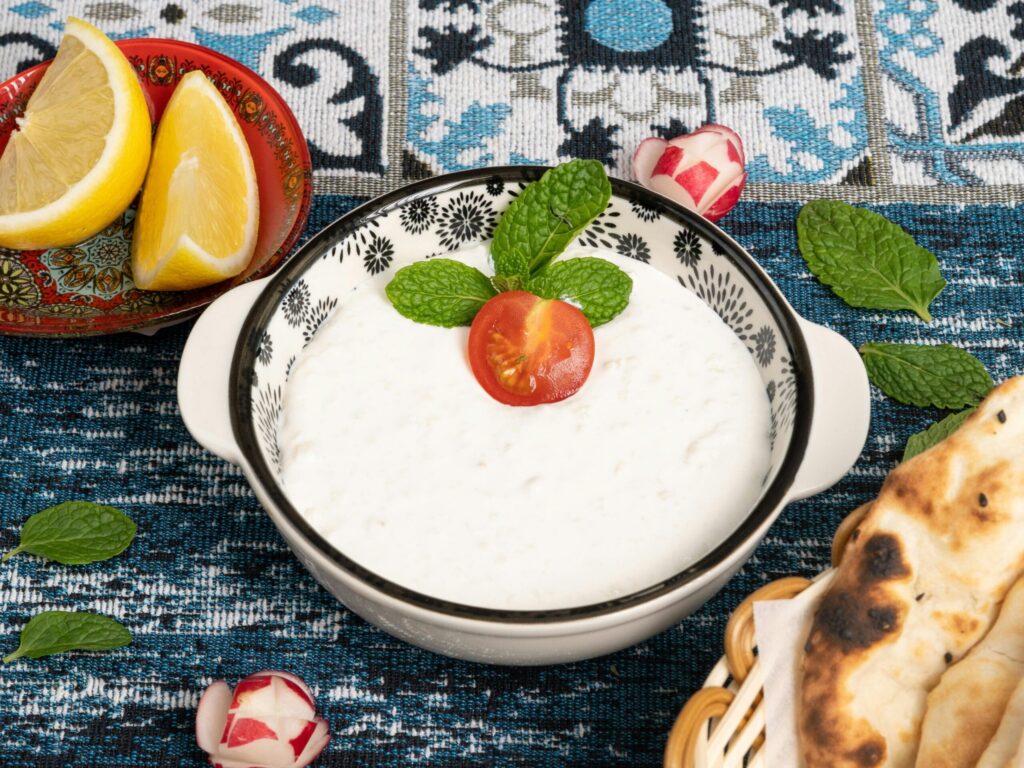
Here’s something that rarely gets said plainly in nutrition discussions: a bowl of plain cooked soybeans and a serving of natto are not the same food from a nutritional standpoint, even though they started from identical ingredients. Similarly, unfermented wheat flour and sourdough bread made from the same flour are nutritionally quite different. Fermentation isn’t just a way to make food taste sour or preserve it longer — it is a genuine nutritional transformation, driven by billions of microorganisms remodelling the food at a molecular level over hours or days.
⚗️ What Actually Happens During Fermentation
Bacteria, yeasts, or moulds consume the carbohydrates and proteins in the raw ingredient. In return, they produce lactic acid, acetic acid, B-vitamins, bioactive peptides, and dozens of other compounds. The food’s pH drops, its texture changes, its flavour deepens — and its nutritional profile is genuinely transformed, often dramatically. The same principle applies whether the starting material is cabbage (kimchi, sauerkraut), milk (yogurt, kefir, dahi), soybeans (natto, tempeh, kinema), or rice-lentil batter (idli, dosa).
Seven Things Fermentation Does to Your Food
- Breaks down antinutrients: Phytate — found in all grains and legumes — locks up iron, zinc, and calcium so the body can’t absorb them. Fermentation reduces phytate by 40–90% depending on duration, dramatically improving mineral availability. This is why fermented grain foods like idli, sourdough bread, and injera deliver meaningfully more absorbable minerals than their unfermented equivalents.
- Makes vitamins: Lactic acid bacteria are tiny vitamin factories. They build folate, riboflavin (B2), and niacin during fermentation. Sourdough bread ends up with nearly 10 times more folate than the flour it started from. Kinema and hawaijar from Northeast India produce 52–60 µg of folate per 100 g through the same mechanism.
- Improves protein: Fermentation breaks protein chains into smaller, more digestible peptides. Some of these peptides actively lower blood pressure (ACE-inhibitory peptides) — found in yogurt, kefir, dahi, and chaas worldwide. Others have mild anti-inflammatory effects.
- Reduces bloating triggers: FODMAPs are fermentable carbohydrates that cause gas and bloating in sensitive people. Sourdough fermentation breaks them down significantly — which is why many people who can’t tolerate regular bread do fine with authentic slow-fermented sourdough.
- Produces GABA: γ-Aminobutyric acid is a neuroactive compound that also has documented antihypertensive effects. Many LAB strains produce it during prolonged fermentation — especially in extended ferments like gundruk, aged kimchi, and long-fermented miso.
- Delivers live organisms: Eaten fresh and unheated, most traditionally fermented foods contain billions of live bacteria per gram. These organisms interact directly with the gut lining and immune cells in ways that no supplement can fully replicate at the ecosystem level.
- Creates entirely new molecules: Nattokinase exists only in natto (and its Indian relatives kinema and hawaijar). Kefiran EPS exists only in kefir grains. Glucosinolate metabolites in kimchi and sauerkraut come from bacterial transformation of brassica cabbage. These aren’t vitamins or minerals — they’re functional molecules that simply don’t exist in the raw ingredients.
8 Categories of Fermented Foods at a Glance
Not all fermented foods do the same thing. Yogurt and kombucha are both fermented, but they’re produced by completely different organisms and give entirely different nutritional benefits. Natto and sauerkraut are both fermented by bacteria, yet have almost nothing in common nutritionally. The category a food belongs to tells you a lot about what to expect. Here’s how the 40+ foods in this database are organised.
🫙
Indian Grain & Legume Ferments
Idli, dosa, dhokla, koozh, ambali, pakhala. Overnight LAB fermentation that breaks down phytate, improves mineral availability, and produces a live-culture food before cooking even begins.
🥛
Indian Dairy Ferments
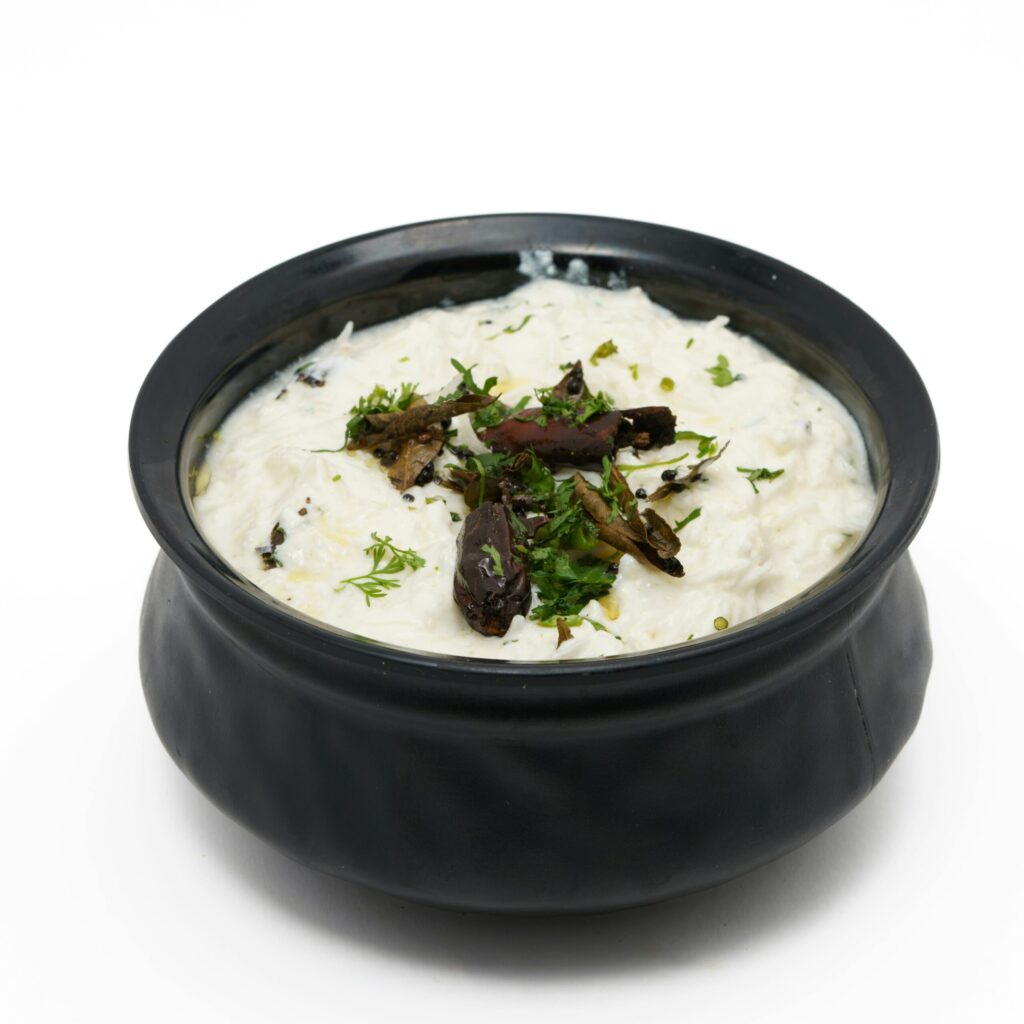
Dahi, lassi, chaas, shrikhand. Lactic acid fermentation of milk — rich in calcium, B12, CLA, and ACE-inhibitory peptides. Among the most consumed probiotic foods anywhere in the world.
🌿
NE Indian & Himalayan Ferments
Kinema, hawaijar, bekang, gundruk, sinki. Among the most nutritionally dense fermented foods in the world — comparable to natto and sauerkraut, and almost entirely absent from international databases.
🫐
International Vegetable Ferments
Kimchi (Korea) and sauerkraut (Germany/Eastern Europe). Both lacto-fermented brassica vegetables — high in Vitamin K, C, and glucosinolate metabolites. Kimchi adds chilli, garlic, and ginger to the mix.
🫘
Asian Soybean Ferments
Natto (Japan), tempeh (Indonesia), miso (Japan). Mould and Bacillus fermentation of soybeans that produces nattokinase, Vitamin K2, and highly bioavailable isoflavone aglycones.
🍶
Fermented Beverages
Kefir (Central Asia/Europe), kombucha (global), water kefir, kvass (Russia/Eastern Europe), kanji (India), amazake (Japan). Each is a living drink with its own distinct microbial ecosystem.
🍞
Fermented & Baked Grains
Sourdough bread (global) and injera (Ethiopia). Baking destroys the live organisms but the fermentation that happened first has already lowered the GI, reduced phytate, and improved mineral bioavailability.
🧫
International Dairy Ferments
Yogurt, Greek yogurt (global), filmjölk (Sweden). Produced with standardised bacterial starter cultures — consistent, extensively researched, and supported by a large clinical evidence base.
Macronutrient Profile (per 100 g)
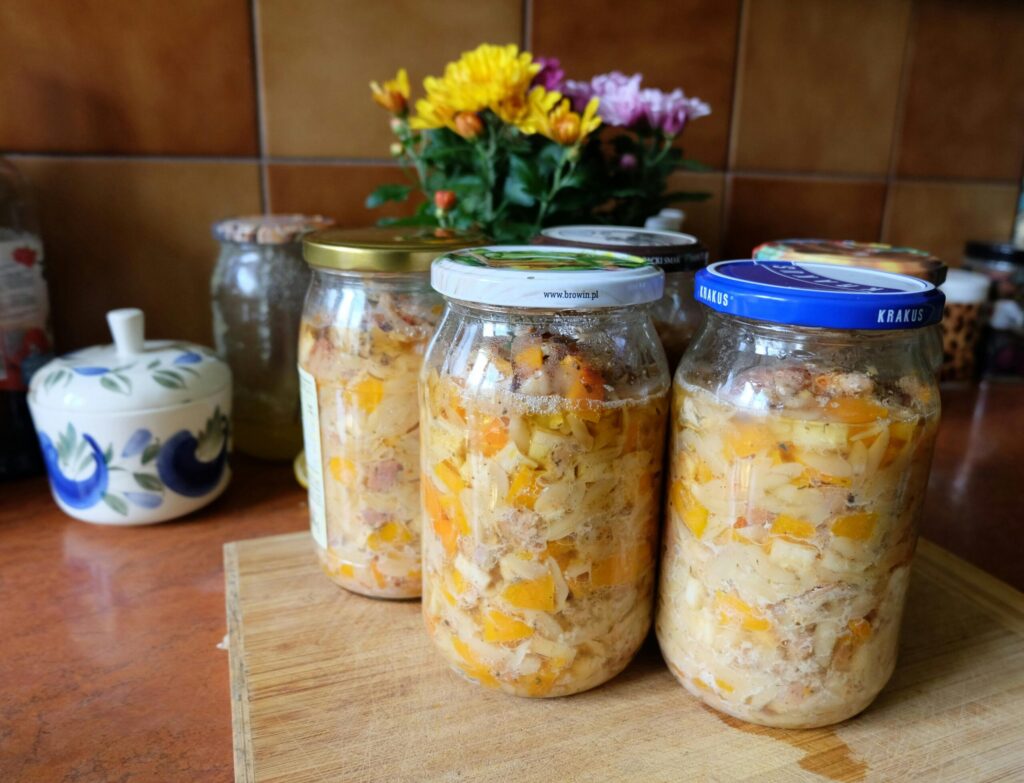
The macronutrient spread across fermented foods is wider than most people realise. At one end you have kombucha and kimchi — barely 15–16 kcal per 100 g, with almost no macros at all. At the other, sourdough bread delivers 274 kcal and kinema (a fermented soybean from Northeast India) clocks nearly 20 g of protein per 100 g, which competes with meat. Most dairy ferments sit in the middle: modest in calories but reliably rich in protein and calcium, wherever in the world they’re made.
| Food / Probiotic Item | Origin | Category | Energy (kcal) | Protein (g) | Total Fat (g) | Saturated Fat (g) | MUFA (g) | PUFA (g) | Total Carbs (g) | Sugars (g) | Dietary Fibre (g) | Water (g) | Ash (g) |
|---|---|---|---|---|---|---|---|---|---|---|---|---|---|
| Idli (fermented rice-lentil cake) | Indian | Fermented Grain/Legume | 130 | 3.9 | 0.5 | 0.1 | 0.1 | 0.2 | 25.7 | 0.5 | 1.1 | 69 | 0.7 |
| Dosa (fermented crepe) | Indian | Fermented Grain/Legume | 168 | 3.8 | 3.7 | 0.7 | 1.2 | 1 | 27.2 | 0.4 | 1 | 62 | 0.8 |
| Dhokla (steamed fermented gram) | Indian | Fermented Legume | 160 | 7 | 4.5 | 0.6 | 1.5 | 1.8 | 22 | 2 | 2.8 | 62 | 1.2 |
| Kanji (fermented carrot/beetroot drink) | Indian | Fermented Beverage | 25 | 0.5 | 0.1 | 0 | 0 | 0 | 5.5 | 3 | 0.8 | 93 | 0.5 |
| Ambali (fermented finger-millet porridge) | Indian | Fermented Grain | 72 | 2.4 | 0.5 | 0.1 | 0.1 | 0.2 | 14.5 | 0.3 | 1.8 | 81.5 | 0.8 |
| Dahi / Curd (whole-milk yogurt) | Indian | Fermented Dairy | 98 | 3.1 | 4 | 2.5 | 1.1 | 0.1 | 12.8 | 5.4 | 0 | 87 | 0.8 |
| Lassi (fermented yogurt drink) | Indian | Fermented Dairy Beverage | 70 | 3.5 | 1.9 | 1.2 | 0.5 | 0.1 | 8.9 | 7 | 0 | 85.5 | 0.6 |
| Chaas / Buttermilk | Indian | Fermented Dairy Beverage | 40 | 3 | 1 | 0.6 | 0.3 | 0 | 4.8 | 3.9 | 0 | 90.5 | 0.7 |
| Shrikhand (strained yogurt dessert) | Indian | Fermented Dairy | 245 | 5 | 11 | 6.8 | 3.1 | 0.3 | 32 | 30 | 0 | 51 | 0.8 |
| Gundruk (fermented leafy greens) | Indian/Nepali | Fermented Vegetable | 55 | 5.1 | 0.9 | 0.1 | 0.2 | 0.4 | 8 | 1.2 | 3.6 | 79 | 2.4 |
| Sinki (fermented radish taproot) | Indian/Nepali | Fermented Vegetable | 42 | 3.5 | 0.6 | 0.1 | 0.1 | 0.2 | 6.5 | 1 | 3.1 | 83.5 | 2.3 |
| Khalpi (fermented cucumber) | Indian/Nepali | Fermented Vegetable | 18 | 1 | 0.2 | 0 | 0 | 0.1 | 3 | 1.5 | 0.8 | 94.5 | 0.8 |
| Kinema (fermented soybean) | Indian/Nepali | Fermented Legume | 198 | 19.3 | 8.4 | 1.2 | 1.9 | 4.8 | 13.5 | 2.8 | 5.2 | 55 | 3.6 |
| Hawaijar (fermented soybean, Manipur) | Indian | Fermented Legume | 195 | 18.5 | 8 | 1.1 | 1.8 | 4.5 | 14.2 | 2.6 | 5 | 56 | 3.5 |
| Bekang (fermented soybean, Mizoram) | Indian | Fermented Legume | 190 | 17.8 | 7.8 | 1 | 1.7 | 4.3 | 14 | 2.5 | 4.8 | 57 | 3.4 |
| Pozol (traditional fermented maize drink – NE variant) | Indian/Regional | Fermented Grain Beverage | 60 | 1.6 | 0.9 | 0.1 | 0.2 | 0.4 | 12 | 2 | 1.2 | 84 | 0.6 |
| Jaand / Rice beer (fermented) | Indian/NE | Fermented Alcoholic Beverage | 53 | 0.3 | 0 | 0 | 0 | 0 | 3 | 0.5 | 0 | 95.2 | 0.2 |
| Koozh (fermented millet gruel, Tamil Nadu) | Indian | Fermented Grain | 68 | 2 | 0.5 | 0.1 | 0.1 | 0.2 | 13.5 | 0.3 | 1.5 | 83 | 0.5 |
| Pakhala (fermented cooked rice water) | Indian | Fermented Grain Beverage | 72 | 1.4 | 0.3 | 0 | 0.1 | 0.1 | 15.6 | 0.2 | 0.4 | 81.5 | 0.5 |
| Borugulu/Vadiyalu (sun-dried fermented snacks) | Indian | Fermented Grain/Legume | 380 | 8.5 | 5 | 0.8 | 1.2 | 2.5 | 73 | 1 | 3.5 | 10 | 1.5 |
| Yogurt (low-fat plain) | International | Fermented Dairy | 63 | 5.2 | 1.6 | 1 | 0.4 | 0 | 7 | 7 | 0 | 85.1 | 0.9 |
| Greek Yogurt (full-fat) | International | Fermented Dairy | 97 | 9 | 5 | 3.3 | 1.3 | 0.1 | 3.6 | 3.2 | 0 | 81.3 | 0.8 |
| Kefir (whole milk) | International | Fermented Dairy Beverage | 61 | 3.4 | 3.5 | 2.1 | 0.9 | 0.1 | 4.5 | 4.5 | 0 | 88 | 0.8 |
| Kimchi (fermented Napa cabbage) | International | Fermented Vegetable | 15 | 1.1 | 0.5 | 0 | 0.1 | 0.2 | 2.4 | 1.3 | 1.6 | 94 | 1.1 |
| Sauerkraut | International | Fermented Vegetable | 19 | 0.9 | 0.1 | 0 | 0 | 0.1 | 4.3 | 1.8 | 2.9 | 92.5 | 0.8 |
| Miso (soybean paste) | International | Fermented Legume Paste | 199 | 11.7 | 6 | 1.1 | 1.3 | 3.4 | 27 | 6.2 | 5.4 | 43 | 12.9 |
| Natto (fermented soybean) | International | Fermented Legume | 211 | 17.7 | 11 | 1.6 | 2.4 | 6.3 | 14.4 | 4.9 | 5.4 | 55.7 | 1.6 |
| Tempeh (fermented soybean) | International | Fermented Legume | 193 | 18.5 | 10.8 | 2.5 | 3 | 4.6 | 9.4 | 0 | 0 | 59.6 | 1.7 |
| Kombucha (plain) | International | Fermented Tea Beverage | 16 | 0 | 0 | 0 | 0 | 0 | 3.9 | 3.5 | 0 | 95.5 | 0.1 |
| Kvass (fermented bread drink) | International | Fermented Grain Beverage | 27 | 0.2 | 0.1 | 0 | 0 | 0 | 5.9 | 1 | 0 | 93.5 | 0.1 |
| Water Kefir | International | Fermented Beverage | 20 | 0 | 0 | 0 | 0 | 0 | 4.8 | 3 | 0 | 95 | 0 |
| Sourdough Bread | International | Fermented Grain | 274 | 8 | 2 | 0.3 | 0.4 | 0.9 | 51.4 | 1.8 | 2.4 | 36.5 | 1.8 |
| Pickled Cucumbers (lacto-fermented) | International | Fermented Vegetable | 11 | 0.7 | 0.1 | 0 | 0 | 0 | 2.3 | 1 | 0.6 | 96 | 0.7 |
| Beet Kvass | International | Fermented Vegetable Beverage | 28 | 0.6 | 0.1 | 0 | 0 | 0 | 6.3 | 4 | 0.5 | 92 | 0.4 |
| Injera (Ethiopian fermented teff bread) | International | Fermented Grain | 150 | 4.9 | 1.4 | 0.4 | 0.4 | 0.4 | 29.3 | 0.5 | 2.6 | 62 | 1.8 |
| Poi (fermented taro paste, Hawaiian) | International | Fermented Starchy Root | 91 | 0.9 | 0.2 | 0 | 0 | 0.1 | 21.5 | 0.5 | 1 | 75.9 | 0.7 |
| Tibicos / Water Kefir grains (live) | International | Probiotic Culture | 30 | 1.5 | 0.5 | 0.1 | 0.2 | 0.1 | 5 | 2 | 0 | 90 | 0.5 |
| Yakult (fermented milk drink, 65 mL) | International | Probiotic Dairy Drink | 50 | 0.8 | 0 | 0 | 0 | 0 | 11.6 | 11 | 0 | 87 | 0.2 |
| Filmjölk (Swedish fermented milk) | International | Fermented Dairy | 64 | 3.4 | 3 | 1.9 | 0.8 | 0.1 | 5 | 4.5 | 0 | 87.5 | 0.7 |
| Viili (Finnish fermented milk) | International | Fermented Dairy | 65 | 3.5 | 3.2 | 2 | 0.9 | 0.1 | 4.8 | 4.3 | 0 | 87.2 | 0.7 |
| Jun (fermented green tea & honey) | International | Fermented Tea Beverage | 18 | 0 | 0 | 0 | 0 | 0 | 4.3 | 4 | 0 | 95 | 0.1 |
| Amazake (Japanese fermented rice drink) | International | Fermented Grain Beverage | 76 | 1.7 | 0.1 | 0 | 0 | 0 | 16.7 | 10.5 | 0.1 | 80.4 | 0.3 |
| Ogi (West African fermented cereal porridge) | International | Fermented Grain | 69 | 1.4 | 0.4 | 0.1 | 0.1 | 0.2 | 14.5 | 0.5 | 1 | 83 | 0.5 |
All values per 100 g edible portion. Real-world values vary ±15–30% based on fermentation time, starter culture, and raw material.
📊 Reading This Table — Key Takeaways by Region
For international readers: The protein numbers for fermented soybean foods stand out across every cuisine. Natto (Japan), tempeh (Indonesia), and kinema/hawaijar (Northeast India) all deliver 17–19 g protein per 100 g — comparable to meat and substantially more than most plant foods. Yogurt and kefir sit at 3–5 g protein per 100 g with strong calcium profiles, making them efficient low-calorie protein sources. Kimchi and sauerkraut are among the lowest-calorie fermented foods (15–19 kcal/100 g) — essentially free from a calorie standpoint, which is why they work so well as regular side dishes.
For Indian readers: Dahi at 98 kcal and 3.1 g protein per 100 g is one of the most efficient protein-to-calorie ratios in the Indian diet. Chaas (buttermilk) at just 40 kcal is practically a free food calorically, yet genuinely probiotic when made fresh. Kinema and hawaijar — fermented soybeans from Sikkim and Manipur — deliver 18–19 g protein per 100 g, matching paneer (18–19 g) while being considerably cheaper and more digestible due to fermentation. Most Indians outside the Northeast have never encountered these foods; the Indian Spotlight section covers them in detail.
Vitamin Content (per 100 g)
Fermentation is a net vitamin producer. Bacteria manufacture B-vitamins as metabolic byproducts of their activity — which means a well-fermented food often contains more folate, riboflavin, and niacin than the same food unfermented. This holds true across cultures and fermentation types: the same principle that enriches sourdough bread with folate also enriches kinema in Northeast India and tempeh in Indonesia.
The single most striking entry in this table is natto’s Vitamin K2 (MK-7): 800–1103 µg per 100 g. Most K2 supplements contain 100–200 µg per capsule. Natto delivers supplement-level K2 in a single 50 g breakfast serving — and no other food on earth comes close. K2 is critical for directing dietary calcium into bones rather than arteries.
🔍 What Fermentation Does to B-Vitamins
Sourdough bread ends up with 95 µg of folate per 100 g — the highest of any food in this table, and nearly 10× more than the flour it started from. Kinema and hawaijar (Northeast India) deliver 52–60 µg folate, comparable to many commercial fortified foods. Dairy ferments — dahi, yogurt, kefir — are among the best everyday sources of Vitamin B12 for those who eat little or no meat. Kimchi contributes a notable 43 µg of Vitamin K1 per 100 g. And gundruk (a Northeast Indian fermented leafy green) surprises with 540 µg of β-carotene — comparable to fresh carrots — because fermentation concentrates and partially liberates the carotenoids from the plant matrix.
| Food / Probiotic Item | Origin | Vit A (µg RAE) | β-Carotene (µg) | Vit D (µg) | Vit E (mg α-TE) | Vit K (µg) | Vit C (mg) | Vit B1 Thiamine (mg) | Vit B2 Riboflavin (mg) | Vit B3 Niacin (mg) | Vit B5 Pantothenic (mg) | Vit B6 (mg) | Vit B7 Biotin (µg) | Vit B9 Folate (µg DFE) | Vit B12 (µg) |
|---|---|---|---|---|---|---|---|---|---|---|---|---|---|---|---|
| Idli | Indian | 0 | 0 | 0 | 0.1 | 0.5 | 0 | 0.04 | 0.05 | 0.7 | 0.3 | 0.05 | 2 | 18 | 0 |
| Dosa | Indian | 0 | 0 | 0 | 0.2 | 0.5 | 0 | 0.05 | 0.06 | 0.9 | 0.4 | 0.06 | 2 | 16 | 0 |
| Dhokla | Indian | 2 | 12 | 0 | 0.3 | 2 | 1 | 0.05 | 0.07 | 0.8 | 0.4 | 0.07 | 3 | 22 | 0 |
| Kanji | Indian | 18 | 105 | 0 | 0.3 | 2 | 5 | 0.02 | 0.03 | 0.3 | 0.2 | 0.04 | 1 | 10 | 0 |
| Ambali (finger-millet) | Indian | 0 | 5 | 0 | 0.2 | 0.5 | 0 | 0.03 | 0.04 | 0.5 | 0.3 | 0.04 | 1.5 | 8 | 0 |
| Dahi / Curd | Indian | 28 | 0 | 0.1 | 0.1 | 0.3 | 0.5 | 0.04 | 0.14 | 0.1 | 0.4 | 0.04 | 2.5 | 11 | 0.4 |
| Lassi | Indian | 20 | 0 | 0.1 | 0.1 | 0.2 | 0.3 | 0.03 | 0.11 | 0.1 | 0.3 | 0.04 | 2 | 9 | 0.4 |
| Chaas / Buttermilk | Indian | 12 | 0 | 0.1 | 0 | 0.1 | 0.5 | 0.03 | 0.1 | 0.1 | 0.3 | 0.04 | 1.5 | 5 | 0.3 |
| Shrikhand | Indian | 55 | 0 | 0.1 | 0.2 | 0.5 | 0.5 | 0.04 | 0.16 | 0.1 | 0.5 | 0.04 | 3 | 12 | 0.5 |
| Gundruk | Indian/Nepali | 90 | 540 | 0 | 1.5 | 15 | 8 | 0.05 | 0.09 | 0.8 | 0.4 | 0.12 | 2 | 40 | 0 |
| Sinki | Indian/Nepali | 10 | 60 | 0 | 0.8 | 8 | 4 | 0.04 | 0.07 | 0.5 | 0.3 | 0.08 | 1.5 | 30 | 0 |
| Khalpi | Indian/Nepali | 5 | 30 | 0 | 0.2 | 3 | 3 | 0.02 | 0.03 | 0.2 | 0.2 | 0.04 | 0.5 | 5 | 0 |
| Kinema | Indian/Nepali | 2 | 12 | 0 | 0.5 | 20 | 1 | 0.12 | 0.2 | 1.2 | 0.5 | 0.18 | 8 | 60 | 0 |
| Hawaijar | Indian | 2 | 12 | 0 | 0.5 | 18 | 1 | 0.11 | 0.18 | 1.1 | 0.4 | 0.16 | 7.5 | 55 | 0 |
| Bekang | Indian | 2 | 10 | 0 | 0.4 | 17 | 1 | 0.1 | 0.17 | 1 | 0.4 | 0.15 | 7 | 52 | 0 |
| Pakhala | Indian | 0 | 0 | 0 | 0 | 0.2 | 0 | 0.02 | 0.02 | 0.4 | 0.2 | 0.02 | 0.5 | 5 | 0 |
| Koozh (finger-millet gruel) | Indian | 2 | 10 | 0 | 0.2 | 0.5 | 0 | 0.03 | 0.04 | 0.6 | 0.3 | 0.04 | 1.5 | 8 | 0 |
| Dahi / Curd (whole-milk) | Indian | 28 | 0 | 0.1 | 0.1 | 0.3 | 0.5 | 0.04 | 0.14 | 0.1 | 0.4 | 0.04 | 2.5 | 11 | 0.4 |
| Yogurt (low-fat plain) | International | 8 | 0 | 0 | 0.1 | 0.2 | 0.5 | 0.04 | 0.19 | 0.1 | 0.5 | 0.05 | 2 | 11 | 0.7 |
| Greek Yogurt (full-fat) | International | 20 | 0 | 0.1 | 0.1 | 0.3 | 0.5 | 0.04 | 0.22 | 0.2 | 0.5 | 0.06 | 3 | 10 | 0.8 |
| Kefir | International | 25 | 0 | 0.2 | 0.1 | 0.3 | 1 | 0.04 | 0.17 | 0.1 | 0.5 | 0.05 | 3.5 | 12 | 0.5 |
| Kimchi | International | 18 | 110 | 0 | 0.5 | 43 | 18 | 0.03 | 0.06 | 0.5 | 0.2 | 0.15 | 1.5 | 30 | 0 |
| Sauerkraut | International | 1 | 8 | 0 | 0.1 | 13 | 14.7 | 0.02 | 0.02 | 0.1 | 0.1 | 0.13 | 1 | 24 | 0 |
| Miso | International | 2 | 12 | 0 | 0.4 | 10 | 0 | 0.07 | 0.23 | 0.9 | 0.3 | 0.12 | 5 | 19 | 0.1 |
| Natto | International | 0 | 0 | 0 | 0 | 1103.4 | 13 | 0.19 | 0.56 | 1.3 | 0.7 | 0.24 | 20 | 73 | 0 |
| Tempeh | International | 0 | 0 | 0 | 0 | 0 | 0 | 0.08 | 0.36 | 2.6 | 0.3 | 0.22 | 0 | 24 | 0 |
| Kombucha | International | 0 | 0 | 0 | 0 | 0 | 0.5 | 0.01 | 0.02 | 0.1 | 0 | 0.01 | 0 | 2 | 0 |
| Sourdough Bread | International | 0 | 0 | 0 | 0.1 | 1 | 0 | 0.45 | 0.35 | 3.8 | 0.5 | 0.08 | 2 | 95 | 0 |
| Injera | International | 0 | 0 | 0 | 0.3 | 0.8 | 0 | 0.18 | 0.18 | 1.4 | 0.3 | 0.12 | 3 | 18 | 0 |
| Yakult | International | 0 | 0 | 0 | 0 | 0 | 0 | 0.01 | 0.04 | 0.1 | 0.2 | 0.01 | 0 | 2 | 0.1 |
| Amazake | International | 0 | 0 | 0 | 0.1 | 0 | 0 | 0.03 | 0.03 | 0.5 | 0.6 | 0.05 | 0.5 | 5 | 0 |
| Water Kefir | International | 0 | 0 | 0 | 0 | 0 | 0.5 | 0.01 | 0.02 | 0.1 | 0.1 | 0.01 | 0.5 | 2 | 0 |
Data: USDA FDC, ICMR-NIN IFCT 2017, Korean FCDB, FAO, peer-reviewed research.
1103
µg
Vit K2 (MK-7)
Natto (Japan)
95
µg
Folate (DFE)
Sourdough Bread
60
µg
Folate (DFE)
Kinema (NE India)
43
µg
Vitamin K
Kimchi (Korea)
0.4
µg
Vitamin B12
Dahi (Indian)
💡 What These Vitamin Numbers Mean in Practice
Natto’s K2 number is genuinely in a different league. At 1103 µg MK-7 per 100 g, a single 50 g serving delivers more Vitamin K2 than a week’s worth of most K2 supplements. For anyone interested in bone density or cardiovascular health, natto is the most effective single food source available. If natto is inaccessible or unpalatable, India’s kinema and hawaijar produce smaller but real amounts through the same fermentation mechanism, and K2 supplements are a practical alternative.
For B12 — dairy ferments are the key for vegetarians worldwide. Yogurt, kefir, and dahi all provide 0.4–0.8 µg B12 per 100 g. Two servings of any dairy ferment daily covers a meaningful share of the adult B12 requirement in most countries. This is relevant for vegetarians globally, not just in India. No plant-based fermented food — kimchi, sauerkraut, tempeh, miso, idli, sourdough — provides bioavailable B12. Vegans who rely on these foods alone risk deficiency; supplementation is essential regardless of how varied the fermented food diet is.
Mineral Content (per 100 g)
This is where fermented foods diverge most sharply from each other — and where some of the biggest surprises in this database appear. Blackstrap molasses aside, most people would not expect a fermented leafy vegetable to contain more calcium than whole milk. Yet gundruk — a dried fermented green from Northeast India and Nepal — delivers 490 mg calcium per 100 g, which is higher than full-fat milk (120 mg) and comparable to paneer or mozzarella. Natto similarly stands out with 217 mg calcium, 8.6 mg iron, and 115 mg magnesium in a single fermented food — mineral numbers more typical of supplements than breakfast.
💡 Why Raw Mineral Numbers Understate the Benefit
Phytate — the antinutrient found in all grains and legumes — binds to iron, zinc, and calcium and carries them out of the body before they can be absorbed. Fermentation dissolves phytate by 40–90% depending on the food and fermentation duration. This means the iron in fermented sourdough bread is more bioavailable than the identical amount of iron in regular bread; the calcium in fermented finger-millet porridge (ambali) is more available than the same calcium in unfermented ragi flour; and the zinc in tempeh and natto is better absorbed than the zinc in the raw soybeans they came from. The real mineral benefit of fermented foods is consistently larger than what the numbers alone suggest.
| Food / Probiotic Item | Origin | Calcium (mg) | Phosphorus (mg) | Magnesium (mg) | Potassium (mg) | Sodium (mg) | Iron (mg) | Zinc (mg) | Copper (µg) | Manganese (mg) | Selenium (µg) | Iodine (µg) | Fluoride (µg) | Chromium (µg) |
|---|---|---|---|---|---|---|---|---|---|---|---|---|---|---|
| Idli | Indian | 19 | 55 | 8 | 60 | 240 | 1.5 | 0.5 | 110 | 0.3 | 5 | 4 | 30 | 1 |
| Dosa | Indian | 14 | 48 | 10 | 55 | 320 | 1.2 | 0.4 | 100 | 0.25 | 5 | 3 | 25 | 1 |
| Dhokla | Indian | 28 | 70 | 15 | 80 | 430 | 1.8 | 0.8 | 120 | 0.35 | 6 | 3 | 30 | 1.5 |
| Kanji | Indian | 22 | 30 | 10 | 120 | 180 | 0.5 | 0.2 | 50 | 0.1 | 2 | 2 | 15 | 0.5 |
| Ambali (finger-millet) | Indian | 100 | 70 | 30 | 85 | 150 | 2 | 0.7 | 130 | 0.55 | 4 | 3 | 40 | 1.5 |
| Dahi / Curd | Indian | 120 | 91 | 11 | 141 | 36 | 0.1 | 0.4 | 14 | 0.01 | 3 | 21 | 25 | 2 |
| Lassi | Indian | 110 | 80 | 10 | 130 | 50 | 0.1 | 0.4 | 12 | 0.01 | 3 | 18 | 20 | 2 |
| Chaas / Buttermilk | Indian | 116 | 88 | 11 | 151 | 105 | 0.1 | 0.4 | 8 | 0.01 | 3 | 18 | 22 | 1.5 |
| Shrikhand | Indian | 180 | 130 | 15 | 180 | 45 | 0.2 | 0.6 | 20 | 0.02 | 4 | 25 | 30 | 2 |
| Gundruk | Indian/Nepali | 490 | 120 | 50 | 670 | 620 | 11.5 | 2.1 | 350 | 2.5 | 3 | 2 | 40 | 1.5 |
| Sinki | Indian/Nepali | 290 | 90 | 40 | 420 | 540 | 8 | 1.5 | 280 | 1.8 | 2 | 2 | 35 | 1 |
| Khalpi | Indian/Nepali | 22 | 25 | 12 | 140 | 380 | 0.4 | 0.2 | 60 | 0.2 | 1 | 2 | 15 | 0.5 |
| Kinema | Indian/Nepali | 160 | 240 | 90 | 680 | 10 | 4 | 2 | 350 | 1.5 | 8 | 2 | 20 | 2.5 |
| Hawaijar | Indian | 155 | 230 | 88 | 660 | 8 | 3.8 | 1.9 | 340 | 1.4 | 7 | 2 | 20 | 2.5 |
| Bekang | Indian | 150 | 220 | 85 | 640 | 9 | 3.6 | 1.8 | 330 | 1.3 | 7 | 2 | 18 | 2 |
| Pakhala | Indian | 5 | 22 | 6 | 38 | 5 | 0.2 | 0.2 | 30 | 0.15 | 3 | 2 | 10 | 0.5 |
| Koozh | Indian | 95 | 65 | 28 | 82 | 140 | 1.8 | 0.6 | 120 | 0.5 | 4 | 3 | 38 | 1.5 |
| Yogurt (low-fat plain) | International | 121 | 95 | 12 | 141 | 46 | 0.1 | 0.5 | 12 | 0.01 | 3 | 26 | 26 | 1 |
| Greek Yogurt (full-fat) | International | 115 | 101 | 11 | 141 | 36 | 0.1 | 0.5 | 11 | 0.01 | 2 | 22 | 24 | 1 |
| Kefir | International | 120 | 93 | 13 | 150 | 40 | 0.1 | 0.4 | 12 | 0.01 | 3 | 24 | 20 | 1.5 |
| Kimchi | International | 33 | 30 | 14 | 222 | 670 | 0.4 | 0.3 | 48 | 0.18 | 1 | 3 | 25 | 0.5 |
| Sauerkraut | International | 30 | 20 | 13 | 170 | 661 | 1.5 | 0.2 | 96 | 0.15 | 0 | 2 | 12 | 0.5 |
| Miso | International | 57 | 153 | 48 | 210 | 3728 | 2.5 | 2.6 | 420 | 0.86 | 7 | 2 | 55 | 10 |
| Natto | International | 217 | 174 | 115 | 729 | 9 | 8.6 | 3.3 | 520 | 1.03 | 13 | 3 | 50 | 5 |
| Tempeh | International | 111 | 266 | 81 | 412 | 9 | 2.7 | 1.7 | 570 | 1.3 | 15 | 3 | 30 | 3 |
| Kombucha | International | 6 | 8 | 5 | 31 | 8 | 0.3 | 0.1 | 20 | 0.05 | 1 | 1 | 5 | 0.5 |
| Sourdough Bread | International | 22 | 110 | 22 | 120 | 490 | 2.5 | 0.8 | 190 | 0.8 | 22 | 2 | 30 | 2 |
| Injera | International | 39 | 89 | 36 | 150 | 580 | 3 | 1 | 230 | 1.7 | 11 | 3 | 35 | 2.5 |
| Yakult | International | 30 | 28 | 5 | 50 | 20 | 0.1 | 0.1 | 10 | 0.01 | 1 | 8 | 10 | 0.5 |
| Amazake | International | 9 | 40 | 10 | 35 | 5 | 0.2 | 0.4 | 80 | 0.35 | 2 | 1 | 8 | 0.5 |
| Water Kefir | International | 8 | 10 | 5 | 35 | 15 | 0.1 | 0.1 | 10 | 0.02 | 0 | 0 | 5 | 0.3 |
490
mg
Calcium
Gundruk (NE India)
11.5
mg
Iron
Gundruk (NE India)
217
mg
Calcium
Natto (Japan)
115
mg
Magnesium
Natto (Japan)
120
mg
Calcium
Dahi (Indian)
📊 Mineral Highlights — What Stands Out for Different Readers
Globally notable: Natto (Japan) stands out with 217 mg calcium, 8.6 mg iron, and 115 mg magnesium per 100 g — an unusually mineral-dense profile for a single plant food. Tempeh also delivers solid iron (2.7 mg) and zinc (1.7 mg) per 100 g with excellent bioavailability due to phytate reduction. Yogurt, kefir, and similar dairy ferments deliver 120–121 mg calcium per 100 g — one of the most efficient dietary calcium sources regardless of cuisine. For high-sodium fermented foods, kimchi (670 mg/100 g), sauerkraut (661 mg/100 g), and especially miso (3728 mg/100 g) should be used as condiments rather than main dishes.
Particularly relevant for Indian readers: Dahi at 120 mg calcium per 100 g is one of the most practical calcium sources in the everyday Indian diet — and lactic acid from fermentation makes that calcium more readily absorbed than the same amount in fresh unfermented milk. Finger-millet ferments (ambali, koozh) provide 100 mg calcium per 100 g, and fermentation improves its bioavailability by an estimated 20–40%. Gundruk at 490 mg calcium and 11.5 mg iron per 100 g dry weight is extraordinary for a leaf vegetable — fermentation here does double duty, both concentrating the minerals and breaking down the oxalate that would otherwise block calcium absorption from leafy greens.
What You Actually Eat — Macros Per Serving
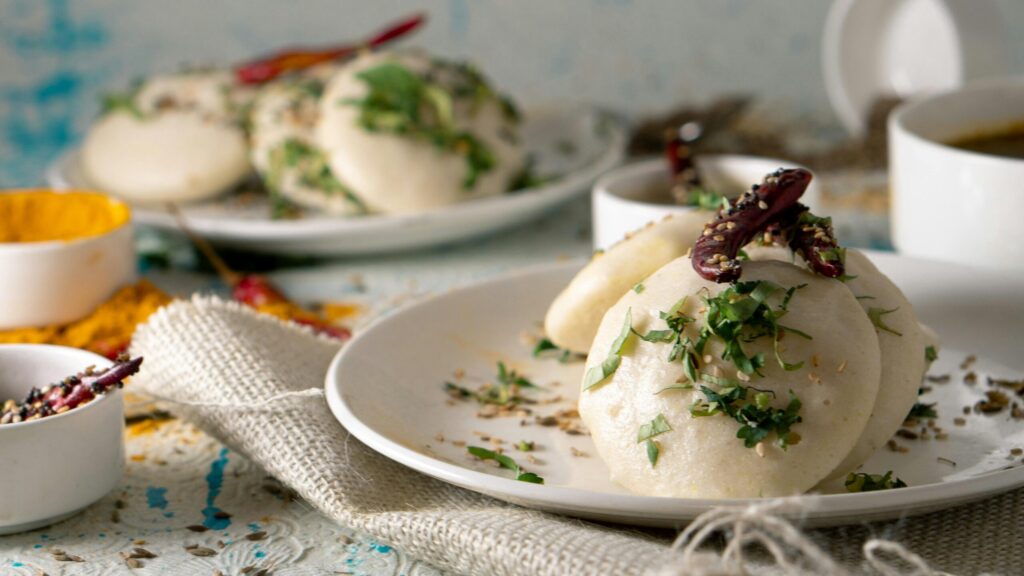
Per-100 g data is useful for comparing foods side by side, but real eating doesn’t work that way. A standard Yakult bottle is 65 mL. A cup of kefir or yogurt is 240–245 g. One tablespoon of miso is 17 g. Two idlis are about 100 g. The table below shows what you’d actually consume in a typical serving of each food — and the numbers look quite different from the per-100 g view. Pay particular attention to the sodium column: a half-cup of kimchi already delivers over 500 mg sodium, and a single tablespoon of miso crosses 630 mg.
| Food / Probiotic Item | Origin | Typical Serving | Serving Size (g) | Energy (kcal) | Protein (g) | Total Fat (g) | Total Carbs (g) | Dietary Fibre (g) | Sugars (g) | Sodium (mg) | Calcium (mg) | Notes / Serving Context |
|---|---|---|---|---|---|---|---|---|---|---|---|---|
| Idli | Indian | 2 medium idlis | 100 | 130 | 3.9 | 0.5 | 25.7 | 1.1 | 0.5 | 240 | 19 | Typical breakfast serving |
| Dosa (plain) | Indian | 1 medium dosa | 90 | 151 | 3.4 | 3.3 | 24.5 | 0.9 | 0.4 | 288 | 13 | Without chutney/sambar |
| Dhokla | Indian | 4 pieces | 80 | 128 | 5.6 | 3.6 | 17.6 | 2.2 | 1.6 | 344 | 22 | Steamed variety |
| Dahi / Curd | Indian | 1 bowl (150 g) | 150 | 147 | 4.7 | 6 | 19.2 | 0 | 8.1 | 54 | 180 | Whole-milk curd |
| Lassi | Indian | 1 glass (200 mL) | 200 | 140 | 7 | 3.8 | 17.8 | 0 | 14 | 100 | 220 | Plain, unsweetened |
| Chaas/Buttermilk | Indian | 1 glass (200 mL) | 200 | 80 | 6 | 2 | 9.6 | 0 | 7.8 | 210 | 232 | Spiced/plain |
| Shrikhand | Indian | 2 tbsp (50 g) | 50 | 123 | 2.5 | 5.5 | 16 | 0 | 15 | 23 | 90 | Dessert portion |
| Kanji | Indian | 1 glass (250 mL) | 250 | 63 | 1.3 | 0.3 | 13.8 | 2 | 7.5 | 450 | 55 | Fermented drink |
| Gundruk | Indian/Nepali | 1 serving dry (30 g) | 30 | 17 | 1.5 | 0.3 | 2.4 | 1.1 | 0.4 | 186 | 147 | Dried fermented greens |
| Kinema | Indian/Nepali | 1 serving (80 g) | 80 | 158 | 15.4 | 6.7 | 10.8 | 4.2 | 2.2 | 8 | 128 | Fermented soybean |
| Pakhala | Indian | 1 bowl (250 mL) | 250 | 180 | 3.5 | 0.8 | 39 | 1 | 0.5 | 13 | 13 | Fermented rice dish |
| Ambali | Indian | 1 bowl (200 g) | 200 | 144 | 4.8 | 1 | 29 | 3.6 | 0.6 | 300 | 200 | Fermented ragi gruel |
| Koozh | Indian | 1 bowl (200 g) | 200 | 136 | 4 | 1 | 27 | 3 | 0.6 | 280 | 190 | Fermented millet gruel |
| Yogurt low-fat | International | 1 cup (245 g) | 245 | 154 | 12.7 | 3.9 | 17.2 | 0 | 17.2 | 113 | 296 | USDA standard cup |
| Greek Yogurt full-fat | International | 1 cup (245 g) | 245 | 238 | 22.1 | 12.3 | 8.8 | 0 | 7.8 | 88 | 282 | Plain, full-fat |
| Kefir | International | 1 cup (240 mL) | 240 | 146 | 8.2 | 8.4 | 10.8 | 0 | 10.8 | 96 | 288 | Whole-milk kefir |
| Kimchi | International | ½ cup (75 g) | 75 | 11 | 0.8 | 0.4 | 1.8 | 1.2 | 1 | 503 | 25 | Side dish portion |
| Sauerkraut | International | ½ cup (71 g) | 71 | 13 | 0.6 | 0.1 | 3.1 | 2.1 | 1.3 | 469 | 21 | Drained |
| Miso | International | 1 tbsp (17 g) | 17 | 34 | 2 | 1 | 4.6 | 0.9 | 1.1 | 634 | 10 | Typical soup base |
| Natto | International | 1 package (50 g) | 50 | 106 | 8.9 | 5.5 | 7.2 | 2.7 | 2.5 | 5 | 109 | Standard Japanese pkg |
| Tempeh | International | 3 oz / 85 g | 85 | 164 | 15.7 | 9.2 | 8 | 0 | 0 | 8 | 94 | Pan-fried portion |
| Kombucha | International | 1 bottle (240 mL) | 240 | 38 | 0 | 0 | 9.4 | 0 | 8.4 | 19 | 14 | Commercial bottle |
| Sourdough Bread | International | 2 slices (60 g) | 60 | 164 | 4.8 | 1.2 | 30.8 | 1.4 | 1.1 | 294 | 13 | Standard serving |
| Yakult | International | 1 bottle (65 mL) | 65 | 33 | 0.5 | 0 | 7.5 | 0 | 7.2 | 13 | 20 | One 65 mL bottle |
| Water Kefir | International | 1 cup (240 mL) | 240 | 48 | 0 | 0 | 11.5 | 0 | 7.2 | 36 | 19 | Home-brewed |
| Injera | International | 1 piece (100 g) | 100 | 150 | 4.9 | 1.4 | 29.3 | 2.6 | 0.5 | 580 | 39 | One flatbread |
| Amazake | International | 1 cup (200 mL) | 200 | 152 | 3.4 | 0.2 | 33.4 | 0.2 | 21 | 10 | 18 | Japanese beverage |
| Filmjölk | International | 1 cup (240 mL) | 240 | 154 | 8.2 | 7.2 | 12 | 0 | 10.8 | 96 | 288 | Swedish cultured milk |
📊 Per-Serving Highlights — Across All Cuisines
For international readers: Greek yogurt delivers the highest protein per serving of any dairy ferment — 22.1 g in a standard cup (245 g), making it a genuinely useful post-exercise snack. Natto’s 50 g package provides 8.9 g protein with 2.7 g fibre and only 5 mg sodium — an unusually clean nutritional profile. Tempeh at 85 g offers 15.7 g protein at 164 kcal, comparable to a chicken breast but with the added benefit of fermented soy bioactives. Kimchi and sauerkraut are effective as condiment servings — rich in fibre, low in calories, but watch sodium if eating large portions.
For Indian readers: A 200 mL glass of chaas gives you 80 kcal, 6 g protein, and 232 mg calcium — making it one of the most mineral-efficient low-calorie drinks in the Indian diet. Kinema at one serving (80 g) delivers 15.4 g protein, which is nutritionally equivalent to 80 g of chicken breast. Dahi (150 g bowl) provides 180 mg calcium per serving — close to 20% of the adult daily requirement in a single accompaniment that most Indians eat anyway. Pakhala and ambali are both low-calorie and genuinely probiotic when freshly prepared.
Unfamiliar foods explained briefly: Kefir is a thin, tangy drinkable yogurt from Central Asia/Europe — nutritionally similar to lassi. Greek yogurt is thick, strained yogurt, similar to hung curd (chakka). Natto is a sticky fermented soybean eaten over rice in Japan — strong flavour, exceptional nutrition. Tempeh is a firm soybean cake popular in Southeast Asia, cooked similarly to paneer. Kombucha is a mildly fizzy fermented tea drink increasingly available globally.
Probiotic Strains, CFU & Bioactive Compounds
Standard nutrition tables measure nutrients that have been known since the early 20th century — vitamins, minerals, macros. But fermented foods produce a second tier of biologically active molecules that those tables were never designed to capture. This section covers the most significant ones: which organisms are responsible for fermentation, how many live organisms the food contains, and what unique compounds are produced that you’d never find in the raw ingredient.
🌟 Natto
Japan — fermented whole soybeans
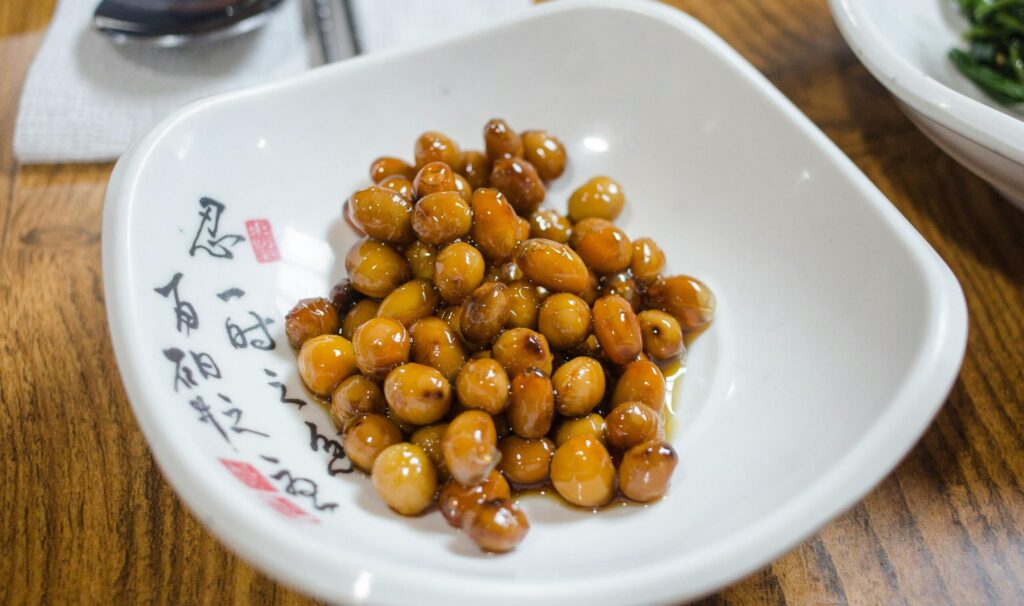
What it is: Whole soybeans fermented by Bacillus subtilis bacteria. Sticky, pungent, eaten over rice for breakfast in Japan. Nattokinase is a thrombolytic enzyme — the only food-derived molecule clinically studied for dissolving blood clots. MK-7 is the most bioavailable form of Vitamin K2, at concentrations no other natural food approaches. Indian parallel: Kinema, hawaijar, and bekang are produced by the same organism, though with lower nattokinase activity.
🫘 Kinema / Hawaijar / Bekang
NE India’s answer to natto
What it is: Fermented soybean preparations from Sikkim/Darjeeling (kinema), Manipur (hawaijar), and Mizoram (bekang). The same Bacillus subtilis bacterium used in Japanese natto produces fibrinolytic enzymes here too. Fermentation also converts tightly bound soy isoflavones into free aglycones — daidzein and genistein — that your body absorbs far more readily than those in raw soy or boiled dal. Three regional foods, one extraordinary biochemical profile — and almost completely absent from Indian nutrition databases.
🥛 Dahi / Kefir — Dairy Ferments Compared
Indian vs. Central Asian
Dahi is India’s most familiar fermented food — milk fermented by a mix of Lactobacillus and Streptococcus species. It produces ACE-inhibitory peptides (blood pressure lowering), CLA, and bioactive casein fragments. Kefir is made from a grain-like SCOBY that contains 20–60 microbial species — far more diverse than dahi. It produces kefiran, an exopolysaccharide with anti-inflammatory effects in animal models. Both are excellent probiotic dairy foods; kefir has greater microbial complexity, while dahi is culturally embedded in the Indian diet and eaten in far larger quantities.
🥬 Gundruk
NE India/Nepal — India’s sauerkraut
What it is: Leafy greens (mustard, radish, cauliflower leaves) sun-wilted and then fermented in a warm, airtight container. The closest Indian equivalent to sauerkraut or kimchi — but made from nutrient-dense leafy greens rather than cabbage. The calcium and iron figures are for dry weight (the food is used in dried form), and they’re genuinely exceptional. Fermentation breaks down oxalate in the leaves, which dramatically improves calcium absorption — solving the main problem with eating calcium-rich leafy greens raw.
⚠️ High biogenic amines (50–120 mg/100g tyramine, histamine) — people prone to migraines or histamine sensitivity should go slowly.
🌶️ Kimchi
Korea — spiced fermented cabbage
What it is: Napa cabbage fermented with chilli paste, garlic, ginger, and fish sauce (vegan versions exist). Think of it as a Korean equivalent of Indian mixed vegetable achaar — but fermented differently (LAB brine rather than oil-based). The brassica cabbage brings glucosinolates that fermentation converts to sulforaphane — studied for cancer-protective effects. The chilli adds capsaicin, the garlic adds allicin. Eaten as a side dish with every Korean meal, just as dahi or achaar accompanies Indian meals.
🫙 Kanji
What it is: Black carrots or beetroot fermented with mustard seeds in water — consumed as a tangy, deep purple drink, particularly in North India during winter and Holi season. This is India’s native probiotic beverage, predating kombucha’s Indian popularity by centuries. Beetroot brings natural nitrates (vasodilatory — the same reason athletes use beetroot juice), betalain pigments, and anthocyanins. LAB fermentation adds the sour character and the live culture count. It’s arguably one of India’s most complete traditional functional beverages — and one of the most underappreciated.
🍵 Kombucha
Global — fermented tea drink
What it is: Sweet tea fermented by a SCOBY (Symbiotic Culture Of Bacteria and Yeast) — a rubbery disc of organisms that lives in the jar and ferments batch after batch. The result is a lightly fizzy, tangy beverage with some live organisms, organic acids, and tea polyphenols. It’s increasingly sold in Indian cities. Nutritional reality check: The evidence base for specific human benefits is still building — most strong data is from animal models. What’s certain: it’s a low-sugar, low-calorie live-culture drink with tea polyphenols, which is a reasonable addition to a varied diet. Indian parallel: Kanji does something very similar, using local ingredients that most Indian kitchens already have.
⚠️ pH 2.5–3.5 — dental enamel erosion risk with daily sipping. Use a straw, rinse with water afterwards.
🍞 Sourdough Bread
Global — wild-yeast fermented bread
What it is: Bread leavened by wild bacteria and yeast rather than commercial yeast — made using a “starter” that must be kept alive and fed regularly, much like a dahi starter culture. The counterintuitive truth: baking at 220°C kills every organism in it. No live probiotics survive. But the fermentation that happened beforehand has already dismantled 80–90% of the phytate, broken down bloating-causing FODMAPs, and pushed the glycaemic index down from 72 to roughly 54. Indian parallel: This fermentation benefit is essentially what happens to idli and dosa batter — the same organisms transform the food before cooking, even though cooking happens afterwards. The principle is identical.
🫙 Miso
Japan — fermented soybean paste
What it is: Soybeans fermented with koji mould (Aspergillus oryzae), salt, and sometimes rice or barley — aged from weeks to years. The paste is used as a base for soups and sauces in Japan. Aspergillus oryzae is the same organism used in some Indian fermented rice preparations. It converts soy isoflavone glycosides into free aglycones that your body absorbs far more efficiently. The critical caveat: miso is extremely salty (3728 mg sodium/100 g — nearly two full days of sodium in 100 g). Use it in tablespoon quantities as a flavouring, not as a main food. Indian analogy: Think of it as you would a concentrated masala paste — intensely flavoured, used sparingly.
🫘 Tempeh
Indonesia — fermented soybean cake
What it is: Whole soybeans bound together by Rhizopus mould into a firm, sliceable cake. It has a nutty flavour and can be cooked like paneer — sliced, marinated, pan-fried, or added to curries. Important warning for vegans: Tempeh contains a B12-like molecule, but it’s a cobalamin analogue that your body cannot use for B12 functions. It does not prevent B12 deficiency and may even block absorption of real B12. Do not rely on tempeh for B12 — supplement separately. Indian parallel: The closest Indian equivalent in use is fermented dal products — but tempeh is firmer and much higher in protein (18.5 g/100 g).
| FOOD IDENTITY | MICROBIOLOGICAL | ORGANIC ACIDS & NEUROACTIVE | ENZYMES | PHYTONUTRIENTS | FATTY ACIDS | ANTINUTRIENTS & EPS | pH | HEALTH NOTES | ||||||||
|---|---|---|---|---|---|---|---|---|---|---|---|---|---|---|---|---|
| Food / Probiotic Item | Origin | Predominant Probiotic / Fermentation Organisms | Viable Count (CFU/g approx.) | Lactic Acid (mg/100g) | Acetic Acid (mg/100g) | GABA (mg/100g) | Nattokinase (FU/g) | Isoflavones (mg/100g) | Vit K2 / MK-7 (µg/100g) | SCFA (mg/100g) | CLA (mg/100g) | Phytate (mg/100g) | Biogenic Amines (mg/100g) | EPS Kefiran (mg/100g) | pH (approx.) | Key Bioactive / Health Notes |
| Idli (fermented rice-lentil cake) | Indian | Leuconostoc mesenteroides, Weissella confusa, Enterococcus faecalis | 10⁶–10⁸ | 300–600 | trace | 5–15 | — | — | — | trace | — | 200–400 (↓40–60% vs raw) | Low (<5) | — | 5.5–6.0 | Fermentation ↓ phytate 40–60%; ↑ Fe & Zn bioavailability; ↑ B vitamins (folate, riboflavin) during ferment |
| Dosa (fermented rice-lentil crepe) | Indian | Leuconostoc mesenteroides, Lactobacillus fermentum, Saccharomyces cerevisiae | 10⁶–10⁸ | 350–700 | trace | 5–20 | — | — | — | trace | — | 180–380 (↓ vs raw) | Low (<5) | — | 4.8–5.5 | Extended fermentation (>12 h) ↑ GABA; ↓ phytate improves mineral bioavailability; thiamine ↑ |
| Dhokla (steamed fermented chickpea cake) | Indian | Leuconostoc mesenteroides, Lactobacillus plantarum, Enterococcus faecium | 10⁶–10⁸ | 400–800 | 50–150 | 10–25 | — | — | — | trace | — | 150–350 (↓ vs raw gram) | Low (<5) | — | 4.5–5.2 | Chickpea fermentation ↑ protein digestibility; ↓ trypsin inhibitors; ↑ free amino acids |
| Dahi / Curd (whole-milk yogurt) | Indian | Lactobacillus delbrueckii subsp. bulgaricus, Streptococcus thermophilus | 10⁷–10⁹ | 500–1200 | 50–200 | 20–40 | — | — | — | — | 5–8 | — | 5–20 (tyramine, histamine) | — | 3.8–4.5 | CLA 5–8 mg/100g; ACE-inhibitory peptides (antihypertensive); ↑ Ca & P absorption; β-casomorphins |
| Lassi / Buttermilk / Chaas | Indian | Lactobacillus spp., Streptococcus thermophilus, Lactococcus lactis | 10⁶–10⁸ | 400–900 | 40–150 | 15–30 | — | — | — | — | 3–6 | — | 3–12 | — | 4.0–4.6 | CLA 3–6 mg/100g; ACE-inhibitory peptides; diluted dairy matrix improves probiotic delivery |
| Shrikhand (strained yogurt dessert) | Indian | Lactobacillus delbrueckii subsp. bulgaricus, Streptococcus thermophilus | 10⁶–10⁹ | 600–1500 | 80–250 | 25–50 | — | — | — | — | 8–12 | — | 8–25 (tyramine) | — | 3.8–4.3 | Concentrated probiotic; high CLA due to milk fat; bioactive peptides concentrated by straining |
| Kanji (fermented carrot/beetroot drink) | Indian | Lactobacillus plantarum, Leuconostoc mesenteroides | 10⁶–10⁸ | 800–1800 | 50–200 | 20–50 | — | — | — | trace | — | trace | Low (<5) | — | 3.5–4.2 | Beetroot nitrates (natural); anthocyanins (antioxidant); betalain pigments; lacto-fermented beverage |
| Ambali (fermented finger-millet porridge) | Indian | Lactobacillus plantarum, Weissella confusa, Leuconostoc spp. | 10⁶–10⁸ | 700–1500 | 80–200 | 25–60 | — | — | — | trace | — | 600–900 (↓ vs raw ragi) | Low (<5) | — | 3.5–4.5 | Finger-millet (ragi): highest Ca among cereals; fermentation ↑ Ca bioavailability 20–40%; polyphenols ↑ |
| Koozh (fermented millet gruel, Tamil Nadu) | Indian | Lactobacillus spp., Weissella spp., wild yeast | 10⁶–10⁸ | 600–1400 | 60–180 | 20–50 | — | — | — | trace | — | 500–800 (↓ vs raw) | Low (<5) | — | 3.8–4.5 | Overnight fermentation of pearl millet; ↑ folate; ↑ niacin; traditional Tamil summer food |
| Pakhala (fermented cooked rice, Odisha) | Indian | Lactobacillus plantarum, L. brevis, Pediococcus pentosaceus | 10⁶–10⁸ | 600–1400 | 50–150 | 30–70 | — | — | — | trace | — | trace | Low (<5) | — | 3.8–4.5 | ↑ Fe & Zn bioavailability overnight; B12 production traces; probiotic-rich traditional Odisha staple; ↑ riboflavin |
| Gundruk (fermented leafy greens, NE India/Nepal) | Indian/Nepali | Lactobacillus plantarum, L. fermentum, Pediococcus pentosaceus | 10⁷–10⁹ | 1200–2500 | 100–300 | 30–80 | — | — | — | trace | — | ↑ vs fresh (oxalate ↓) | 50–120 (tyramine, histamine) | — | 3.5–4.0 | Rich β-carotene; high Ca (490 mg/100g dry); ↑ GABA with prolonged ferment; ↓ oxalate improves mineral uptake |
| Sinki (fermented radish taproot, NE India/Nepal) | Indian/Nepali | Lactobacillus plantarum, Leuconostoc mesenteroides, Pediococcus spp. | 10⁶–10⁸ | 900–1800 | 80–250 | 20–60 | — | — | — | trace | — | ↓ vs raw | 30–80 (tyramine) | — | 3.5–4.2 | Radish glucosinolate metabolites; ↓ phytate; probiotic properties validated in vitro; strong sour flavor |
| Kinema (fermented soybean, Sikkim/Darjeeling) | Indian/Nepali | Bacillus subtilis (dominant), Enterococcus faecium, Lactobacillus spp. | 10⁸–10¹⁰ | 200–500 | 300–800 | 50–150 | ~50–200 FU/g (nattokinase-like) | 15–40 | trace | trace | — | Low (↓ vs raw soy) | 20–60 | trace | 7.5–8.5 | Bacillus subtilis fibrinolytic enzyme (nattokinase-like); isoflavone aglycones (daidzein, genistein) ↑ bioavailability; unique NE Indian soybean food |
| Hawaijar (fermented soybean, Manipur) | Indian | Bacillus subtilis, B. licheniformis, Lactobacillus spp. | 10⁸–10¹⁰ | 200–500 | 300–750 | 50–140 | ~40–180 FU/g (nattokinase-like) | 12–38 | trace | trace | — | Low (↓ vs raw soy) | 20–55 | trace | 7.5–8.5 | Nutritionally comparable to natto; fibrinolytic activity confirmed; high-protein traditional food of Manipur |
| Bekang (fermented soybean, Mizoram) | Indian | Bacillus subtilis, Bacillus amyloliquefaciens | 10⁷–10¹⁰ | 180–480 | 280–720 | 45–130 | ~40–150 FU/g (nattokinase-like) | 10–35 | trace | trace | — | Low (↓ vs raw soy) | 15–50 | trace | 7.5–8.5 | Strong ammoniacal aroma (glutamic acid fermentation by Bacillus); fibrinolytic enzymes; ↑ isoflavone aglycones |
| Yogurt (plain, low-fat) | International | Lactobacillus delbrueckii subsp. bulgaricus, Streptococcus thermophilus | 10⁶–10⁹ | 600–1500 | 100–250 | 25–50 | — | — | — | — | 3–7 | — | 5–25 (tyramine) | — | 4.0–4.5 | CLA 3–7 mg/100g; casein-derived bioactive peptides (antihypertensive, immunomodulatory, opioid); ACE-inhibitory |
| Greek Yogurt (full-fat, strained) | International | Lactobacillus delbrueckii subsp. bulgaricus, Streptococcus thermophilus | 10⁶–10⁹ | 700–1800 | 100–300 | 25–55 | — | — | — | — | 5–10 | — | 8–30 (tyramine) | — | 4.0–4.4 | Straining concentrates protein & bioactive peptides; CLA 5–10 mg/100g; higher probiotic density vs regular yogurt |
| Kefir (whole-milk, traditionally fermented) | International | Lactobacillus kefiri, L. kefiranofaciens, Kazachstania unispora, Acetobacter fabarum (20–60 species in SCOBY) | 10⁷–10¹⁰ | 800–2000 | 200–500 | 30–80 | — | — | — | — | 5–8 | — | 5–20 | 500–2000 (kefiran EPS) | 3.5–4.5 | Kefiran EPS: anti-inflammatory, antitumour, immunomodulatory (mouse models); 0.5–1% ethanol; broadest microbial diversity of all dairy ferments |
| Kimchi (fermented Napa cabbage) | International | Leuconostoc mesenteroides, Lactobacillus sakei, L. plantarum, Weissella koreensis | 10⁷–10⁹ | 900–2500 | 150–400 | 40–100 | — | — | — | trace | — | trace (brassica) | 20–60 (tyramine) | trace | 3.5–4.5 | Glucosinolates → sulforaphane/isothiocyanates (cancer-protective); capsaicin anti-inflammatory; allicin (garlic); ↑ GABA; Vit K & C high |
| Sauerkraut (lacto-fermented cabbage) | International | Leuconostoc mesenteroides, Lactobacillus plantarum, L. brevis | 10⁶–10⁸ | 1000–2200 | 100–300 | 30–70 | — | — | trace | trace | — | trace (brassica) | 10–40 (tyramine) | trace | 3.2–3.8 | Glucosinolates → isothiocyanates (chemoprotective); Vit C 14.7 mg/100g; Vit K high; GABA ↑; histamine risk if >6 weeks |
| Miso (Japanese fermented soybean paste) | International | Aspergillus oryzae (koji mould), Tetragenococcus halophilus, Lactobacillus spp. | 10⁵–10⁷ | 200–600 | 400–1000 | 50–200 | — | 20–50 | — | trace | — | 400–800 (↓ vs raw soy) | 30–80 (histamine, tyramine) | — | 4.8–5.5 | Very high Na (3728 mg/100g); isoflavone aglycones (daidzein, genistein) bioavailability ↑ vs raw soy; protease & amylase enzymes; melanoidins (antioxidant) |
| Natto (Japanese fermented soybean) | International | Bacillus subtilis var. natto | 10⁸–10¹⁰ | 150–400 | 200–600 | 50–130 | 500–1000 FU/g (highest of all foods) | 20–60 | 800–1103 (MK-7; highest natural source) | trace | — | Low (↓ vs raw soy) | 20–50 (polyamines: putrescine, spermidine) | trace | 7.0–7.5 | Nattokinase: thrombolytic enzyme (dissolves fibrin); MK-7 (bone density, cardiovascular); spermidine (autophagy, longevity research); PQQ traces |
| Tempeh (Indonesian fermented soybean) | International | Rhizopus oligosporus, Rhizopus oryzae | 10⁷–10⁹ | 100–300 | 200–500 | 20–60 | — | 5–15 | — | trace | — | Low–Moderate (↓ vs raw soy) | Low (5–20) (cadaverine, putrescine) | — | 6.5–7.0 | Pseudo-B12 (inactive analogue, not bioavailable); tempol antibiotic (phenylacetaldehyde); ↑ Zn & Fe bioavailability; DOPA-containing peptides |
| Kombucha (fermented tea) | International | SCOBY: Acetobacter spp., Gluconobacter spp., Brettanomyces/Dekkera bruxellensis, Zygosaccharomyces spp. | 10⁶–10⁸ (yeast+bacteria) | 200–800 | 500–2000 | 5–15 | — | — | — | trace | — | — | Low (10–50) | trace (dextran) | 2.5–3.5 | Glucuronic acid (phase II detox support); gluconic acid; D-saccharic acid-1,4-lactone (β-glucuronidase inhibitor); tea polyphenols (EGCG); ethanol 0.5–3% |
| Sourdough Bread (wheat/rye, traditionally leavened) | International | Fructilactobacillus sanfranciscensis, Lactiplantibacillus plantarum, L. brevis, Saccharomyces cerevisiae | <10³ (post-baking kills LAB) | 400–800 | 200–600 | 20–50 | — | — | — | trace | — | 500–800 (↓80–90% vs flour) | Low (post-bake) | — | 3.5–4.5 | ↓ Phytate 80–90% → ↑ Fe, Zn, Mg bioavailability; ↓ glycaemic index vs yeast bread; ferulic acid (antioxidant); FODMAPs reduced |
| Injera (Ethiopian fermented teff flatbread) | International | Lactobacillus spp., Pediococcus pentosaceus, Saccharomyces cerevisiae, wild yeast | 10⁵–10⁷ | 500–1200 | 100–400 | 15–40 | — | — | — | trace | — | 400–600 (↓ vs raw teff) | Low (<5) | — | 4.0–4.5 | Teff iron (3 mg/100g) bioavailability ↑ by fermentation; resistant starch (probiotic substrate); injera phytase active during ferment |
| Kvass (fermented rye bread drink) | International | Lactobacillus spp., Saccharomyces cerevisiae | 10⁴–10⁶ | 200–600 | 50–200 | 10–25 | — | — | — | trace | — | trace | Low (<5) | — | 3.5–4.5 | Low ethanol (0.5–1.5%); B vitamins (thiamine, niacin) from yeast; rye polyphenols; prebiotic fructo-oligosaccharides |
| Water Kefir (tibicos) | International | Lactobacillus nagelii, L. hordei, Bifidobacterium spp., Saccharomyces cerevisiae, Leuconostoc mesenteroides | 10⁶–10⁸ | 300–900 | 100–300 | 20–50 | — | — | — | trace | — | trace | Low (5–15) | 500–1500 (kefiran-type EPS) | 3.5–4.5 | Dairy-free alternative; kefiran-type EPS production; diverse microbiome; minimal ethanol (<0.5%); suitable for lactose-intolerant individuals |
| Filmjölk (Swedish long-fermented milk) | International | Lactococcus lactis subsp. cremoris, Leuconostoc mesenteroides subsp. cremoris | 10⁷–10⁹ | 600–1400 | 80–250 | 20–45 | — | — | — | — | 4–7 | — | 5–20 (tyramine) | 200–800 (ropy EPS) | 4.2–4.6 | Ropy EPS (exopolysaccharides from Lactococcus) gives viscous texture; ACE-inhibitory tripeptides (VPP, IPP) clinically validated for BP reduction |
| Amazake (Japanese sweet fermented rice drink) | International | Aspergillus oryzae (koji), Lactobacillus spp. (if naturally fermented) | 10⁴–10⁷ (koji enzymes, not live LAB) | trace | trace | trace | — | — | — | trace | — | ↓ vs raw rice (amylase digest) | Low | trace (oligosaccharides) | 4.5–5.5 | Koji enzymes: amylase, protease, lipase; produces glucose, free amino acids (sweet taste naturally); ergothioneine (antioxidant amino acid from Aspergillus) |
💡 Quick Guide — Which Probiotic Food for Which Goal?
For everyday gut health (easiest, most accessible): Dahi + chaas. Already in your kitchen, already part of your diet, already delivering results. Consistency matters more than exotic choices.
For maximum microbial diversity: Kefir (if available) or homemade kanji. Both bring a wider range of organisms than standard dahi. Homemade kanji costs almost nothing and uses ingredients any North Indian kitchen already has.
For Vitamin K2 and bone health: Natto if you can find and tolerate it. Nothing else comes close on MK-7. India’s kinema and hawaijar produce smaller but real K2 amounts — worth exploring if you’re in or visiting NE India.
For plant-based protein with fermentation benefits: Kinema or hawaijar (NE India), tempeh, or miso in small amounts. All three deliver high-bioavailability soy protein with isoflavone aglycones that raw soy cannot match.
For vegetarians worried about iron absorption: Eat fermented grain foods (idli, dosa, fermented ragi porridge) alongside iron-rich dal or leafy greens. The phytate reduction from fermentation makes the iron in your whole meal more available — not just the iron in the fermented food itself.
India's Hidden Fermented Superfoods
Search “best fermented foods” on any health website and you’ll get the same predictable list: yogurt, kefir, kimchi, sauerkraut, natto. It’s a fine list. But it leaves out an entire country whose fermented food tradition is arguably richer, older, and more diverse than any of those five combined. India has over 250 documented fermented food preparations — spanning every region, every climate, and every major crop — and most of them have never appeared in an international nutrition database.
This isn’t a complaint about research bias, though that’s real. It’s an invitation to look more carefully at what’s already on the Indian table — and to recognise that several of these foods are genuinely extraordinary by any global standard. Not “pretty good for regional food.” Extraordinary, full stop.
250+ Preparations — A Tradition the World Hasn’t Discovered Yet
ICMR researchers have documented fermented food preparations across every Indian state — and 250 is a conservative estimate that excludes countless micro-regional variations. The Northeast is the most remarkable zone: Sikkim, Manipur, Mizoram, Nagaland, and the Himalayan borderlands are home to alkaline soybean ferments produced by the same Bacillus subtilis mechanism as Japanese natto, mineral-dense vegetable ferments that dwarf most dairy foods on calcium and iron, and traditional probiotic beverages that predate kombucha’s global popularity by generations. These foods have sustained highland communities with limited agricultural options for centuries. The nutrition was never the mystery — the documentation just hadn’t caught up.
Six Indian Fermented Foods That Deserve Global Recognition
What follows isn’t a complete catalogue — the full database tables cover all 40+ foods. These are the six that most often surprise people, including many Indians who have never encountered foods from other regions of their own country.
Kinema, Hawaijar & Bekang — India’s Answer to Natto
If you’ve encountered natto — Japan’s sticky, pungent fermented soybean that appears on every “superfood” list — and wondered whether India has an equivalent, it does. Three of them, in fact. Kinema is made in Sikkim and Darjeeling. Hawaijar comes from Manipur. Bekang is from Mizoram. All three are produced by Bacillus subtilis, the same bacterial species responsible for natto’s most celebrated compounds — nattokinase (a fibrinolytic enzyme studied for cardiovascular health) and bioavailable isoflavone aglycones (daidzein and genistein, with documented effects on bone density and hormone metabolism).
The comparison to natto is not a stretch. On protein (17–19 g/100 g), iron (3.6–4.0 mg), and folate (52–60 µg), these three Indian ferments stand equal to or above natto. The main gap is in Vitamin K2/MK-7, where natto’s concentration (800–1103 µg/100 g) is genuinely unmatched. But on every other measure, kinema, hawaijar, and bekang are nutritionally exceptional — and they’ve been eaten in the hills of Northeast India for centuries without anyone calling them superfoods.
Gundruk — The Fermented Green That Outperforms Dairy on Calcium
Gundruk is made from leafy greens — mustard leaves, radish tops, cauliflower greens — wilted in the sun and then packed tightly into a warm, airtight container for several days. The result is a sour, intensely flavoured dried ferment used in soups and side dishes across Sikkim, Darjeeling, and the hill communities of Nepal.
The nutritional data for gundruk reads like a misprint until you understand what’s happening. In dry form, it delivers 490 mg calcium per 100 g — higher than whole milk (120 mg), comparable to hard cheese. Iron comes in at 11.5 mg per 100 g dry weight, comparable to chicken liver. β-Carotene reaches 540 µg/100 g, equivalent to fresh carrots. And unlike raw leafy greens, gundruk’s fermentation breaks down both phytate and oxalate simultaneously — the two main antinutrients that would otherwise block calcium and iron absorption from plant sources. The mineral availability from gundruk is therefore higher, not just numerically stronger, than from the fresh greens it came from.
For communities in the Himalayan belt where fresh vegetables are seasonal and dairy is limited, gundruk has historically been a critical micronutrient source across the winter months. As a dried ferment, it stores easily for months — which is precisely why it was developed in a region where food security depended on preservation techniques that also happened to enhance nutrition.
Kanji — India’s Native Probiotic Drink
Long before kombucha became a fixture in urban health cafes, North India had kanji — a deep purple, pleasantly sour drink fermented from black carrots or beetroot with mustard seeds, consumed particularly in the weeks around Holi. It is made by leaving the vegetables and mustard in water at room temperature for 2–3 days while naturally occurring lactic acid bacteria do the rest.
Kanji is not just a probiotic drink in the informal sense. It’s a genuinely functional beverage. Beetroot brings natural nitrates with vasodilatory properties — the same reason athletes use beetroot juice for performance. Fermentation adds a significant LAB count (10⁶–10⁸ CFU per 100 mL), lactic acid, and the anthocyanins and betalain pigments from the root vegetables become more bioavailable as the pH drops. The closest international parallel is water kefir — a live-culture, non-dairy fermented drink. Kanji uses cheaper, more accessible local ingredients and produces a comparable functional result.
It’s worth noting that kanji is one of the few traditional Indian fermented beverages that can be made in 48–72 hours at home with essentially zero cost and zero specialised equipment. A clay pot, some black carrots, mustard seeds, and time are all that’s needed.
Pakhala — Leftover Rice That Became a Functional Food
Pakhala is, on the surface, the simplest food in this entire database: cooked rice left to soak in water overnight and eaten cold the next morning. It is a staple across Odisha and parts of Chhattisgarh and West Bengal, particularly in summer, often served with fried or roasted accompaniments and a sprinkle of mustard.
What happens overnight in that pot is not passive. Naturally occurring lactic acid bacteria colonise the water, drop the pH to roughly 3.8–4.5 by morning, raise riboflavin and niacin levels measurably above those of fresh cooked rice, improve iron bioavailability through mild acidification, and deliver a live probiotic count of 10⁶–10⁸ CFU per 100 mL of the water. Research by Panda et al. (2015) confirmed all of this directly — pakhala is not folk wisdom masquerading as nutrition; it’s folk wisdom that happens to be supported by microbiology.
The summer relevance is also functional, not just cultural. Pakhala is cooling, hydrating (roughly 80% water), light on the digestive system, and — thanks to overnight fermentation — gentler on blood sugar than freshly cooked hot rice. It costs nothing extra and requires no special technique. Across Odisha, it is simply how rice is sometimes eaten. From a functional food standpoint, it is considerably more than that.
Ambali & Koozh — Fermented Finger-Millet Gruel
Ambali (Karnataka/Andhra Pradesh) and koozh (Tamil Nadu) are overnight-fermented porridges made from finger-millet (ragi) or pearl millet. They have been morning staples in South Indian rural communities for generations, particularly valued for their cooling properties in summer and their ability to sustain energy through a full working day.
Ragi is already the highest-calcium cereal grain — 344 mg per 100 g raw flour, far exceeding wheat (41 mg) or rice (10 mg). Fermentation doesn’t just add probiotic value to this; it actively improves how much of that calcium the body can absorb. Studies have found that fermentation increases calcium bioavailability from finger-millet by 20–40% through phytate reduction and mild acidification that aids intestinal calcium uptake. For vegetarian communities in South India where dairy intake may be inconsistent, a morning bowl of fermented ragi gruel is a genuinely important calcium delivery mechanism — even if nobody was using that language to describe it.
The B-vitamin enrichment is also real. Riboflavin (B2) and folate levels increase measurably in ragi during overnight fermentation, making ambali and koozh meaningfully better than their unfermented equivalents even before accounting for the probiotic organisms themselves.
For International Readers — Why These Foods Matter Beyond India
These are not curiosities or ethnic specialities of limited relevance. Gundruk demonstrates that fermented leafy greens can deliver calcium and iron at levels competitive with dairy — which has direct implications for plant-based nutrition worldwide. Kinema and hawaijar show that Bacillus subtilis fermentation of soybeans is not uniquely Japanese — it emerged independently across different food cultures and produces overlapping functional outcomes. Pakhala is evidence that even the simplest fermentation (overnight rice in water) produces measurable nutritional enhancement. These are principles, not just recipes.
The Honest Summary for Indian Readers
India’s fermented food tradition is not a gap that needs to be filled with imported products. It’s a strength that needs to be understood and preserved. A person who eats idli or dosa for breakfast, drinks chaas after lunch, has a bowl of dahi with dinner, and occasionally incorporates ambali, gundruk, or kinema from their region already consumes a more diverse, more nutritionally comprehensive probiotic diet than most people eating commercial kefir and kombucha in health-conscious Western cities.
The real risk is not ignorance of international fermented foods. It is the gradual erosion of traditional fermented food practices as processed convenience foods replace them — the shift from homemade dahi to flavoured packaged yogurt, from fermented ragi gruel to instant oat packets, from kanji to carbonated beverages. Understanding the nutritional science behind these traditional foods is the first step toward making a deliberate choice to keep them.
Myths & Facts About Fermented Foods
❌ Myth
All fermented foods are probiotic foods.
✅ Fact
A fermented food only qualifies as probiotic when you eat it if it still contains live organisms in sufficient numbers. Sourdough bread (baked), pasteurised kimchi, shelf-stable miso, and most pickles are fermented but no longer probiotic. Dahi eaten fresh from the fridge, homemade kanji, and fresh kimchi from the jar — these are live. Heating fermented food above 60–70°C kills the organisms regardless of how well it was fermented.
❌ Myth
Dahi and yogurt are the same thing.
✅ Fact
Both start with milk and LAB, but dahi is a spontaneous fermentation using ambient bacteria that vary from kitchen to kitchen — producing higher and more regionally diverse microbial populations. Commercial yogurt uses a standardised two-strain starter (L. bulgaricus + S. thermophilus), producing consistent results with well-studied strains. Dahi’s advantage is diversity; commercial yogurt’s advantage is documented clinical evidence for specific strains. Both are excellent — dahi is simply less predictable but richer in variety.
❌ Myth
More CFU (colony forming units) = better probiotic.
✅ Fact
CFU count without strain identity is nearly meaningless. Probiotic benefit is strain-specific: 10⁶ CFU/g of the right, well-documented strain can outperform 10¹⁰ CFU/g of a strain with no documented human benefit. WHO and FAO probiotic guidelines have stated this clearly since 2001. A product claiming “50 billion CFU” with unknown strains is making a number-based marketing claim, not a health claim. Look for named strains (L. rhamnosus GG, L. acidophilus NCFM, etc.) with clinical evidence behind them.
❌ Myth
Tempeh is a good Vitamin B12 source for vegetarians.
✅ Fact
This myth is genuinely dangerous. Tempeh contains a cobalamin analogue — structurally similar to B12 but metabolically inactive in the human body. It does not prevent or treat B12 deficiency. Some researchers believe it may actually compete with real B12 at intestinal receptors, making deficiency worse in people relying on it. For vegetarians and vegans, dahi and other dairy ferments are the only reliable dietary B12 sources. Supplementation is essential if dairy intake is low.
❌ Myth
Fermented foods are safe and beneficial for everyone.
✅ Fact
Most healthy people benefit from fermented foods without issue. But biogenic amines (tyramine, histamine) accumulate in aged ferments — long-fermented gundruk, aged kimchi, mature miso — and can trigger migraines or headaches in histamine-sensitive individuals. Kombucha’s pH of 2.5–3.5 poses dental erosion risk with daily consumption. Immunocompromised individuals (on chemotherapy, post-transplant, HIV) should consult their doctor before eating unpasteurised live-culture fermented foods, as live organisms can occasionally cause infections in severely compromised immunity.
Frequently Asking Questions (FAQs)
1. How many servings of fermented food should I eat every day?
There’s no official daily requirement, but most gut microbiome researchers land on 1–3 servings of varied fermented foods per day as a practical target. The word “varied” matters — rotating between different fermented foods brings different microbial strains. A morning idli (fermented grain), a bowl of dahi with lunch (fermented dairy), and a glass of chaas after dinner is already an excellent three-ferment day without any special effort or imported products. If you eat this way consistently, you’re doing more for your gut microbiome than someone taking a single-strain probiotic supplement once a day.
2. Is homemade dahi as good as commercial probiotic yogurt that costs 10× more?
For everyday gut health, homemade dahi is often as good — and sometimes better. Commercial probiotic yogurts use standardised starter cultures with specific, clinically studied strains. That’s genuinely valuable if you need a specific strain for a specific purpose (like L. rhamnosus GG for traveller’s diarrhoea). But homemade dahi, especially made with a starter passed from previous batches, contains a wider and more diverse ecosystem of LAB — which may be more beneficial for general microbiome diversity. CFU counts are comparable. Save your money on fancy probiotic products unless you have a specific clinical reason to use them.
3. Can fermented foods replace a probiotic supplement?
For general health in a healthy person: probably yes. A 2021 Stanford study published in Cell found that a high-fermented-food diet increased microbiome diversity and reduced inflammatory markers better than a high-fibre diet alone. But for specific clinical situations — antibiotic-associated diarrhoea, IBS with confirmed triggers, H. pylori treatment support — you need a specific documented strain at a proven therapeutic dose. Your dahi cannot reliably deliver that. Use traditional fermented foods as the foundation and use supplements as clinical tools when evidence supports their specific use.
4. I add dahi to hot dal or curry. Is that destroying the probiotics?
Yes — temperatures above 60–70°C kill most LAB and probiotic organisms. If you stir dahi into a simmering curry, boil kimchi in soup, or use fermented batter in a dosa (though the batter is fermented, the cooking creates the final product), the live organisms are destroyed. This doesn’t make the food nutritionally useless — the protein, calcium, vitamins, and organic acids survive heating entirely. But the probiotic benefit from live organisms is gone. To preserve that benefit, eat dahi cold or at room temperature: as a raita, as a side bowl, or as chaas after the meal, added after cooking is done.
5. I've never tried kimchi, kefir, or tempeh — should I bother?
Honestly, only if you’re curious or want more variety — you don’t need them if you’re already eating Indian fermented foods consistently. If you’d like to try: kimchi is easiest (sold in Indian metro cities and online — eat it as you would achaar, a spoonful alongside your meal). Kefir is the most similar to what you already eat — it tastes like thin, tangy lassi. Tempeh can be cooked like paneer and absorbs spices well. Natto has a distinctive sticky texture and strong smell that takes adjustment — try it over hot rice with a splash of soy sauce. You don’t have to like all of them, and you certainly don’t have to eat them to have an excellent probiotic diet.
6. I'm vegetarian and worried about Vitamin B12. Which fermented food helps most?
Dahi. That’s the answer for lacto-vegetarians. A 150 g bowl of dahi provides around 0.6 µg of B12; two bowls a day gets you close to India’s adult RDA of 1 µg. Chaas also contributes. The critical point: no plant-based fermented food provides bioavailable B12 — not idli, not dosa, not tempeh, not kinema. If you’re vegan or eat very little dairy, no amount of fermented food will meet your B12 needs. The consequences of undetected B12 deficiency — nerve damage that can be permanent — are serious enough that supplementation is simply not optional for low-dairy vegetarians and vegans. A monthly B12 injection or daily 500 µg supplement is inexpensive insurance.
Data Sources & References
Every value in this database is sourced from the references below. Where databases produced conflicting values, the most recent peer-reviewed research was used as the tiebreaker. Values for Indian traditional foods not found in standard databases were sourced from FAO documentation, ICMR-NIN publications, and published ethnobotany and food science research specific to Indian regions.
- USDA FoodData Central (FDC): Standard Reference, Foundation Foods, SR Legacy. fdc.nal.usda.gov. Accessed 2023–24.
- ICMR-NIN IFCT 2017: Indian Food Composition Tables. National Institute of Nutrition, Hyderabad. Primary source for all Indian fermented foods. ICMR-National Institute of Nutrition, India
- Korean Food Composition DB (KCDB): National Institute of Food and Drug Safety Evaluation, Korea. koreanfood.rda.go.kr.
- Japanese MEXT FCDB (2020)Standard Tables of Food Composition in Japan. Ministry of Education, Culture, Sports, Science and Technology.
- FAO Food Composition TablesFAO/INFOODS Regional Tables — Africa, South Asia. fao.org/food.
- WHO/FAO Probiotic Guidelines (2001)Health and Nutritional Properties of Probiotics in Food. WHO/FAO Expert Consultation.
- Tamang JP et al. (2005, 2010, 2016)Fermented foods and beverages of the world; NE Indian fermented foods. Springer/CRC Press.
- Sumi H et al. (1987)A novel fibrinolytic enzyme (nattokinase) in natto. Experientia 43(10):1110–1111.
- Rimada PS & Abraham AG (2001)Polysaccharide production by L. kefiranofaciens in whey. Int J Food Microbiol 69(1–2):31–37.
- Wastyk HC et al. (2021)Gut-microbiota-targeted diets modulate human immune status. Cell 184(16):4137–4153.
- Panda SK et al. (2015)Characterisation of fermented rice (pakhala). LWT Food Sci Technol 60(2):888–895.
- Narzary Y et al. (2016)Ethnic fermented soybean foods of Mizoram and Manipur. J Ethnic Foods 3(1):55–61.
- Gobbetti M et al. (2014)Sourdough and functional features of leavened goods. Food Microbiol 37:30–40.
- Gröber U et al. (2015)Vitamin K: an old vitamin in a new perspective. Dermatoendocrinol 6(1):e968490.
All nutrient values are for information and education. Fermented food composition varies substantially depending on the raw material, starter culture, fermentation time, temperature, and regional preparation method — real-world values can differ from these figures by ±15–30%. These numbers are reliable starting points, not laboratory guarantees. For decisions about managing a health condition through diet — or for clinical nutrition therapy — always work with a registered dietitian or a qualified physician who can apply the data to your specific situation.
Explore more,
Nutrient content and recommended intake Mushrooms
Nutrient content and recommended intake of Beverages