Amla Nutrition Facts (Indian Gooseberry): Calories, Vitamin C & Health Benefits
Amla — the Indian gooseberry — is the fruit every Ayurvedic text and every modern nutrition label agrees on: nothing else grown at scale in India packs this much vitamin C into so few calories. But the numbers you see quoted online swing wildly, from 300mg to 900mg of vitamin C per 100g. This guide breaks down the amla nutrition facts that actually hold up — sourced from ICMR-NIN's Indian Food Composition Tables and USDA data — along with the macro and micronutrient profile, evidence-based benefits, and how much you should realistically eat.
1. What Is Amla?
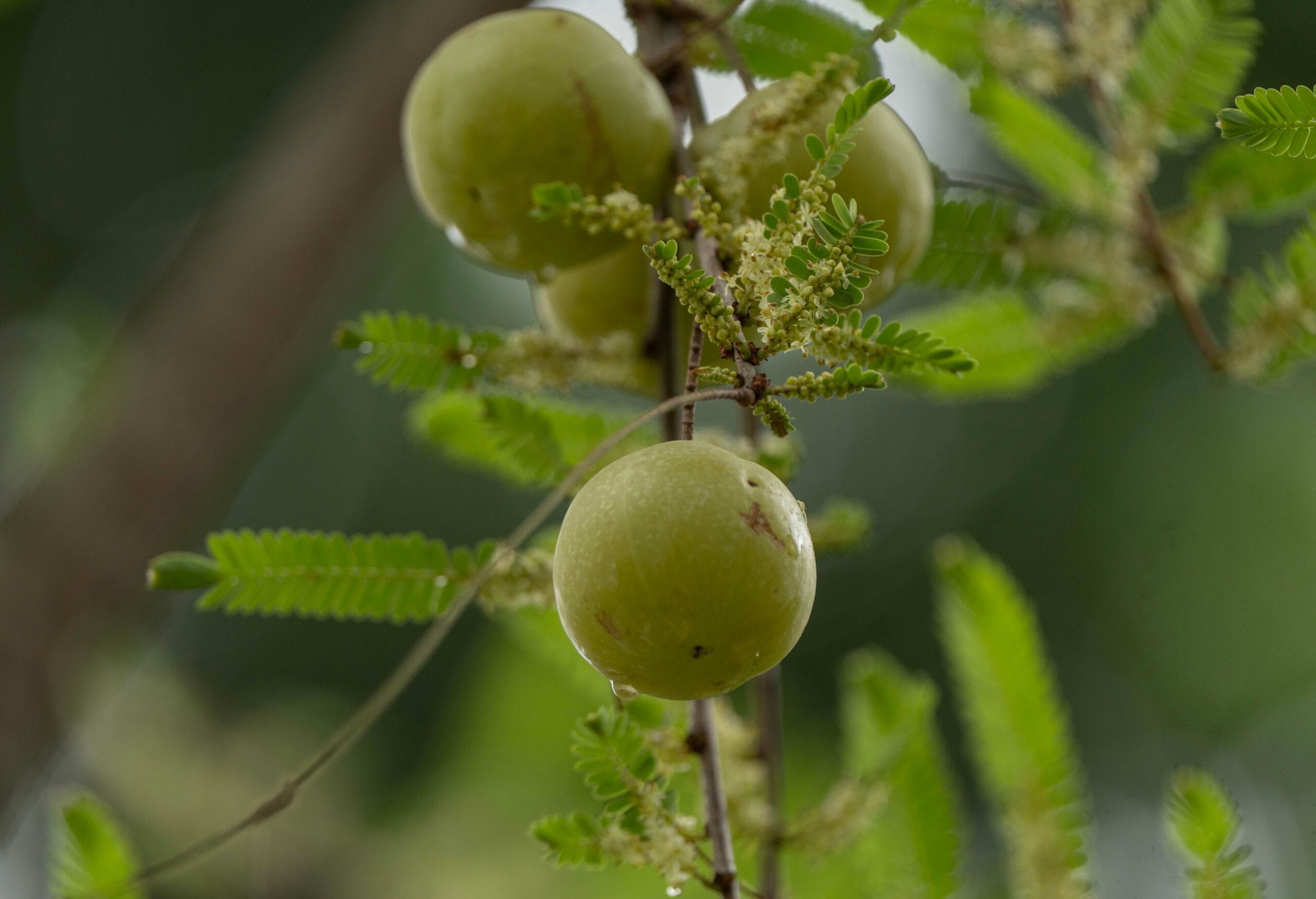
Amla (Phyllanthus emblica, also called Emblica officinalis) is the fruit of the Indian gooseberry tree, native to India and widely cultivated across the subcontinent. Sanskrit texts call it Amalaki, and it's one of the three fruits in Triphala and the primary ingredient in Chyawanprash — two of Ayurveda's most enduring formulations.
The fruit itself is small, round, pale green to yellow, and intensely sour and astringent when eaten raw. That sourness comes from a combination of very high vitamin C content and a dense load of tannins — the same tannins that, unusually, help stabilize the vitamin C rather than letting it degrade.
Amla is eaten fresh, dried, powdered (churna), pickled, candied (murabba), or juiced. In Indian households it shows up as a monsoon-season fresh fruit, a year-round powder stirred into water, or an ingredient in hair oils and skincare — though the nutrition case rests entirely on how it's eaten, not applied.
2. Amla Nutrition Per 100g
Values below are for fresh, raw amla, edible portion. ICMR-NIN's IFCT 2017 is the reference standard for Indian food composition; USDA figures are shown alongside where available, since lab values vary by variety, region, and ripeness.
The spread in vitamin C values isn't sloppy data — amla's ascorbic acid content genuinely varies with cultivar, growing region, and how ripe the fruit was at harvest. For everyday reference, treating fresh amla as roughly 500–600mg vitamin C per 100g is a defensible, commonly-cited middle ground.
3. Vitamin C Content: Why Amla Stands Out
An orange delivers about 53mg of vitamin C per 100g. Amla delivers 10 to 12 times that in the same weight — which is where the "20 oranges in one amla serving" comparison comes from (based on average fruit sizes, not per-100g weight).
What actually makes amla unusual isn't just the quantity — it's the stability. Vitamin C is normally heat-labile; cooking or drying most fruits destroys much of it. Amla's tannins bind to the ascorbic acid and slow its degradation, which is why amla powder and even cooked preparations like murabba retain a meaningful fraction of the original vitamin C, unlike, say, cooked citrus.
4. Macronutrients
5. Micronutrients
6. Health Benefits (Evidence-Based)
The claims made about amla are extensive; the ones with actual clinical or mechanistic backing are narrower. Here's what current research supports:
Antioxidant and anti-inflammatory activity. Amla's polyphenol and tannin content gives it one of the higher ORAC (oxygen radical absorbance capacity) values recorded among fruits. This translates to measurable reduction in oxidative stress markers in supplementation studies.
Lipid and cardiovascular markers. Several human trials using amla powder or extract have reported improvements in total cholesterol and LDL, with some studies showing 15–25% improvements in lipid parameters over supplementation periods of 6–12 weeks.
Blood glucose regulation. Amla's fibre slows carbohydrate absorption, and small trials suggest improvements in fasting and post-meal glucose levels with regular intake. It is a supportive dietary addition, not a substitute for glucose management.
Digestive support. The fibre and natural stimulation of digestive enzyme activity support regularity — one of amla's more consistently reported traditional and modern uses.
Skin and hair. A randomized, placebo-controlled trial of topical amla gel showed measurable improvements in skin hydration and elasticity over 84 days. Oral amla syrup has also shown improvement in hair growth markers in small trials on androgenetic alopecia, though this evidence base is thinner than the cardiovascular and antioxidant data.
Immune support. Amla is described as an immunomodulator rather than a simple immune "booster" — it appears to help regulate immune response rather than non-specifically stimulate it, though this mechanism needs more human trial data to be considered firmly established.
What amla is not: a proven treatment for cancer, a verified anti-aging cure, or a substitute for medical management of diabetes or cardiovascular disease. Most of the strongest evidence comes from small trials or animal/in-vitro studies — promising, but not yet at the level of a first-line clinical intervention.
7. Fresh vs Dried vs Juice vs Powder
Fresh amla or fresh juice will always give you the most complete nutrient profile. Powder is the most practical for daily year-round use but should be treated as a supplementary vitamin C source, not the primary one — the retention loss is real.