
Protein Intake Calculator – Daily Protein Requirement
Find out how much protein you need per day based on your body weight and goals. Perfect for muscle gain, fat loss, and fitness.
Lean Body Mass = Weight × (1 − Body Fat%). When provided, fat loss calculations use LBM instead of total weight.
This tool is for informational purposes only. Consult a registered dietitian or physician before making significant dietary changes.
Related Calculator
Why Protein Is Important
Protein is essential for many biological processes in the body. It is made up of amino acids that are necessary for building and repairing tissues.
Key roles of protein include:
- Supporting muscle growth and repair
- Producing enzymes and hormones
- Maintaining healthy skin, hair, and nails
- Supporting immune function
- Helping with satiety and weight management
Adequate protein intake is particularly important for individuals who exercise regularly, follow weight-loss diets, or aim to increase muscle mass.
How Much Protein Do You Need Per Day?
Protein requirements vary depending on several factors such as body weight, activity level, and fitness goals.
The most common way to estimate daily protein intake is using grams of protein per kilogram of body weight (g/kg).
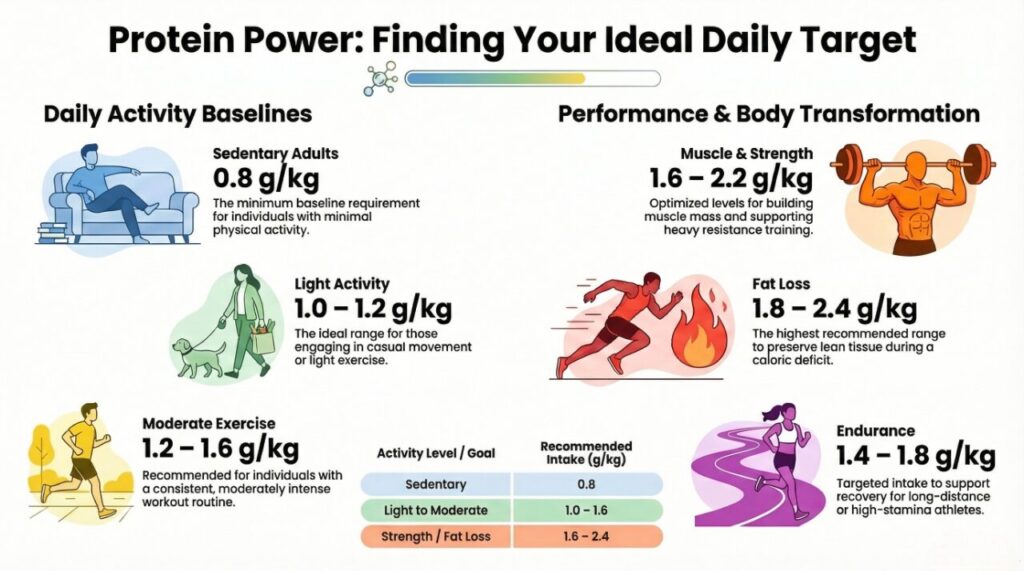
General Protein Intake Guidelines
| Activity Level or Goal | Recommended Protein Intake |
|---|---|
| Sedentary adults | 0.8 g/kg body weight |
| Light activity | 1.0 – 1.2 g/kg |
| Moderate exercise | 1.2 – 1.6 g/kg |
| Strength training | 1.6 – 2.2 g/kg |
| Muscle gain | 1.6 – 2.2 g/kg |
| Fat loss | 1.8 – 2.4 g/kg |
| Endurance athletes | 1.4 – 1.8 g/kg |
For example:
If a person weighs 70 kg and requires 1.6 g of protein per kg, the daily protein intake would be:
70 × 1.6 = 112 grams of protein per day
How the Protein Intake Calculator Works
This calculator estimates your recommended protein intake using the following steps:
- Determine your body weight
- Select your activity level or fitness goal
- Apply the appropriate protein factor (g/kg)
- Calculate the recommended daily protein intake
The result provides an estimate of how many grams of protein you should consume per day.
Protein Intake for Different Goals
Protein for Muscle Gain
Individuals who want to build muscle usually require higher protein intake. Consuming around 1.6–2.2 g of protein per kg of body weight helps support muscle protein synthesis and recovery from strength training.
Protein for Weight Loss
Higher protein intake can help preserve lean muscle mass during weight loss and improve satiety. Many weight-loss diets recommend 1.8–2.4 g/kg of protein.
Protein for General Health
For individuals with low activity levels, the minimum recommended intake is about 0.8 g/kg of body weight, which is the general dietary recommendation for adults.
Protein Per Meal
Distributing protein evenly throughout the day may improve muscle protein synthesis and overall nutrient utilization.
For example:
If your daily protein requirement is 120 grams, you could divide it across meals like this:
- Breakfast: 30 g
- Lunch: 30 g
- Dinner: 30 g
- Snack or post-workout meal: 30 g
Consuming 20–40 grams of protein per meal is often recommended for optimal muscle maintenance and growth.
Best Sources of Protein
Animal Protein Sources
- Eggs
- Chicken breast
- Fish
- Lean meat
- Milk and dairy products
- Greek yogurt
Plant Protein Sources
- Lentils
- Chickpeas
- Beans
- Tofu and tempeh
- Nuts and seeds
- Whole grains
A balanced diet can include a variety of protein sources to meet daily requirements.
Factors That Affect Protein Needs
Protein requirements may vary based on:
- Body weight
- Physical activity level
- Age
- Muscle mass
- Health conditions
- Fitness goals
Athletes and highly active individuals usually require higher protein intake compared to sedentary individuals.
Frequently Asked Questions(FAQs)
How much protein should I eat per day?
Most adults need around 0.8–1.6 grams of protein per kilogram of body weight, depending on activity level and health goals.
Is too much protein harmful?
For healthy individuals, moderate increases in protein intake are generally safe. However, extremely high protein intake may not provide additional benefits and could stress the kidneys in individuals with certain medical conditions.
Can protein help with weight loss?
Yes. Protein can increase feelings of fullness, help preserve lean muscle mass, and support metabolic health during weight loss.
Should athletes consume more protein?
Yes. Athletes and individuals who perform strength training or endurance exercise often require 1.4–2.2 g/kg of protein to support recovery and performance.