Custard Apple Benefits & Nutrition: Calories, Fibre, Vitamins & More
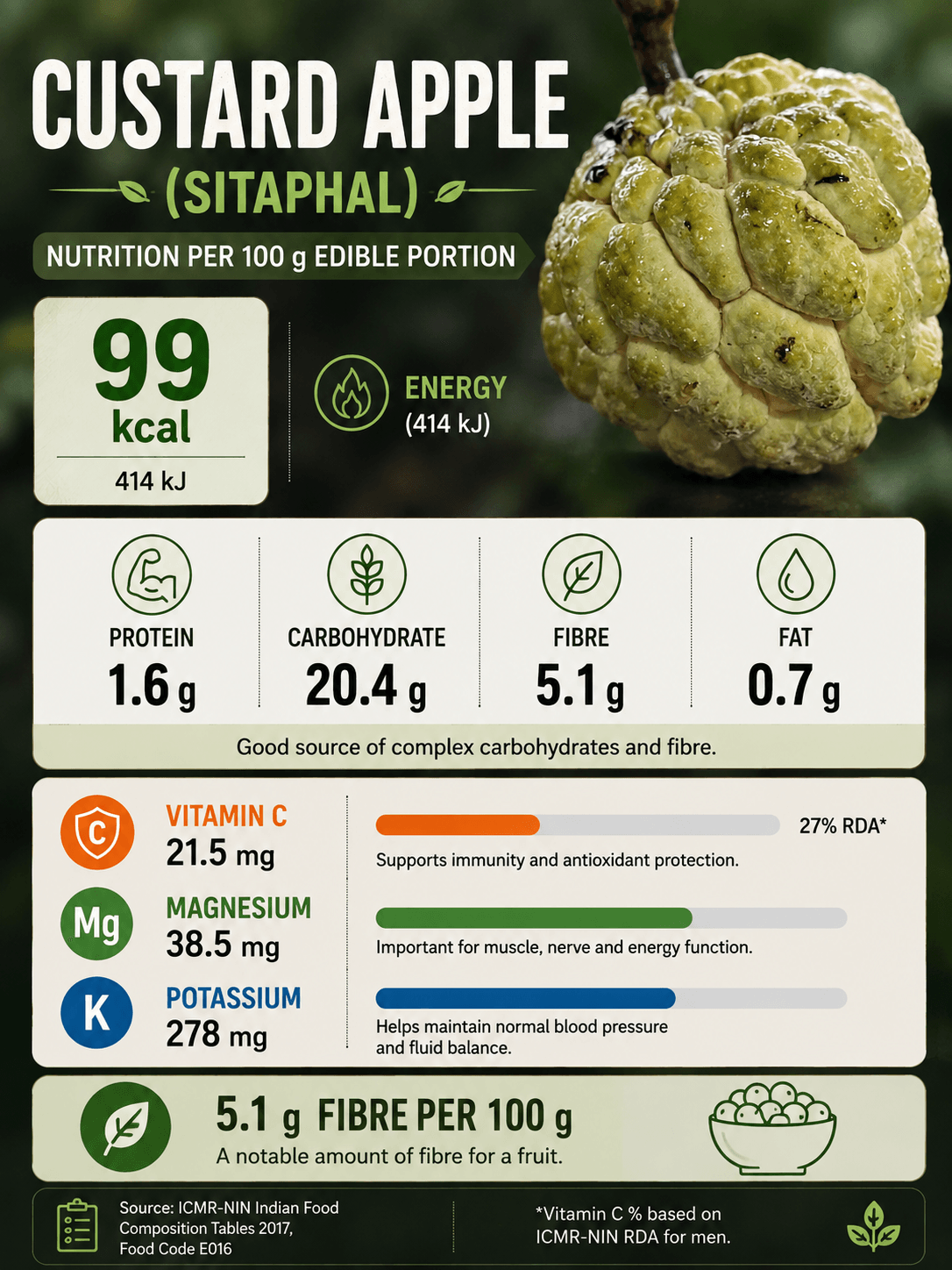
Custard apple is a seasonal Indian fruit that provides about 99 calories, 5.1 g of dietary fibre, and 21.5 mg of vitamin C per 100 g of edible pulp. It also provides 38.5 mg of magnesium, along with potassium, phosphorus and several B vitamins. So while custard apple is naturally sweet, its nutritional profile is more interesting than its sweetness alone suggests. The figures here are based on the ICMR-NIN Indian Food Composition Tables (IFCT) 2017.
Growing up, custard apple season was easy to track without a calendar. There were several trees around the house, and you simply waited for the fruit to soften. That’s rarer now. Many of us, including those with just one or two trees left at home, buy custard apples from the market like everyone else. What hasn’t changed is what’s inside the fruit. And that’s worth looking at properly, rather than repeating the same few health claims that appear in almost every article about it.
Table of Contents
What Is Custard Apple?
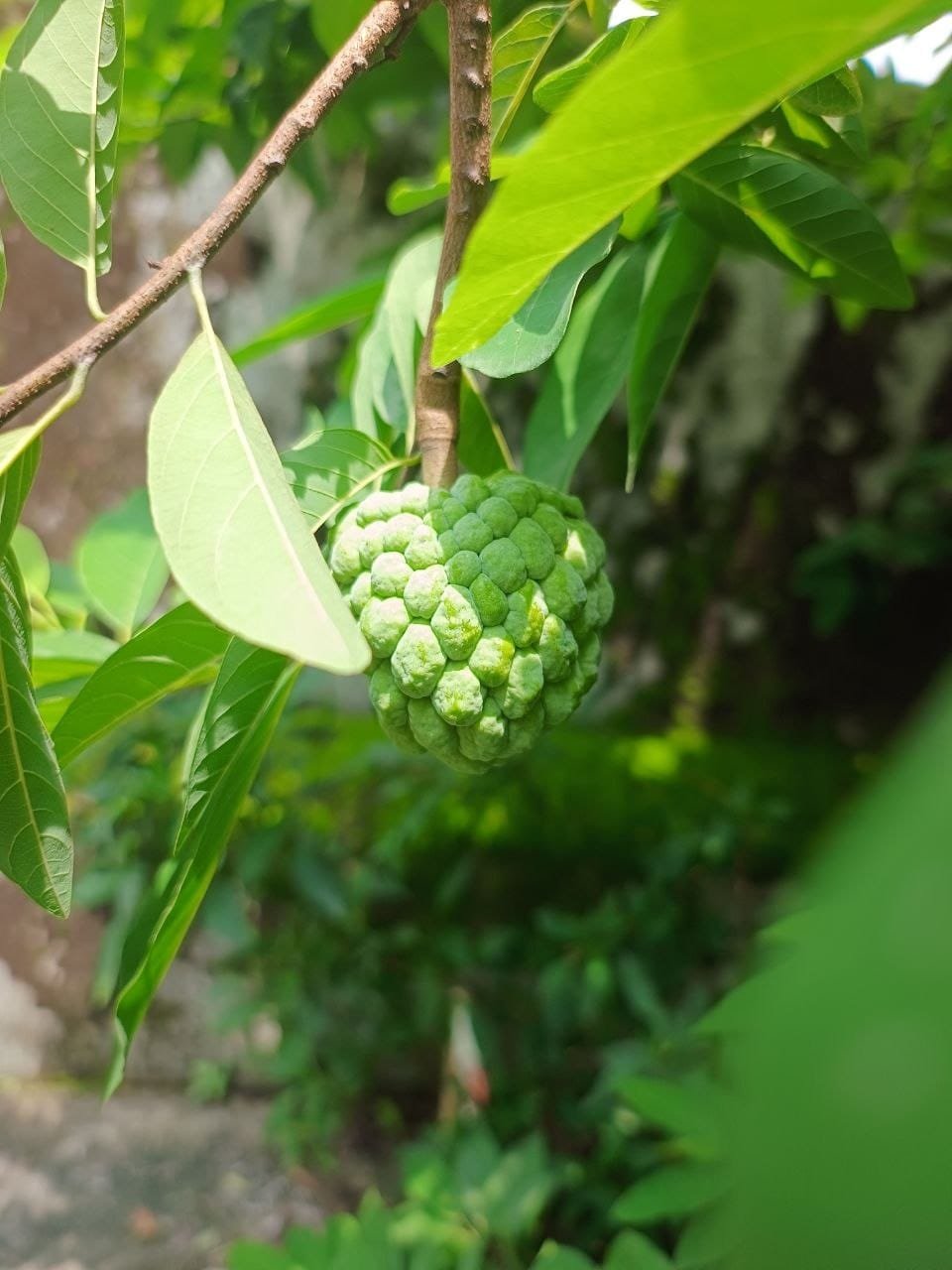
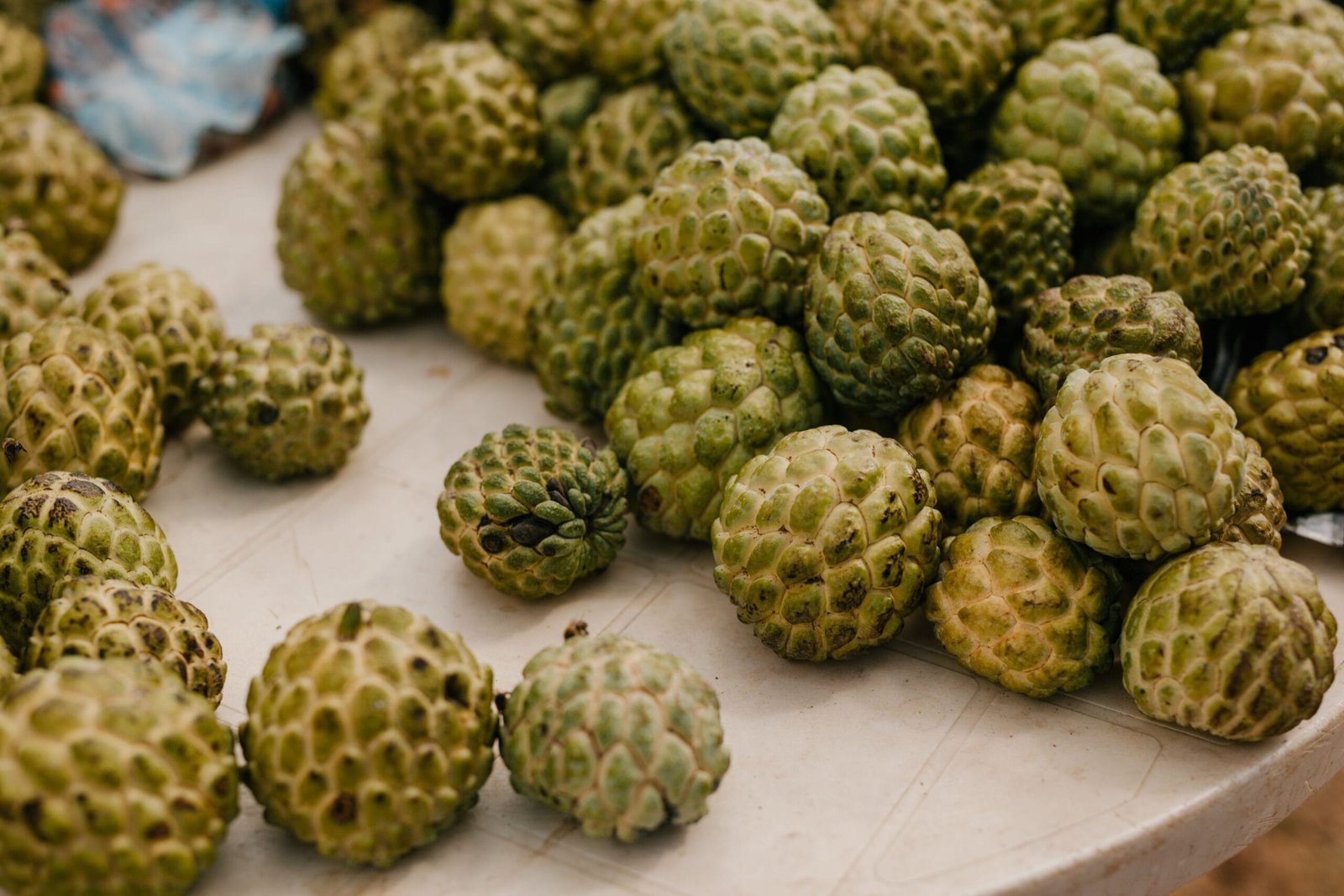
Custard apple is the fruit of Annona squamosa, a species also commonly known as sugar apple or sweetsop. In India, it is widely known as sitaphal or sharifa, although the name varies by region. It is called sitaphal in Marathi and Gujarati, sharifa in Punjabi, sitaphala/seethaphala in Kannada, ata in Bengali and Odia, seethapazham in Tamil and Malayalam, and sitaphalam in Telugu. You may also see spellings such as sitafal, seetaphal, and seethaphal in Indian markets and online.
Custard apple is grown in several parts of India, including Maharashtra, Madhya Pradesh, Andhra Pradesh, Telangana, Karnataka, Odisha, Gujarat, and Tamil Nadu, and is widely sold in local markets during its seasonal availability (August to December). The fruit is usually eaten fresh once the segments have softened and the pulp has become creamy.
Custard Apple Nutrition Facts (Per 100 g)
| Nutrient | Per 100 g edible portion |
|---|---|
| Energy | 414 kJ (≈99 kcal) |
| Protein | 1.62 g |
| Available carbohydrate | 20.38 g |
| Total dietary fibre | 5.10 g |
| Fat | 0.67 g |
| Vitamin C | 21.51 mg |
| Potassium | 278 mg |
| Magnesium | 38.47 mg |
| Phosphorus | 40.81 mg |
| Calcium | 28.20 mg |
| Iron | 0.42 mg |
| Sodium | 3.11 mg |
| Zinc | 0.22 mg |
| Manganese | 0.15 mg |
| Copper | 0.19 mg |
| Vitamin B1 (Thiamine) | 0.13 mg |
| Vitamin B2 (Riboflavin) | 0.09 mg |
| Vitamin B3 (Niacin) | 0.69 mg |
| Vitamin B5 (Pantothenic acid) | 0.19 mg |
| Vitamin B6 | 0.07 mg |
| Total folates | 7.60 µg |
| Biotin | 0.76 µg |
Source: ICMR-NIN, Indian Food Composition Tables (IFCT) 2017, Food Code E016, Custard apple (Annona squamosa). NIN’s current website continues to provide IFCT 2017 as an official food-composition resource
Note: IFCT 2017 reports the energy value as 414 kJ. The approximately 99 kcal figure is calculated by converting kJ to kcal. The IFCT entry has n=1, so these values should be treated as representative of the sampled food rather than exact values for every custard apple.
What stands out? Custard apple isn’t particularly high in protein or fat, but its 5.1 g of dietary fibre per 100 g is notable. It also provides 21.5 mg of vitamin C and 38.5 mg of magnesium, along with 278 mg of potassium. At the same time, it provides 20.38 g of available carbohydrate per 100 g, so its sweetness isn’t just an impression — it has a substantial carbohydrate contribution.
For a Practical Serving: 150 g Edible Portion
| Nutrient | Per 150 g edible portion* |
|---|---|
| Energy | ≈149 kcal |
| Available carbohydrate | 30.57 g |
| Total dietary fibre | 7.65 g |
| Protein | 2.43 g |
| Vitamin C | 32.27 mg |
| Potassium | 417 mg |
| Magnesium | 57.71 mg |
| Calcium | 42.30 mg |
Calculated from IFCT 2017 values for 100 g edible portion. This represents an estimated 150 g edible portion, not an official NIN serving size. Actual edible weight varies by fruit size and seed content.
Why do custard apple nutrition numbers differ between sources?
You may find different nutrition figures for custard apple on other websites and in older nutrition references. For example, published values for vitamin C, magnesium, fibre and other nutrients can differ noticeably from the IFCT 2017 figures shown above.
This does not necessarily mean that one database is wrong. Nutrition values for fresh fruit can vary with cultivar, growing conditions, maturity, region and the particular sample tested. Different food-composition databases also use different samples and analytical methods.
For this article, we use the ICMR-NIN Indian Food Composition Tables (IFCT) 2017 as the primary source because it is an Indian food-composition database and specifically includes custard apple as Food Code E016. We have not replaced its values with numbers from international databases simply because those figures appear more frequently online.
For reference: USDA FoodData Central reports different values for raw sugar apple, including approximately 94 kcal, 36.3 mg vitamin C, 247 mg potassium and 22 mg magnesium per 100 g. Older Indian references also report somewhat different values. These figures are useful for comparison, but they should not be presented as if they were measurements of the same sample.
Calories in Custard Apple
At around 99 kcal per 100 g of edible portion according to IFCT 2017, custard apple is more energy-dense than fruits such as papaya and watermelon and is in a similar range to banana. A calculated 150 g edible portion provides about 149 kcal, while 200–250 g would provide roughly 198–248 kcal. The difference is worth keeping in mind because custard apples vary considerably in size and in the amount of edible flesh they contain.
Use the [Vitaroxi Macronutrient Calculator] if you’re tracking your intake against a daily target.
Custard Apple Carbohydrates, Protein, Fat & Fibre
Most of custard apple’s energy comes from carbohydrate. IFCT 2017 reports 20.38 g of available carbohydrate per 100 g, along with 5.10 g of dietary fibre. The fibre includes 3.17 g of insoluble fibre and 1.93 g of soluble fibre.
Protein is modest at 1.62 g per 100 g, while fat is low at 0.67 g. So nutritionally, custard apple is primarily a carbohydrate- and fibre-containing fruit, rather than a significant source of protein or fat.
The combination of natural sweetness and relatively substantial fibre is one reason custard apple can be quite filling, but its carbohydrate content still matters when portion size is being considered.
Vitamins and Minerals in Custard Apple
Custard apple provides several vitamins and minerals in smaller amounts alongside its carbohydrate and fibre content:
- Vitamin C: 21.51 mg per 100 g. Using the ICMR-NIN reference values of 80 mg/day for men and 65 mg/day for women, this is about 27% and 33%, respectively.
- Potassium: 278 mg per 100 g, compared with just 3.11 mg of sodium.
- Magnesium: 38.47 mg per 100 g, making it a useful dietary source of magnesium.
- Phosphorus and calcium: 40.81 mg and 28.20 mg per 100 g, respectively.
- B vitamins: IFCT reports 0.13 mg thiamine, 0.09 mg riboflavin, 0.69 mg niacin, 0.07 mg vitamin B6 and 7.60 µg total folates per 100 g.
- Iron and zinc: 0.42 mg and 0.22 mg per 100 g, respectively. These are present, but custard apple shouldn’t be treated as a major source of either mineral.
Custard Apple Health Benefits
Supports normal digestion: Custard apple provides 5.1 g of dietary fibre per 100 g, including 1.93 g of soluble fibre and 3.17 g of insoluble fibre. Fibre contributes to normal bowel function and can help slow digestion and carbohydrate absorption. How much benefit you get depends on the rest of your diet and your overall fibre intake.
Provides vitamin C for immune function and iron absorption: With 21.51 mg of vitamin C per 100 g, custard apple can make a useful contribution to vitamin C intake. Vitamin C contributes to normal immune function and also improves the absorption of non-heme iron from plant foods. Eating custard apple alongside a meal containing dal, beans, or leafy vegetables can therefore provide vitamin C at the same time as plant-based iron.
Provides potassium with very little sodium: IFCT 2017 reports 278 mg of potassium and 3.11 mg of sodium per 100 g. Potassium is important for normal nerve and muscle function and helps maintain normal blood pressure. Custard apple can contribute to potassium intake, although it should not be treated as a blood-pressure treatment or a replacement for an overall balanced diet.
A useful fruit source of magnesium: At 38.47 mg of magnesium per 100 g, custard apple provides more magnesium than you might expect from a fruit. Magnesium contributes to normal energy metabolism, muscle and nerve function, and the maintenance of normal bones.
Provides a moderate amount of energy and carbohydrate: At approximately 99 kcal and 20.38 g of available carbohydrate per 100 g, custard apple is more energy-dense than some watery fruits. That can be useful when you want a more substantial fruit serving, while people monitoring carbohydrate or calorie intake may simply need to pay attention to portion size.
Is Custard Apple Good for Weight Management?
Custard apple can fit into either a weight-loss or weight-gain diet; the portion and the rest of the diet matter more than the fruit itself. At about 99 kcal and 20.38 g of available carbohydrate per 100 g, it is more energy-dense than fruits such as papaya and watermelon. Its 5.1 g of fibre per 100 g also makes it more substantial than a very watery fruit.
For someone trying to lose weight, custard apple can still be included as a measured fruit portion rather than treated as a freely available low-calorie snack. For someone trying to increase calorie intake, its higher energy density can make it easier to add calories without eating a very large volume of food.
A 150 g edible portion provides about 149 kcal, based on the IFCT 2017 values. The actual amount of edible flesh in one fruit varies considerably with fruit size and seed content.
Is Custard Apple Good for Diabetes?
Having diabetes does not automatically mean avoiding whole fruit. Fruit contains carbohydrate, so the amount eaten needs to fit into the person’s overall meal plan. Diabetes guidance generally favors whole fruit over juice and emphasizes appropriate portions.
Custard apple does require some attention to portion size because IFCT 2017 reports 20.38 g of available carbohydrate per 100 g, along with 5.1 g of dietary fibre. A 150 g edible portion would provide about 30.6 g of available carbohydrate. That is a meaningful carbohydrate contribution, particularly for someone who is counting carbohydrates.
So there is no good reason to describe custard apple as a fruit that everyone with diabetes must avoid. At the same time, it would be misleading to call it a “diabetes-friendly” fruit without qualification. Portion size, the rest of the meal, medication, blood-glucose response and the individual’s overall diabetes plan all matter.
If you have diabetes and want to include custard apple, a smaller portion of whole fruit is a more sensible approach than eating a large amount at once or choosing custard-apple juice. If you’re unsure how much fits your meal plan, a dietitian or your healthcare professional can help determine an appropriate portion.
How Much Custard Apple Can You Eat?
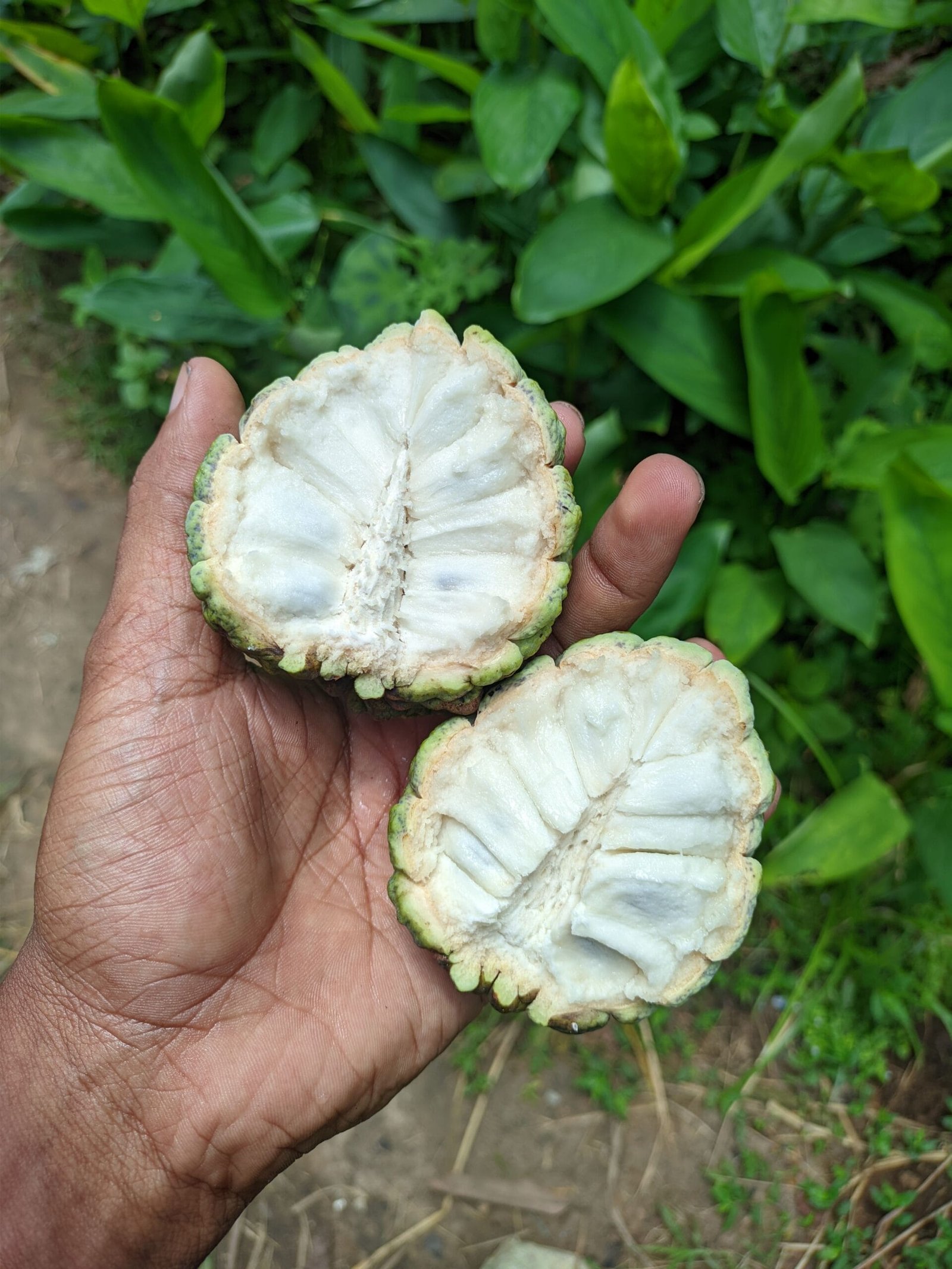
There is no single standard serving size for custard apple. A useful reference is 150 g of edible portion, which provides about 149 kcal, 30.57 g of available carbohydrate and 7.65 g of dietary fibre. The actual amount of edible flesh in one fruit varies with its size and seed content, so a whole “medium fruit” should not automatically be assumed to contain 150 g of edible flesh.
For most healthy adults, custard apple can be included as part of the day’s overall fruit intake. If you’re managing diabetes or monitoring carbohydrate intake, a smaller portion may be more appropriate, depending on your individual meal plan, medications and blood-glucose response. It is better to count the fruit as part of your carbohydrate intake rather than treating it as a food that needs to be completely avoided.
Custard apple is seasonal in India, so it makes sense to enjoy it when it is available rather than treating it as an everyday staple. Availability varies by region and growing conditions.
How to Choose and Store Custard Apple
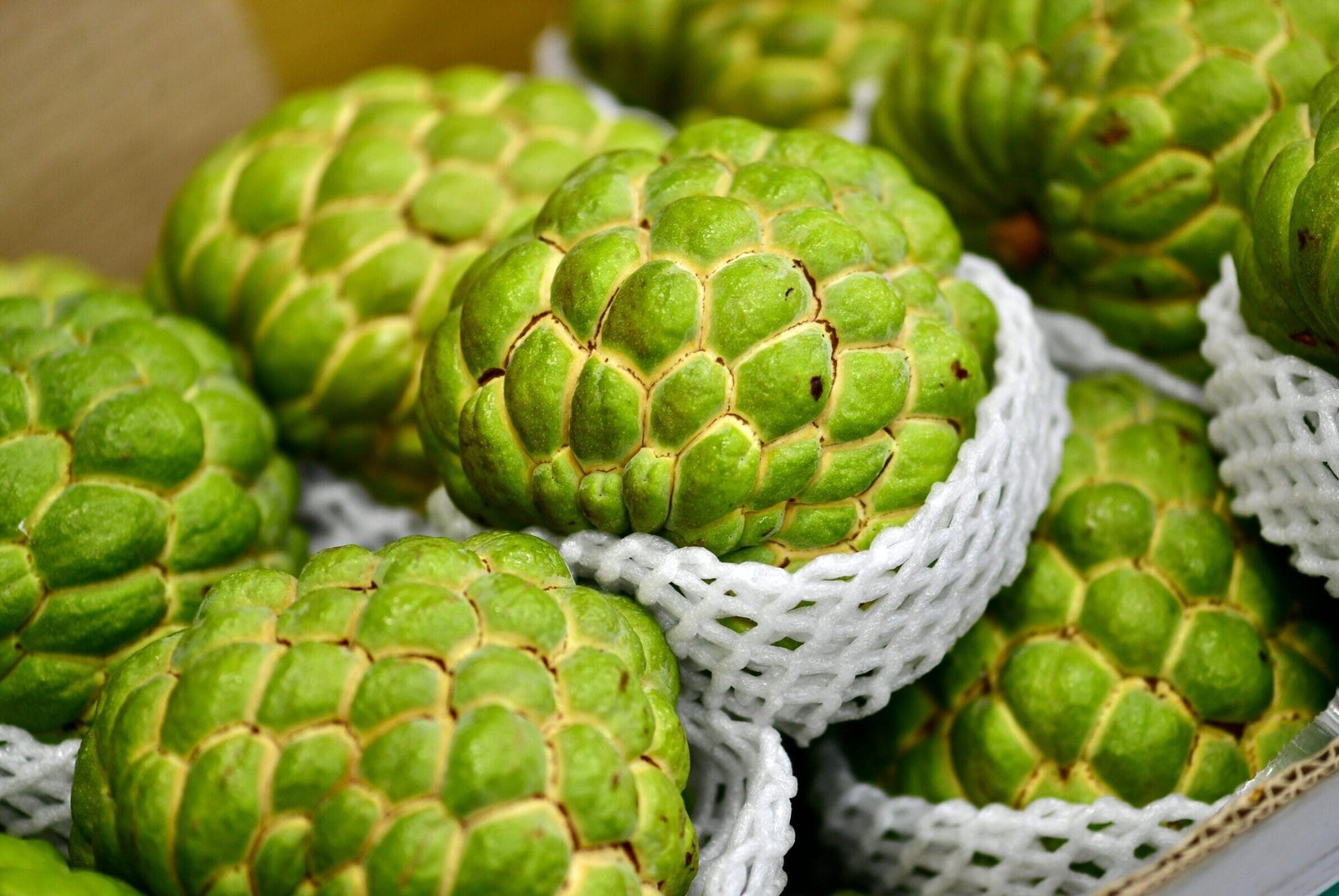
Choose a custard apple with green to yellowish-green skin and well-developed segments. A mature fruit will soften as it ripens; avoid fruit that is already very dark, excessively soft, or showing signs of spoilage. If the fruit is still firm, leave it at room temperature in a cool, dark place until it softens. Once ripe, refrigerating it can slow further softening.
Custard apple is best eaten soon after it ripens because the flesh becomes very soft. If you are not eating it immediately, refrigeration can help extend its usable quality, although the exact storage time depends on how ripe the fruit was when refrigerated.
Custard Apple Seeds: What You Should Know
When eating custard apple, separate the seeds from the pulp and discard them rather than chewing or blending them. The seeds contain several bioactive compounds, including acetogenins and alkaloids, so they are not considered an edible part of the fruit. Research on Annona squamosa seed compounds
There is no need to be alarmed about eating the fruit itself. The simple rule is: enjoy the soft pulp and leave the seeds out. Take particular care not to get crushed seed material into the eyes; cases of eye irritation and toxic keratoconjunctivitis have been reported following direct exposure to crushed seeds. Indian Journal of Ophthalmology case report
Custard Apple vs Banana, Guava, Papaya and Apple
The following comparison uses values from the Indian Food Composition Tables (IFCT) 2017, calculated per 100 g edible portion. The specific entries are custard apple, ripe robusta banana, white-flesh guava, ripe papaya and big apple.
Nutrition comparison per 100 g
| Nutrient | Custard Apple | Banana | Guava | Papaya | Apple |
|---|---|---|---|---|---|
| Energy | 99 kcal | 105 kcal | 32 kcal | 41 kcal | 62 kcal |
| Protein | 1.62 g | 1.23 g | 1.44 g | 0.42 g | 0.29 g |
| Total fat | 0.67 g | 0.33 g | 0.32 g | 0.14 g | 0.64 g |
| Dietary fibre | 5.10 g | 1.94 g | 8.59 g | 1.80 g | 2.59 g |
| Available carbohydrate | 20.38 g | 23.63 g | 5.13 g | 6.68 g | 13.11 g |
| Vitamin C | 21.51 mg | 16.81 mg | 214 mg | 43.09 mg | 3.57 mg |
The underlying values are reported in the database as energy in kJ and nutrients in their respective units; the kcal figures above are rounded conversions.
What the comparison shows
Custard apple provides a moderate amount of fibre: Custard apple contains 5.10 g of dietary fibre per 100 g, which is higher than banana, papaya and apple. Guava is substantially higher, with 8.59 g per 100 g.
Custard apple is relatively energy-dense: At about 99 kcal per 100 g, custard apple provides similar energy to banana but considerably more than guava, papaya or apple. It is therefore a more energy-dense fruit rather than a low-calorie fruit.
Custard apple contains more protein than these fruits: At 1.62 g protein per 100 g, custard apple is higher than banana, guava, papaya and apple in this comparison. However, this is still a modest amount, so custard apple should not be considered a high-protein food.
Guava is the clear vitamin C winner: Guava provides 214 mg vitamin C per 100 g, compared with 43.09 mg in papaya, 21.51 mg in custard apple, 16.81 mg in banana and 3.57 mg in apple. Custard apple provides vitamin C, but guava and papaya are much stronger sources.
Bottom line: Custard apple stands out for its combination of fibre, carbohydrate and moderate energy content. It contains more fibre than banana, papaya and apple, but guava provides considerably more fibre and vitamin C. Custard apple is therefore a nutritious fruit choice, but it should not be presented as superior to all other fruits.
Frequently Asked Questions
1. How many calories are in one custard apple?
A 150 g edible portion of custard apple provides about 149 calories, based on the IFCT 2017 value of 99 kcal (414 kJ) per 100 g. This is a calculated estimate, not a standard calorie value for one whole fruit, because fruit size and the amount of edible flesh vary.
2. Is custard apple good for weight loss or weight gain?
Custard apple can fit into either a weight-loss or weight-gain diet. At about 99 kcal and 20.38 g of available carbohydrate per 100 g, it is relatively energy-dense for a fruit, while its 5.1 g of fibre can contribute to fullness. For weight management, the important factor is the portion and your overall calorie intake rather than whether the fruit is labelled as a weight-loss or weight-gain food.
3. Can people with diabetes eat custard apple?
People with diabetes do not necessarily need to avoid custard apple, but portion size matters. IFCT 2017 reports 20.38 g of available carbohydrate per 100 g, so a 150 g edible portion provides about 30.6 g. How much fits depends on the individual’s overall carbohydrate intake, medication and blood-glucose response. Whole fruit is preferable to custard-apple juice because juice makes it easier to consume a larger amount quickly.
4. Is custard apple good during pregnancy?
Custard apple can be included as part of a varied pregnancy diet when eaten as a normal food portion. It provides vitamin C, potassium and fibre, but its folate (7.6 µg/100 g) and iron (0.42 mg/100 g) content is relatively modest, so it should not be relied on as a major source of either nutrient. During pregnancy, overall dietary intake and any supplements recommended by a healthcare professional are more important than relying on one fruit.
5. Does custard apple cause cold and cough?
There is no good evidence that eating custard apple causes a cold or cough. The common cold is caused by viral infections, not by a particular fruit. If someone notices throat discomfort after eating custard apple, that individual reaction is different from the fruit causing a respiratory infection.
6. Does custard apple cause gas?
It can cause gas or bloating in some people, particularly if you eat a large amount at once. Custard apple provides 5.1 g of fibre per 100 g, including soluble and insoluble fibre, so someone who is not used to much fibre may notice more digestive discomfort after a large serving. If it consistently causes symptoms, reduce the portion rather than assuming the fruit itself is harmful.
7. Does custard apple cause constipation?
Custard apple contains about 5.1 g of dietary fibre per 100 g, so it is not naturally a low-fibre fruit. Fibre generally supports normal bowel function, although suddenly eating a large amount of fibre without enough fluid can cause digestive discomfort in some people.
8. Does custard apple cause diarrhea or loose motion?
Custard apple does not generally cause diarrhea when eaten as a normal food. However, eating a large amount may cause digestive discomfort in some people. If diarrhea occurs repeatedly after eating it, other causes such as food intolerance, contamination, or an unrelated digestive problem should also be considered.
9. Does custard apple contain calcium?
Yes. Custard apple provides about 28.2 mg of calcium per 100 g of edible portion, according to IFCT 2017. A 150 g edible portion would provide roughly 42.3 mg. It contributes to your daily calcium intake, but custard apple is not a particularly rich source of calcium, so it should not be relied on as a major calcium food.