
Nutritional Value and Recommended Intake of Sugar, Jaggery, and Honey
Compare calories and carbohydrate content of Indian sweeteners like sugar, jaggery, and honey. Learn ICMR and WHO recommendations for daily sugar intake and healthier alternatives.
Understanding Sugars and Their Role in the Diet
Sugar and sweeteners are concentrated sources of energy (carbohydrates) that provide instant fuel to the body.
In Indian diets, common sweeteners include white sugar, jaggery (gur), honey, and brown sugar. While all provide similar calories, jaggery and honey also contain trace minerals, antioxidants, and vitamins.
Excess consumption, however, can lead to obesity, diabetes, and dental problems. Hence, moderation is key.
Nutrient Composition of Common Indian Sweeteners
| Category | Food | Serving_g | Calories_kcal | Carbohydrate_g | Protein_g | Fat_g | Fiber_g | Sodium_mg |
|---|---|---|---|---|---|---|---|---|
| Sugars & Sweets | Jaggery (Gur) | 100 | 383 | 98.0 | 0.0 | 0.0 | 0.0 | 0 |
| Sugars & Sweets | Sugar (refined) | 100 | 387 | 99.8 | 0.0 | 0.0 | 0.0 | 0 |
| Sugars & Sweets | Gulab Jamun (average) | 100 | 300 | 40.0 | 5.0 | 12.0 | 0.0 | 60 |
| Sugars & Sweets | Ladoo (besan) | 100 | 450 | 50.0 | 10.0 | 20.0 | 0.0 | 40 |
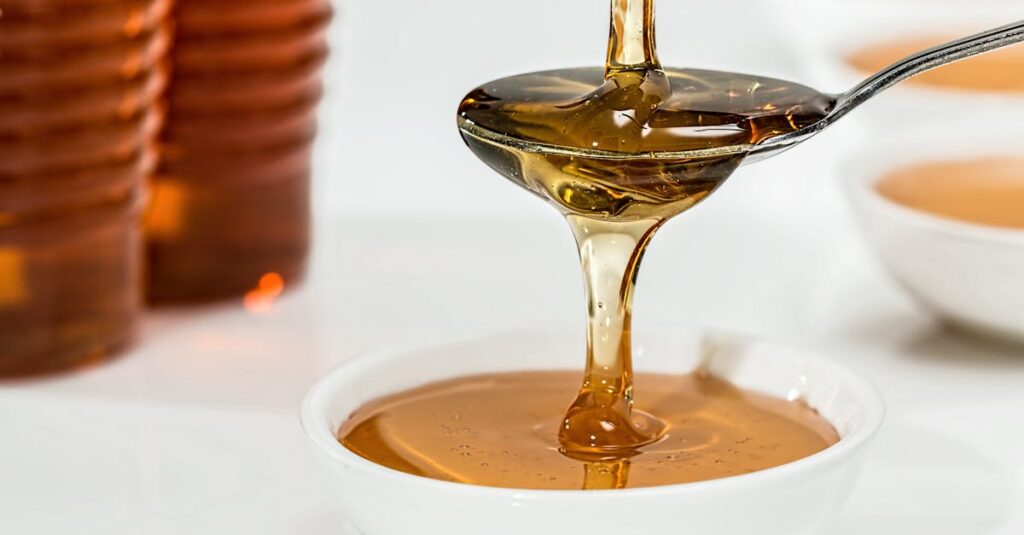
| Sugars & Sweets | Honey | 100g | 304 | 82.4 | 0.3 | 0 | 0.2 | 4 |
⚠️ “Did you know? Just one tablespoon (12 g) of sugar adds 48 kcal — if you take 4 teaspoons daily in tea, that’s almost 200 extra calories per day!”
Recommended Daily Intake
ICMR, WHO & USDA Recommendations for Sugar and Sweeteners
According to ICMR-NIN (2020):
- Added sugar intake:
- Should not exceed 10% of total daily calories.
- For a 2,000 kcal diet, that equals about 50 g (10 teaspoons) of sugar per day.
- Prefer natural sugars (from fruits, milk, honey) over refined or processed sugars.
- Jaggery and honey can be used as traditional sweeteners but in limited quantities.
According to WHO, FAO and USDA:
- Free sugar intake (including added sugar, honey, fruit juices) should be <10% of total energy; ideally <5% for better heart and dental health.
- This equals roughly 25 g/day (5 teaspoons) of added sugar for an adult consuming 2,000 kcal/day.
- Encourage foods with natural sweetness such as fruits instead of sugary snacks or beverages.
Key Nutrients and Functions
| Nutrient | Function | RDA (ICMR/WHO) |
|---|---|---|
| Carbohydrates | Primary source of quick energy | 45–65% of daily calories |
| Natural Sugars (Sucrose, Glucose, Fructose) | Energy for brain and muscles | ≤10% of calories (WHO) |
| Iron (in Jaggery) | Helps prevent anemia | 17 mg/day |
| Antioxidants (in Honey) | Protect cells from damage | — |
| Calcium, Potassium (Trace in Jaggery) | Support metabolism | — |
Diet Tips
- Replace refined sugar with small amounts of jaggery or honey when possible.
- Limit sweetened drinks (tea, coffee, juices) and packaged desserts.
- Use fruit purées or dates for natural sweetness in recipes.
- Read labels carefully — hidden sugars are often listed as glucose syrup, maltose, or dextrose.
- Balance sweet foods with fibre-rich meals to prevent blood sugar spikes.