
Vegetables: Vitamins, Minerals, Macros & Health Benefits
A comprehensive, evidence-based reference covering macronutrients, vitamins, minerals, per-serving data, and key health benefits of 53 common Indian and international vegetables — sourced from USDA FoodData Central, NIN India (IFCT 2017), and ICMR.
Introduction
Vegetables are the foundation of virtually every healthy dietary pattern ever studied — from the Mediterranean and DASH diets to traditional Indian Ayurvedic food systems and modern whole-food plant-based nutrition. They deliver an unparalleled combination of essential micronutrients, dietary fiber, phytochemicals, and bioactive compounds at remarkably low caloric cost.
Modern nutrition science, building on decades of large-scale cohort studies, has demonstrated that diets rich in diverse vegetables significantly reduce the risk of cardiovascular disease, type 2 diabetes, colorectal cancer, hypertension, and all-cause mortality. Both the WHO and ICMR India recommend a minimum of 400 g of fruits and vegetables daily — with vegetables ideally forming the larger portion.
This article presents complete, verified nutrition data for 53 commonly consumed vegetables across 8 major categories — including both widely available international varieties and distinctly Indian vegetables like Methi (Fenugreek), Drumstick (Moringa), Cluster Beans (Guar), Pointed Gourd (Parwal), Lotus Stem (Kamal Kakdi), Bitter Gourd (Karela), and Taro Root (Arbi) — that are nutritionally exceptional yet absent from most global nutrition literature.
Key Insight: India has one of the most diverse vegetable food cultures in the world. Several traditional Indian vegetables — Drumstick Leaves (Moringa), Fenugreek (Methi), Curry Leaves, and Cluster Beans — rank among the most micronutrient-dense foods on the planet, often surpassing expensive imported “superfoods.”
What Makes Vegetables Nutritionally Unique?
Unlike most food groups, vegetables deliver a wide spectrum of nutrients simultaneously — macronutrients, micronutrients, and a dense library of bioactive phytochemicals — in a matrix that optimises absorption and synergistic effects. Their key nutritional pillars include:
- Dietary Fiber: Both soluble (pectin, beta-glucan, inulin) and insoluble fiber. Supports gut microbiome diversity, lowers LDL cholesterol, moderates glycemic response, and improves satiety. Peas, Artichoke, Broccoli, and Drumstick are exceptional sources.
- Vitamins: Vegetables are the primary dietary source of Vitamin K, Folate, Vitamin C, and provitamin A (beta-carotene). Leafy greens especially dominate the micronutrient landscape across nearly all categories.
- Minerals: Critical minerals including Calcium, Iron, Magnesium, and Potassium are abundant in dark leafy greens and Indian vegetables that are often overlooked. Curry Leaves and Fenugreek (Methi) contain more calcium per 100g than most dairy alternatives.
- Phytochemicals: Polyphenols (quercetin, kaempferol), carotenoids (lycopene, lutein, zeaxanthin), glucosinolates (broccoli, kale), allicin (garlic, onion), and anthocyanins. These reduce oxidative stress, suppress inflammation, and exhibit anti-cancer properties.
- Low Energy Density: Most vegetables are 85–95% water, providing significant volume and satiety with minimal calories — 14–35 kcal per 100g for most green and gourd vegetables.
- Alkalizing Effect: Vegetables are net acid-reducing foods that help buffer dietary acid load, supporting bone mineral density and kidney health.
Macronutrient & Fiber Profile (per 100g)
All values are per 100g of raw, edible portion. Data sourced from USDA FoodData Central (2024) and IFCT 2017 (NIN/ICMR, India).
| # | Vegetable | Category | Calories (kcal) | Protein (g) | Carbs (g) | Fat (g) | Fiber (g) |
|---|---|---|---|---|---|---|---|
| 1 | Spinach | Leafy Green | 23 | 2.9 | 3.6 | 0.4 | 2.2 |
| 2 | Fenugreek (Methi) | Leafy Green | 49 | 4.4 | 6 | 0.9 | 2.7 |
| 3 | Amaranth (Chaulai) | Leafy Green | 23 | 2.5 | 4 | 0.3 | 2.1 |
| 4 | Mustard Greens | Leafy Green | 27 | 2.9 | 4.7 | 0.4 | 3.2 |
| 5 | Kale | Leafy Green | 35 | 2.9 | 4.4 | 1.5 | 4.1 |
| 6 | Cabbage | Leafy Green | 25 | 1.3 | 5.8 | 0.1 | 2.5 |
| 7 | Lettuce (Romaine) | Leafy Green | 17 | 1.2 | 3.3 | 0.3 | 2.1 |
| 8 | Drumstick Leaves (Moringa) | Leafy Green | 64 | 9.4 | 8.3 | 1.4 | 2 |
| 9 | Curry Leaves | Leafy Green | 108 | 6.1 | 18.7 | 1 | 6.4 |
| 10 | Coriander Leaves | Leafy Green | 23 | 2.1 | 3.7 | 0.5 | 2.8 |
| 11 | Cauliflower | Cruciferous | 25 | 1.9 | 5 | 0.3 | 2 |
| 12 | Broccoli | Cruciferous | 34 | 2.8 | 6.6 | 0.4 | 2.6 |
| 13 | Kohlrabi | Cruciferous | 27 | 1.7 | 6.2 | 0.1 | 3.6 |
| 14 | Brussels Sprouts | Cruciferous | 43 | 3.4 | 8.9 | 0.3 | 3.8 |
| 15 | Bottle Gourd (Lauki) | Gourd | 14 | 0.6 | 3.4 | 0.1 | 0.5 |
| 16 | Bitter Gourd (Karela) | Gourd | 17 | 1 | 3.7 | 0.2 | 2.8 |
| 17 | Ridge Gourd (Turai) | Gourd | 20 | 1.2 | 3.5 | 0.2 | 0.5 |
| 18 | Snake Gourd | Gourd | 18 | 0.5 | 3.9 | 0.3 | 0.6 |
| 19 | Ash Gourd (Petha) | Gourd | 13 | 0.4 | 3 | 0.1 | 2.9 |
| 20 | Pointed Gourd (Parwal) | Gourd | 20 | 2 | 2.2 | 0.3 | 3 |
| 21 | Zucchini | Gourd | 17 | 1.2 | 3.1 | 0.3 | 1 |
| 22 | Pumpkin | Gourd | 26 | 1 | 6.5 | 0.1 | 0.5 |
| 23 | Potato | Root/Tuber | 77 | 2 | 17.5 | 0.1 | 2.2 |
| 24 | Sweet Potato | Root/Tuber | 86 | 1.6 | 20.1 | 0.1 | 3 |
| 25 | Carrot | Root/Tuber | 41 | 0.9 | 9.6 | 0.2 | 2.8 |
| 26 | Beetroot | Root/Tuber | 43 | 1.6 | 9.6 | 0.2 | 2.8 |
| 27 | Radish (Mooli) | Root/Tuber | 16 | 0.7 | 3.4 | 0.1 | 1.6 |
| 28 | Turnip | Root/Tuber | 28 | 0.9 | 6.4 | 0.1 | 1.8 |
| 29 | Yam (Suran) | Root/Tuber | 118 | 1.5 | 27.9 | 0.2 | 4.1 |
| 30 | Taro Root (Arbi) | Root/Tuber | 112 | 1.5 | 26.5 | 0.2 | 4.1 |
| 31 | Onion | Allium | 40 | 1.1 | 9.3 | 0.1 | 1.7 |
| 32 | Garlic | Allium | 149 | 6.4 | 33.1 | 0.5 | 2.1 |
| 33 | Leek | Allium | 61 | 1.5 | 14.2 | 0.3 | 1.8 |
| 34 | Spring Onion (Scallion) | Allium | 32 | 1.8 | 7.3 | 0.2 | 2.6 |
| 35 | Tomato | Nightshade | 18 | 0.9 | 3.9 | 0.2 | 1.2 |
| 36 | Brinjal (Eggplant) | Nightshade | 25 | 1 | 5.9 | 0.2 | 3 |
| 37 | Bell Pepper (Capsicum) | Nightshade | 20 | 0.9 | 4.6 | 0.2 | 1.7 |
| 38 | Green Chilli | Nightshade | 40 | 2 | 9.5 | 0.2 | 1.5 |
| 39 | Green Peas | Legume/Pod | 81 | 5.4 | 14.5 | 0.4 | 5.1 |
| 40 | French Beans | Legume/Pod | 31 | 1.8 | 7.1 | 0.1 | 3.4 |
| 41 | Cluster Beans (Guar) | Legume/Pod | 16 | 3.2 | 10.8 | 0.4 | 4 |
| 42 | Cowpea (Lobia) pods | Legume/Pod | 47 | 3.3 | 8.4 | 0.2 | 3.6 |
| 43 | Broad Beans (Sem) | Legume/Pod | 88 | 7.9 | 15.7 | 0.7 | 5.4 |
| 44 | Drumstick (Moringa pods) | Legume/Pod | 37 | 2.1 | 8.5 | 0.2 | 3.7 |
| 45 | Okra (Bhindi) | Other | 33 | 1.9 | 7.5 | 0.2 | 3.2 |
| 46 | Corn (Sweet, raw) | Other | 86 | 3.3 | 19 | 1.2 | 2.7 |
| 47 | Lotus Stem (Kamal Kakdi) | Other | 74 | 2.6 | 17.2 | 0.1 | 4.9 |
| 48 | Raw Banana | Other | 89 | 1.3 | 23.4 | 0.3 | 2.6 |
| 49 | Jackfruit (raw/unripe) | Other | 95 | 1.7 | 23.2 | 0.6 | 1.5 |
| 50 | Mushroom (Button) | Other | 22 | 3.1 | 3.3 | 0.3 | 1 |
| 51 | Celery | Other | 16 | 0.7 | 3 | 0.2 | 1.6 |
| 52 | Cucumber | Other | 15 | 0.7 | 3.6 | 0.1 | 0.5 |
| 53 | Asparagus | Other | 20 | 2.2 | 3.9 | 0.1 | 2.1 |
Low-Calorie Vegetables (< 25 kcal per 100g)
These vegetables offer maximum volume and satiety with minimal caloric cost — ideal for weight management and high-volume eating strategies:
- Bottle Gourd (Lauki): 14 kcal — Lowest Calorie
- Cucumber: 15 kcal — 96% water content
- Bitter Gourd & Tomato: 17–18 kcal
- Gourds & Greens: 20–25 kcal — Turai, Bell Pepper, Cauliflower, Spinach, Cabbage
High-Fiber Vegetables (≥ 3.5g per 100g)
Dietary fiber supports gut microbiome diversity, LDL cholesterol reduction, blood glucose control, and prolonged satiety. These vegetables lead the list:
- Curry Leaves: 6.4g — highest among all listed vegetables (used as seasoning)
- Green Peas: 5.1g | Broad Beans (Sem): 5.4g — best among pods
- Lotus Stem (Kamal Kakdi): 4.9g — an underrated Indian fiber powerhouse
- Kale: 4.1g | Yam (Suran): 4.1g | Taro Root (Arbi): 4.1g
- Cluster Beans (Guar): 4.0g | Brussels Sprouts: 3.8g | Drumstick Pods: 3.7g
- Okra (Bhindi): 3.2g — soluble mucilage fiber; excellent for gut health and blood sugar
Starchy Vegetables — The Calorie-Dense Group
Starchy vegetables have meaningfully higher carbohydrate and calorie content and behave more like grains in terms of energy contribution. They are nutritious and filling but require portion awareness in calorie-controlled or low-carb diets:
- Yam (Suran): 118 kcal, 27.9g carbs | Taro Root (Arbi): 112 kcal, 26.5g carbs
- Corn (Sweet): 86 kcal, 19g carbs | Sweet Potato: 86 kcal, 20.1g carbs
- Potato: 77 kcal, 17.5g carbs — the most commonly consumed starchy vegetable globally
- Green Peas: 81 kcal — higher carbs among pods but exceptional in protein and fiber
Notable observations: Drumstick Leaves (Moringa) contain 9.4g protein per 100g — the highest among all vegetables in this dataset. Garlic reaches 149 kcal/100g but is consumed in tiny quantities (3–9g per serving), making its per-serving caloric contribution negligible. The Broad Bean (Sem) provides 7.9g protein — comparable to many legumes.
Vitamin Content of Vegetables (per 100g)
Vegetables are the dominant dietary source of Vitamin K, Folate, Vitamin C, and provitamin A (beta-carotene). The table covers the six most nutritionally significant vitamins available from vegetables — those where vegetables make a meaningful and often irreplaceable contribution.
| Vegetable | Category | Vit C (mg) | Vit A (mcg RAE) | Folate (mcg) | Vit K (mcg) | Vit B6 (mg) | Vit E (mg) | Highlight |
|---|---|---|---|---|---|---|---|---|
| Spinach | Leafy Green | 28.1 | 469 | 194 | 483 | 0.2 | 2 | Excellent Vit K, A & Folate source |
| Fenugreek (Methi) | Leafy Green | 3 | 60 | 57 | 0 | 0.37 | 0 | Rich in Ca & Folate; modest Vit A |
| Amaranth (Chaulai) | Leafy Green | 43.3 | 146 | 85 | 1140 | 0.19 | 1.5 | Very high Vit K; good Vit C & A |
| Mustard Greens | Leafy Green | 70 | 151 | 12 | 593 | 0.18 | 2 | Very high Vit C & K |
| Kale | Leafy Green | 93.4 | 241 | 62 | 817 | 0.27 | 1.5 | Highest Vit K & C among leafy greens |
| Cabbage | Leafy Green | 36.6 | 5 | 43 | 76 | 0.12 | 0.1 | |
| Lettuce (Romaine) | Leafy Green | 4 | 436 | 136 | 102 | 0.07 | 0.1 | Good Vit A & Folate |
| Drumstick Leaves (Moringa) | Leafy Green | 51.7 | 378 | 40 | 19.9 | 0.06 | 4 | Extraordinary micronutrient density |
| Curry Leaves | Leafy Green | 4 | 95 | 93 | 0 | 0.1 | 1 | High Vit A; used as seasoning |
| Coriander Leaves | Leafy Green | 27 | 337 | 62 | 310 | 0.15 | 2.5 | High Vit K & A per 100g |
| Cauliflower | Cruciferous | 48.2 | 0 | 57 | 16 | 0.18 | 0.1 | |
| Broccoli | Cruciferous | 89.2 | 31 | 63 | 102 | 0.18 | 0.8 | Top Vit C & Folate in cruciferous family |
| Kohlrabi | Cruciferous | 62 | 2 | 16 | 0 | 0.15 | 0.5 | |
| Brussels Sprouts | Cruciferous | 85 | 38 | 61 | 177 | 0.22 | 0.9 | High Vit C, K & Folate |
| Bottle Gourd (Lauki) | Gourd | 8 | 0 | 6 | 0 | 0.04 | 0 | |
| Bitter Gourd (Karela) | Gourd | 84 | 24 | 72 | 5 | 0.04 | 0.1 | Good Vit C; unique bitter compounds |
| Ridge Gourd (Turai) | Gourd | 12 | 3 | 10 | 0 | 0.03 | 0.1 | |
| Snake Gourd | Gourd | 6 | 0 | 8 | 0 | 0.04 | 0.2 | |
| Ash Gourd (Petha) | Gourd | 13 | 0 | 5 | 0 | 0.04 | 0.1 | |
| Pointed Gourd (Parwal) | Gourd | 29 | 0 | 0 | 0 | 0.04 | 0 | |
| Zucchini | Gourd | 17.9 | 10 | 24 | 4 | 0.16 | 0.1 | |
| Pumpkin | Gourd | 9 | 426 | 16 | 1 | 0.06 | 1.1 | High beta-carotene; mild Vit A |
| Potato | Root/Tuber | 19.7 | 0 | 16 | 2 | 0.3 | 0.1 | |
| Sweet Potato | Root/Tuber | 2.4 | 961 | 11 | 2 | 0.29 | 0.3 | Richest beta-carotene (Vit A) source |
| Carrot | Root/Tuber | 5.9 | 835 | 19 | 13 | 0.14 | 0.7 | Excellent beta-carotene (Vit A) |
| Beetroot | Root/Tuber | 4.9 | 2 | 109 | 0 | 0.07 | 0 | Top Folate among root vegetables |
| Radish (Mooli) | Root/Tuber | 14.8 | 0 | 25 | 1 | 0.07 | 0 | |
| Turnip | Root/Tuber | 21 | 0 | 15 | 0 | 0.09 | 0 | |
| Yam (Suran) | Root/Tuber | 17.1 | 7 | 23 | 2 | 0.29 | 0.4 | |
| Taro Root (Arbi) | Root/Tuber | 4.5 | 4 | 19 | 1 | 0.33 | 2.4 | |
| Onion | Allium | 7.4 | 0 | 19 | 0 | 0.12 | 0 | |
| Garlic | Allium | 31.2 | 0 | 3 | 2 | 1.24 | 0.1 | Notable Vit B6; also antioxidants |
| Leek | Allium | 12 | 83 | 64 | 47 | 0.23 | 0.9 | |
| Spring Onion (Scallion) | Allium | 18.8 | 50 | 64 | 207 | 0.06 | 0.6 | |
| Tomato | Nightshade | 13.7 | 42 | 15 | 8 | 0.08 | 0.5 | |
| Brinjal (Eggplant) | Nightshade | 2.2 | 1 | 22 | 3 | 0.08 | 0.3 | |
| Bell Pepper (Capsicum) | Nightshade | 127.7 | 18 | 46 | 5 | 0.29 | 1.6 | Highest Vit C of all vegetables |
| Green Chilli | Nightshade | 242.5 | 59 | 23 | 14 | 0.28 | 0.7 | Exceptionally high Vit C (raw, whole) |
| Green Peas | Legume/Pod | 40 | 38 | 65 | 25 | 0.17 | 0.1 | Good Folate & Vit C in pods |
| French Beans | Legume/Pod | 12.2 | 35 | 33 | 14 | 0.07 | 0.4 | |
| Cluster Beans (Guar) | Legume/Pod | 49 | 65 | 130 | 0 | 0.09 | 0 | Highest Folate among Indian gourds |
| Cowpea (Lobia) pods | Legume/Pod | 17 | 0 | 56 | 0 | 0.07 | 0.2 | |
| Broad Beans (Sem) | Legume/Pod | 5.4 | 26 | 148 | 15 | 0.1 | 0 | Excellent Folate source |
| Drumstick (Moringa pods) | Legume/Pod | 141 | 25 | 44 | 0 | 0.12 | 0 | Highest Vit C among Indian pods |
| Okra (Bhindi) | Other | 23 | 36 | 88 | 53 | 0.22 | 0.4 | Good Vit K & Folate |
| Corn (Sweet, raw) | Other | 6.8 | 9 | 42 | 0 | 0.09 | 0.1 | |
| Lotus Stem (Kamal Kakdi) | Other | 44 | 0 | 25 | 0 | 0.3 | 0 | |
| Raw Banana | Other | 8.7 | 8 | 22 | 1 | 0.3 | 0.1 | |
| Jackfruit (raw/unripe) | Other | 13.7 | 17 | 24 | 0 | 0.33 | 0.3 | |
| Mushroom (Button) | Other | 2.1 | 0 | 17 | 0 | 0.09 | 0 | |
| Celery | Other | 3.1 | 22 | 36 | 29 | 0.08 | 0.3 | |
| Cucumber | Other | 2.8 | 5 | 7 | 16 | 0.04 | 0 | |
| Asparagus | Other | 5.6 | 38 | 52 | 42 | 0.09 | 1.1 | Good Folate & Vit E |
Vitamin C — Immunity & Collagen Synthesis
Vitamin C (ascorbic acid) is essential for collagen formation, immune defence, and non-heme iron absorption. It is a powerful water-soluble antioxidant. RDA: 65–90 mg/day for adults.
Top Vitamin C Sources among Vegetables:
- Green Chilli: 242.5 mg/100g — the richest natural Vitamin C source among vegetables (whole, raw)
- Drumstick pods (Moringa): 141 mg/100g — exceptional for an Indian pod vegetable
- Bell Pepper (Capsicum): 127.7 mg/100g — far exceeds oranges
- Kale: 93.4 mg | Broccoli: 89.2 mg | Brussels Sprouts: 85 mg | Bitter Gourd (Karela): 84 mg
- Cauliflower: 48.2 mg | Cluster Beans: 49 mg | Mustard Greens: 70 mg
Vitamin A & Beta-Carotene — Vision, Immunity & Skin
Provitamin A (beta-carotene) is converted to retinol (active Vitamin A) in the body. It supports visual function, immune system integrity, skin health, and cell differentiation. RDA: 700–900 mcg RAE/day.
- Sweet Potato: 961 mcg RAE/100g — the single richest vegetable source of provitamin A globally
- Carrot: 835 mcg — iconic for beta-carotene; one medium carrot covers nearly the full RDA
- Pumpkin: 426 mcg | Spinach: 469 mcg | Lettuce (Romaine): 436 mcg
- Drumstick Leaves (Moringa): 378 mcg | Coriander: 337 mcg
Folate (Vitamin B9) — Cell Division & DNA Synthesis
Folate is essential for DNA synthesis, cell division, and red blood cell formation. It is critically important during pregnancy (first trimester) to prevent neural tube defects. RDA: 400 mcg/day (600 mcg for pregnant women).
- Spinach: 194 mcg/100g — the richest everyday vegetable source of folate
- Broad Beans (Sem): 148 mcg | Cluster Beans (Guar): 130 mcg — excellent Indian sources
- Lettuce (Romaine): 136 mcg | Beetroot: 109 mcg | Okra (Bhindi): 88 mcg
- Broccoli: 63 mcg | Brussels Sprouts: 61 mcg | Green Peas: 65 mcg
Vitamin K — Blood Clotting & Bone Mineralisation
Vitamin K (primarily K1/phylloquinone from plants) activates proteins required for blood clotting and is essential for bone mineralisation by activating osteocalcin. RDA: 90–120 mcg/day.
- Amaranth (Chaulai): 1140 mcg/100g — highest Vit K content of all listed vegetables
- Kale: 817 mcg | Mustard Greens: 593 mcg | Spinach: 483 mcg
- Coriander Leaves: 310 mcg | Spring Onion: 207 mcg | Brussels Sprouts: 177 mcg
Mineral Content of Vegetables (per 100g)
Vegetables are often overlooked as mineral sources, yet they provide substantial amounts of Calcium, Iron, Magnesium, and Potassium — particularly in traditional Indian varieties that are frequently underrepresented in global databases.
| Vegetable | Category | Calcium (mg) | Iron (mg) | Magnesium (mg) | Potassium (mg) | Phosphorus (mg) | Zinc (mg) | Highlight |
|---|---|---|---|---|---|---|---|---|
| Spinach | Leafy Green | 99 | 2.71 | 79 | 558 | 49 | 0.53 | High Fe & K; oxalates reduce Ca absorption |
| Fenugreek (Methi) | Leafy Green | 395 | 1.93 | 130 | 770 | 260 | 0.9 | Excellent Ca & Mg; great for bones |
| Amaranth (Chaulai) | Leafy Green | 215 | 2.32 | 55 | 611 | 50 | 0.9 | Good Ca & Fe; non-oxalate source |
| Mustard Greens | Leafy Green | 115 | 1.46 | 32 | 384 | 58 | 0.25 | Good Ca; lower oxalate than spinach |
| Kale | Leafy Green | 150 | 1.47 | 47 | 491 | 92 | 0.44 | Good Ca & Fe with better bioavailability than spinach |
| Cabbage | Leafy Green | 40 | 0.47 | 12 | 170 | 26 | 0.18 | |
| Lettuce (Romaine) | Leafy Green | 33 | 0.97 | 14 | 247 | 30 | 0.23 | |
| Drumstick Leaves (Moringa) | Leafy Green | 185 | 4 | 147 | 337 | 112 | 0.6 | Outstanding Fe & Mg; top mineral profile |
| Curry Leaves | Leafy Green | 830 | 0.93 | 107 | 812 | 570 | 0.2 | Highest Ca & K of any vegetable (seasoning) |
| Coriander Leaves | Leafy Green | 67 | 1.77 | 26 | 521 | 48 | 0.5 | |
| Cauliflower | Cruciferous | 22 | 0.44 | 15 | 299 | 44 | 0.27 | |
| Broccoli | Cruciferous | 47 | 0.73 | 21 | 316 | 66 | 0.41 | Good Ca, Fe & P — well-rounded |
| Kohlrabi | Cruciferous | 24 | 0.4 | 19 | 350 | 46 | 0.03 | |
| Brussels Sprouts | Cruciferous | 42 | 1.4 | 23 | 389 | 69 | 0.42 | Good Fe, Mg & P |
| Bottle Gourd (Lauki) | Gourd | 26 | 0.2 | 11 | 150 | 13 | 0.07 | |
| Bitter Gourd (Karela) | Gourd | 19 | 0.43 | 17 | 296 | 31 | 0.8 | Notable Zn; blood sugar management |
| Ridge Gourd (Turai) | Gourd | 18 | 0.36 | 14 | 139 | 30 | 0.07 | |
| Snake Gourd | Gourd | 26 | 0.54 | 22 | 330 | 20 | 0.3 | |
| Ash Gourd (Petha) | Gourd | 28 | 0.4 | 10 | 87 | 19 | 0.07 | |
| Pointed Gourd (Parwal) | Gourd | 30 | 1.7 | 17 | 83 | 40 | 0 | |
| Zucchini | Gourd | 16 | 0.37 | 18 | 261 | 38 | 0.32 | |
| Pumpkin | Gourd | 21 | 0.8 | 12 | 340 | 44 | 0.32 | |
| Potato | Root/Tuber | 12 | 0.81 | 23 | 425 | 57 | 0.3 | Best everyday K source (staple) |
| Sweet Potato | Root/Tuber | 30 | 0.61 | 25 | 337 | 47 | 0.3 | |
| Carrot | Root/Tuber | 33 | 0.3 | 12 | 320 | 35 | 0.24 | |
| Beetroot | Root/Tuber | 16 | 0.8 | 23 | 325 | 40 | 0.35 | Good Fe & K; natural nitrate source |
| Radish (Mooli) | Root/Tuber | 25 | 0.34 | 10 | 233 | 20 | 0.28 | |
| Turnip | Root/Tuber | 30 | 0.3 | 11 | 191 | 27 | 0.27 | |
| Yam (Suran) | Root/Tuber | 17 | 0.54 | 21 | 816 | 55 | 0.24 | Highest K among root vegetables |
| Taro Root (Arbi) | Root/Tuber | 43 | 0.72 | 33 | 591 | 84 | 0.23 | Good Mg & K; high starch |
| Onion | Allium | 23 | 0.21 | 10 | 146 | 29 | 0.17 | |
| Garlic | Allium | 181 | 1.7 | 25 | 401 | 153 | 1.16 | High Ca & Zn relative to serving |
| Leek | Allium | 59 | 2.1 | 28 | 180 | 35 | 0.12 | Notable Fe & Ca among alliums |
| Spring Onion (Scallion) | Allium | 72 | 1.48 | 20 | 276 | 37 | 0.39 | Good Ca & Fe; underrated micronutrient source |
| Tomato | Nightshade | 10 | 0.27 | 11 | 237 | 24 | 0.17 | |
| Brinjal (Eggplant) | Nightshade | 9 | 0.23 | 14 | 229 | 24 | 0.16 | |
| Bell Pepper (Capsicum) | Nightshade | 10 | 0.43 | 12 | 211 | 26 | 0.25 | |
| Green Chilli | Nightshade | 18 | 1.2 | 25 | 340 | 70 | 0.3 | |
| Green Peas | Legume/Pod | 25 | 1.47 | 33 | 244 | 108 | 1.24 | Best Zn & P among pod vegetables |
| French Beans | Legume/Pod | 37 | 1.03 | 25 | 209 | 38 | 0.24 | |
| Cluster Beans (Guar) | Legume/Pod | 130 | 1.08 | 44 | 310 | 57 | 0.2 | Good Ca & Mg; high fiber synergy |
| Cowpea (Lobia) pods | Legume/Pod | 62 | 0.66 | 51 | 256 | 50 | 0.3 | |
| Broad Beans (Sem) | Legume/Pod | 37 | 1.5 | 43 | 332 | 125 | 1 | High P & Zn; good plant protein companion |
| Drumstick (Moringa pods) | Legume/Pod | 30 | 0.36 | 45 | 461 | 50 | 0.45 | Good K & Mg in Indian diet |
| Okra (Bhindi) | Other | 82 | 0.62 | 57 | 299 | 61 | 0.58 | High Ca & Mg; excellent for bone health |
| Corn (Sweet, raw) | Other | 2 | 0.52 | 37 | 270 | 89 | 0.46 | |
| Lotus Stem (Kamal Kakdi) | Other | 45 | 1.16 | 22 | 556 | 100 | 0.39 | Surprisingly good K & P |
| Raw Banana | Other | 3 | 0.26 | 29 | 358 | 22 | 0.15 | |
| Jackfruit (raw/unripe) | Other | 24 | 0.23 | 29 | 303 | 21 | 0.13 | |
| Mushroom (Button) | Other | 3 | 0.5 | 9 | 318 | 86 | 0.52 | |
| Celery | Other | 40 | 0.2 | 11 | 260 | 24 | 0.13 | |
| Cucumber | Other | 16 | 0.28 | 13 | 147 | 24 | 0.2 | |
| Asparagus | Other | 24 | 2.14 | 14 | 202 | 52 | 0.54 | High Fe & P; good kidney support |
Calcium — Bone Health & Beyond
Calcium is the most abundant mineral in the human body, essential for bone structure, muscle contraction, nerve transmission, and blood clotting. RDA: 1000 mg/day for adults.
- Curry Leaves: 830 mg/100g — extraordinary calcium content, though intake per serving is small (~5g)
- Fenugreek (Methi): 395 mg — an excellent everyday Indian calcium source
- Amaranth (Chaulai): 215 mg — better bioavailability than spinach due to lower oxalate content
- Kale: 150 mg | Mustard Greens: 115 mg — cruciferous greens with highly bioavailable calcium
Iron — Oxygen Transport & Energy
Plant-based (non-heme) iron has significantly lower bioavailability (5–20%) compared to haem iron from animal sources (15–35%). However, co-consumption with Vitamin C dramatically enhances non-heme iron absorption. RDA: 8 mg/day (men), 18 mg/day (premenopausal women).
- Drumstick Leaves (Moringa): 4.0 mg/100g — the richest vegetable iron source in the dataset
- Spinach: 2.71 mg | Amaranth: 2.32 mg | Asparagus: 2.14 mg | Leek: 2.10 mg
- Fenugreek (Methi): 1.93 mg — one of the most important iron sources in Indian vegetarian diets
Potassium & Magnesium — Heart, Muscle & Metabolism
Potassium is critical for blood pressure regulation, muscle contraction, and nervous system function. Most adults consume far less than the recommended 2600–3400 mg/day. Vegetables are a major dietary source:
- Yam (Suran): 816 mg/100g — highest potassium among all listed vegetables
- Curry Leaves: 812 mg | Fenugreek (Methi): 770 mg (though both consumed in small quantities)
- Taro Root (Arbi): 591 mg | Spinach: 558 mg | Lotus Stem: 556 mg | Amaranth: 611 mg
- Potato: 425 mg — the most practically available everyday potassium source
Magnesium supports over 300 enzymatic reactions, including muscle function, blood sugar regulation, protein synthesis, and sleep quality. Most Indians are mildly deficient:
- Fenugreek (Methi): 130 mg | Drumstick Leaves: 147 mg — most Mg-dense vegetables
- Okra (Bhindi): 57 mg — a good everyday Mg source common in Indian cooking
- Cluster Beans (Guar): 44 mg | Broad Beans: 43 mg | Corn: 37 mg
Nutrition Per Serving — Real-World Intake
Nutrition databases present per-100g data, but real consumption varies significantly. Below is a practical per-serving reference using standard Indian home-cooking and household measures.
| # | Vegetable | Category | Serving Size (g) | Serving Description | Calories (kcal) | Protein (g) | Carbs (g) | Fat (g) | Fiber (g) |
|---|---|---|---|---|---|---|---|---|---|
| 1 | Spinach | Leafy Green | 85 | 1 cup raw / ½ cup cooked | 19.6 | 2.5 | 3.1 | 0.3 | 1.9 |
| 2 | Fenugreek (Methi) | Leafy Green | 30 | 1 small handful (sabzi portion) | 14.7 | 1.3 | 1.8 | 0.3 | 0.8 |
| 3 | Amaranth (Chaulai) | Leafy Green | 85 | 1 cup raw | 19.6 | 2.1 | 3.4 | 0.3 | 1.8 |
| 4 | Mustard Greens | Leafy Green | 85 | 1 cup raw | 22.9 | 2.5 | 4 | 0.3 | 2.7 |
| 5 | Kale | Leafy Green | 67 | 1 cup chopped | 23.4 | 1.9 | 2.9 | 1 | 2.7 |
| 6 | Cabbage | Leafy Green | 89 | 1 cup shredded | 22.2 | 1.2 | 5.2 | 0.1 | 2.2 |
| 7 | Lettuce (Romaine) | Leafy Green | 47 | 1 cup shredded | 8 | 0.6 | 1.6 | 0.1 | 1 |
| 8 | Drumstick Leaves (Moringa) | Leafy Green | 20 | 2 tbsp (used as garnish/add-in) | 12.8 | 1.9 | 1.7 | 0.3 | 0.4 |
| 9 | Curry Leaves | Leafy Green | 5 | ~10–15 leaves (tempering) | 5.4 | 0.3 | 0.9 | 0.1 | 0.3 |
| 10 | Coriander Leaves | Leafy Green | 10 | 2 tbsp chopped (garnish) | 2.3 | 0.2 | 0.4 | 0.1 | 0.3 |
| 11 | Cauliflower | Cruciferous | 100 | 1 cup florets (~100g) | 25 | 1.9 | 5 | 0.3 | 2 |
| 12 | Broccoli | Cruciferous | 91 | 1 cup florets | 30.9 | 2.5 | 6 | 0.4 | 2.4 |
| 13 | Kohlrabi | Cruciferous | 135 | 1 medium bulb | 36.5 | 2.3 | 8.4 | 0.1 | 4.9 |
| 14 | Brussels Sprouts | Cruciferous | 88 | 1 cup halved | 37.8 | 3 | 7.8 | 0.3 | 3.3 |
| 15 | Bottle Gourd (Lauki) | Gourd | 150 | 1 cup cubed | 21 | 0.9 | 5.1 | 0.1 | 0.8 |
| 16 | Bitter Gourd (Karela) | Gourd | 100 | 1 medium karela | 17 | 1 | 3.7 | 0.2 | 2.8 |
| 17 | Ridge Gourd (Turai) | Gourd | 120 | 1 medium turai | 24 | 1.4 | 4.2 | 0.2 | 0.6 |
| 18 | Snake Gourd | Gourd | 120 | ½ medium snake gourd | 21.6 | 0.6 | 4.7 | 0.4 | 0.7 |
| 19 | Ash Gourd (Petha) | Gourd | 150 | 1 cup cubed | 19.5 | 0.6 | 4.5 | 0.1 | 4.3 |
| 20 | Pointed Gourd (Parwal) | Gourd | 100 | 3–4 medium parwal | 20 | 2 | 2.2 | 0.3 | 3 |
| 21 | Zucchini | Gourd | 113 | 1 cup sliced | 19.2 | 1.4 | 3.5 | 0.3 | 1.1 |
| 22 | Pumpkin | Gourd | 116 | 1 cup cubed | 30.2 | 1.2 | 7.5 | 0.1 | 0.6 |
| 23 | Potato | Root/Tuber | 150 | 1 medium potato | 115.5 | 3 | 26.2 | 0.1 | 3.3 |
| 24 | Sweet Potato | Root/Tuber | 130 | 1 medium sweet potato | 111.8 | 2.1 | 26.1 | 0.1 | 3.9 |
| 25 | Carrot | Root/Tuber | 61 | 1 medium carrot | 25 | 0.5 | 5.9 | 0.1 | 1.7 |
| 26 | Beetroot | Root/Tuber | 82 | 1 small beet | 35.3 | 1.3 | 7.9 | 0.2 | 2.3 |
| 27 | Radish (Mooli) | Root/Tuber | 116 | ½ medium mooli | 18.6 | 0.8 | 3.9 | 0.1 | 1.9 |
| 28 | Turnip | Root/Tuber | 130 | 1 medium turnip | 36.4 | 1.2 | 8.3 | 0.1 | 2.3 |
| 29 | Yam (Suran) | Root/Tuber | 100 | ½ cup cubed | 118 | 1.5 | 27.9 | 0.2 | 4.1 |
| 30 | Taro Root (Arbi) | Root/Tuber | 100 | 3–4 small pieces | 112 | 1.5 | 26.5 | 0.2 | 4.1 |
| 31 | Onion | Allium | 110 | 1 medium onion | 44 | 1.2 | 10.2 | 0.1 | 1.9 |
| 32 | Garlic | Allium | 9 | 3 cloves | 13.4 | 0.6 | 3 | 0 | 0.2 |
| 33 | Leek | Allium | 89 | 1 medium leek (white part) | 54.3 | 1.3 | 12.6 | 0.3 | 1.6 |
| 34 | Spring Onion (Scallion) | Allium | 50 | ½ cup chopped | 16 | 0.9 | 3.6 | 0.1 | 1.3 |
| 35 | Tomato | Nightshade | 123 | 1 medium tomato | 22.1 | 1.1 | 4.8 | 0.2 | 1.5 |
| 36 | Brinjal (Eggplant) | Nightshade | 82 | ½ small brinjal | 20.5 | 0.8 | 4.8 | 0.2 | 2.5 |
| 37 | Bell Pepper (Capsicum) | Nightshade | 92 | 1 medium capsicum | 18.4 | 0.8 | 4.2 | 0.2 | 1.6 |
| 38 | Green Chilli | Nightshade | 10 | 1 medium green chilli | 4 | 0.2 | 0.9 | 0 | 0.1 |
| 39 | Green Peas | Legume/Pod | 145 | 1 cup shelled | 117.5 | 7.8 | 21 | 0.6 | 7.4 |
| 40 | French Beans | Legume/Pod | 100 | 1 cup (~15 beans) | 31 | 1.8 | 7.1 | 0.1 | 3.4 |
| 41 | Cluster Beans (Guar) | Legume/Pod | 100 | 1 cup | 16 | 3.2 | 10.8 | 0.4 | 4 |
| 42 | Cowpea (Lobia) pods | Legume/Pod | 100 | 1 cup | 47 | 3.3 | 8.4 | 0.2 | 3.6 |
| 43 | Broad Beans (Sem) | Legume/Pod | 100 | 1 cup shelled | 88 | 7.9 | 15.7 | 0.7 | 5.4 |
| 44 | Drumstick (Moringa pods) | Legume/Pod | 60 | 2 drumsticks | 22.2 | 1.3 | 5.1 | 0.1 | 2.2 |
| 45 | Okra (Bhindi) | Other | 100 | 8–10 medium bhindi | 33 | 1.9 | 7.5 | 0.2 | 3.2 |
| 46 | Corn (Sweet, raw) | Other | 90 | ½ medium cob (kernels) | 77.4 | 3 | 17.1 | 1.1 | 2.4 |
| 47 | Lotus Stem (Kamal Kakdi) | Other | 100 | 1 cup sliced | 74 | 2.6 | 17.2 | 0.1 | 4.9 |
| 48 | Raw Banana | Other | 100 | ½ medium raw banana | 89 | 1.3 | 23.4 | 0.3 | 2.6 |
| 49 | Jackfruit (raw/unripe) | Other | 100 | 1 cup chunks | 95 | 1.7 | 23.2 | 0.6 | 1.5 |
| 50 | Mushroom (Button) | Other | 70 | 1 cup sliced | 15.4 | 2.2 | 2.3 | 0.2 | 0.7 |
| 51 | Celery | Other | 101 | 2 medium stalks | 16.2 | 0.7 | 3 | 0.2 | 1.6 |
| 52 | Cucumber | Other | 119 | ½ medium cucumber | 17.9 | 0.8 | 4.3 | 0.1 | 0.6 |
| 53 | Asparagus | Other | 134 | 5–6 spears | 26.8 | 2.9 | 5.2 | 0.1 | 2.8 |
Practical insight: A single medium sweet potato (130g) provides more than the entire daily Vitamin A requirement. One cup of green peas provides ~8g of plant protein — comparable to a large egg — alongside 7.4g of fiber. A medium bell pepper covers the full Vitamin C RDA with only 18 calories. Choosing vegetables strategically can dramatically improve micronutrient coverage without adding significant calories.
Health Benefits by Vegetable Category
Leafy Greens — The Micronutrient Powerhouses
Dark leafy greens are consistently ranked as the most nutrient-dense food category per calorie in nutritional epidemiology. They provide exceptional Vitamin K, Folate, beta-carotene, Vitamin C, Calcium, Iron, and Magnesium simultaneously — all below 50 kcal per 100g. Population studies consistently associate higher leafy green intake with reduced risk of cardiovascular disease, cognitive decline, osteoporosis, and several cancers.
Indian leafy greens — particularly Methi (Fenugreek), Chaulai (Amaranth), Sarson (Mustard), and Drumstick Leaves (Moringa) — rival or exceed the micronutrient content of imported “supergreens” like kale and spinach, at a fraction of the cost.
Cruciferous Vegetables — Cancer-Protective Glucosinolates
Broccoli, cauliflower, Brussels sprouts, and cabbage contain glucosinolates — sulfur-containing compounds that are hydrolysed by the enzyme myrosinase (activated by chopping or chewing) into biologically active isothiocyanates (sulforaphane) and indoles. These compounds induce detoxification enzymes, inhibit carcinogen activation, and have demonstrated anti-cancer properties in numerous in vitro and in vivo studies. Regular cruciferous vegetable consumption (≥ 3 servings/week) is associated with 15–40% reduced risk of colon, bladder, and prostate cancers in major cohort studies.
Allium Vegetables — Cardioprotective & Antimicrobial
Garlic, onion, leek, and spring onions contain organo-sulfur compounds — most notably allicin (in garlic) — formed when the enzyme alliinase acts on alliin following cell damage. Allicin has potent antimicrobial, antifungal, anti-platelet aggregation, and LDL-lowering properties. Regular garlic consumption is associated with 10–15% reductions in systolic blood pressure and significant reductions in LDL cholesterol. Onions and leeks provide quercetin — a powerful flavonoid with anti-inflammatory and anti-histamine properties.
Nightshades — Antioxidants & Anti-Inflammatory Compounds
Tomatoes are the primary dietary source of lycopene — a carotenoid with exceptionally high antioxidant capacity. Importantly, lycopene bioavailability increases significantly on cooking — cooked tomato products (pastes, sauces) provide 2.5–5× more absorbable lycopene than raw tomatoes. This makes the Indian practice of sautéeing tomatoes in oil (masala base) nutritionally optimal. Bell peppers lead all vegetables in Vitamin C content, while brinjal (eggplant) contains nasunin, an anthocyanin in its purple skin with powerful neuroprotective properties.
Gourds — Weight Management & Blood Sugar Support
Indian gourds (Lauki, Karela, Turai, Parwal) are among the lowest-calorie, highest-water-content vegetables available. Bitter Gourd (Karela) deserves special mention: it contains charantin (a hypoglycemic steroid glycoside), polypeptide-p (plant insulin), and vicine — compounds that reduce blood glucose by multiple mechanisms. Multiple clinical studies support its blood sugar-lowering effects, particularly in type 2 diabetes. Bottle Gourd (Lauki) is a staple in Indian weight management and Ayurvedic cleansing protocols due to its extreme low-calorie, high-water content and cooling properties.
Leguminous Vegetables — Plant Protein & Prebiotic Fiber
Green peas, broad beans, cluster beans, and French beans occupy a unique nutritional niche — delivering plant protein (5–8g/100g) and substantial dietary fiber, alongside meaningful micronutrient content. The prebiotic fiber in guar (cluster beans) is commercially extracted as guar gum and is one of the most effective viscous fibers for lowering LDL cholesterol and improving glycemic control. Broad beans (sem) provide an exceptional combination of folate, phosphorus, and zinc rarely seen in vegetables.
Cooking Methods & Nutrient Retention
Raw nutritional values represent maximum theoretical content. Actual nutrient delivery depends heavily on cooking method, water volume, duration, and temperature. Understanding these interactions allows you to retain more nutrition from every vegetable you eat.
| Cooking Method | Vit C Retention | Folate Retention | Vit K Retention | Minerals | Best For |
|---|---|---|---|---|---|
| Raw | 100% | 100% | 100% | 100% | Salads, cucumbers, tomatoes, capsicum, carrots |
| Steaming | 70–80% | 75–85% | ~90% | ~90% | Broccoli, cauliflower, leafy greens, beans |
| Stir-fry / Sauté | 60–70% | 60–75% | ~85% | ~85% | Gourds, spinach, mushrooms, asparagus |
| Microwave | 65–75% | 65–75% | ~85% | ~90% | Any vegetable; surprisingly effective at preservation |
| Boiling (minimal water) | 40–55% | 40–55% | ~70% | ~70% | Potatoes, beetroot, starchy roots |
| Boiling (excess water discarded) | 30–45% | 30–40% | ~65% | ~50% | Worst method for water-soluble nutrients |
| Pressure Cooking | 35–50% | 40–55% | ~70% | ~75% | Dal-based recipes; retain cooking liquid |
| Roasting / Dry Heat | 40–55% | 50–65% | ~80% | ~85% | Root vegetables; caramelises sugars, enhances lycopene |
Key insight for Indian cooking: The traditional Indian practice of sautéing vegetables in a small amount of oil — the tadka/masala method — is arguably the most nutritionally optimal cooking approach for many vegetables. The oil enhances fat-soluble vitamin (A, E, K) and carotenoid absorption, while brief high heat preserves minerals and inactivates anti-nutrients like phytates and oxalates. Retain the cooking liquid whenever possible — minerals leach into it.
Anti-Nutrient Reduction Through Cooking
Several vegetables contain anti-nutrients that reduce mineral bioavailability in their raw state. Cooking partially or completely neutralises these:
- Oxalates (spinach, beetroot) — bind calcium and iron, reducing absorption. Boiling reduces oxalate content by 30–87%. Steaming is less effective. This is why cooked spinach provides more absorbable calcium than raw spinach, despite losing some Vitamin C.
- Phytates (leguminous vegetables, guar beans) — bind zinc, iron, calcium. Cooking, soaking, and sprouting all reduce phytate content significantly.
- Goitrogens (cruciferous vegetables) — interfere with iodine uptake in very high quantities when raw. Cooking deactivates these. Not a concern in normal-serving cooking.
- Lectins (raw beans, raw potato) — cause digestive distress when raw. Thorough cooking completely deactivates lectins.
Spotlight — Indian Vegetables: Underrated Nutritional Powerhouses
The following Indian vegetables are among the most nutritionally significant foods available — yet they receive almost no attention in mainstream global nutrition content. Many outperform widely marketed international “superfoods” in micronutrient density.
Drumstick Leaves (Moringa / Sahjan)
Moringa oleifera leaves are arguably the most nutrient-dense green available in Indian markets. Per 100g: 9.4g protein, 378 mcg Vit A, 51.7 mg Vit C, 185 mg Calcium, 4.0 mg Iron, and 147 mg Magnesium. They are frequently described in scientific literature as a “nutritional multivitamin.” Moringa leaves are used in dals, parathas, stir-fries, and powder form across South India. They are increasingly recognised internationally for their application in addressing malnutrition.
Fenugreek (Methi)
Fenugreek is one of the most mineral-rich vegetables in the Indian food system: 395 mg Calcium, 130 mg Magnesium, 770 mg Potassium, and 1.93 mg Iron per 100g — remarkable for a leafy green. Fenugreek also contains diosgenin (a steroidal saponin), 4-hydroxyisoleucine, and galactomannan — compounds with clinically documented effects on insulin sensitivity, blood glucose, LDL cholesterol, and testosterone levels. It is used extensively in Indian cooking as methi sabzi, methi paratha, and as a spice.
Bitter Gourd (Karela)
Karela is pharmacologically one of the most intensively studied vegetables for its anti-diabetic properties. It contains charantin (reduces blood glucose via AMPK activation), polypeptide-p (acts analogously to insulin), vicine, and momordicin. Multiple RCTs have demonstrated significant reductions in fasting blood glucose and HbA1c in type 2 diabetics consuming karela regularly. Its extreme bitterness comes from momordicin and is itself an indicator of its active compound concentration. Despite only 17 kcal/100g, it delivers 84 mg Vitamin C and 2.8g fiber.
Cluster Beans (Guar / Gawar)
Guar beans contain guar gum — one of the most viscous natural dietary fibers known. This fiber is clinically proven to lower LDL cholesterol by 10–15%, reduce postprandial blood glucose spikes by up to 20%, and improve satiety. The bean itself provides 130 mg Calcium, 44 mg Magnesium, and 130 mcg Folate per 100g — exceptional for a vegetable of only 16 kcal/100g. It remains one of the most undervalued everyday vegetables in Indian cooking.
Lotus Stem (Kamal Kakdi)
Often used in Kashmiri and North Indian cuisine, lotus stem provides an unusual nutritional profile: 4.9g fiber, 556 mg Potassium, 100 mg Phosphorus, 44 mg Vitamin C, and 74 kcal per 100g. Its high fiber-to-calorie ratio and excellent potassium content make it an excellent choice for cardiovascular and metabolic health. It contains proanthocyanidins and pyrocatechins — polyphenols with antioxidant and anti-inflammatory activity.
Special Dietary Considerations
Vegetables for Weight Management
The principle of energy density — maximising volume and nutrition per calorie — is the most evidence-supported dietary strategy for sustainable weight management. Vegetables are the ideal food in this framework:
- Bottle Gourd, Cucumber, Snake Gourd, Zucchini: 13–18 kcal/100g with high water content
- High-fiber vegetables (Okra, Guar beans, Kale, Lotus Stem) extend satiety for 2–4 hours post-meal
- Leafy greens: even 300g raw provides only 60–80 kcal while delivering substantial micronutrients
- Avoid deep-frying: Bhindi or Brinjal can absorb 50–150 kcal of oil per 100g serving when deep-fried
Vegetables for Type 2 Diabetes
Glycemic index (GI) and glycemic load (GL) are critical considerations for diabetic dietary planning. Non-starchy vegetables have very low GI (generally <20) and GL (<5 per serving), making them ideal for blood glucose management:
- Most beneficial: Bitter Gourd (Karela), Cluster Beans (Guar), Okra (Bhindi), Broccoli, Leafy Greens — all with low GI, high fiber, and specific bioactive compounds that improve insulin sensitivity
- Moderate caution (starchy): Potato, Sweet Potato, Corn, Yam — consumed in controlled portions with adequate fiber (keeping skin on potato significantly reduces its GI)
- Beetroot contains natural nitrates that may improve vascular function; moderate intake is appropriate for diabetics
Vegetables for Bone Health
While dairy dominates calcium discussion, calcium from certain vegetables is highly bioavailable. Vitamins K and D also play critical roles in bone mineralisation:
- Prioritise Kale, Amaranth, Fenugreek, Drumstick Leaves, Okra, Mustard Greens for calcium (better bioavailability than spinach)
- Vitamin K-rich greens (Amaranth, Kale, Spinach, Mustard Greens) activate osteocalcin for bone mineralisation
- Magnesium (Fenugreek, Drumstick Leaves, Okra) is required for Vitamin D activation and calcium metabolism
Vegetables in Pregnancy
Certain vegetables are particularly critical during pregnancy for fetal development and maternal health:
- Spinach, Broad Beans (Sem), Cluster Beans (Guar), Beetroot: Rich in folate — critical for neural tube closure in the first 4 weeks
- Sweet Potato, Carrot, Drumstick Leaves: Vitamin A for fetal organ development (as beta-carotene — safe, unlike retinol excess)
- Fenugreek (Methi), Drumstick Leaves, Amaranth: Iron + Calcium for preventing maternal anaemia and supporting fetal skeletal development
- Dark leafy greens generally are the most important vegetable group during pregnancy — aim for at least 1–2 servings/day
Frequently Asked Questions (FAQs)
Q1. How many vegetables should I eat per day?
The WHO, ICMR India, and Dietary Guidelines for Americans all recommend at least 400g of combined fruits and vegetables daily, with vegetables forming the majority. This translates to roughly 3–5 servings of vegetables per day. A serving is approximately 1 cup of raw leafy greens, ½ cup of cooked non-starchy vegetables, or 1 medium vegetable (tomato, carrot, capsicum). Most Indians consume significantly less than this recommended amount.
Q2. Which vegetables are best for iron absorption in vegetarian/vegan diets?
Drumstick Leaves (Moringa), Spinach, Amaranth (Chaulai), Fenugreek (Methi), Asparagus, and Leek are highest in non-heme iron. Critically, always pair iron-rich vegetables with a Vitamin C source (tomato, lemon, capsicum) in the same meal — this can increase non-heme iron absorption by 2–3×. Avoid tea, coffee, or calcium-rich foods within 1 hour of an iron-rich meal as these reduce absorption.
Q3. Can vegetables alone meet calcium needs without dairy?
It is possible but requires deliberate planning. Fenugreek (Methi), Amaranth, Kale, Mustard Greens, Drumstick Leaves, Okra, and Cluster Beans are the best vegetable calcium sources. Critically, choose low-oxalate sources — kale and amaranth provide more absorbable calcium per serving than spinach, despite spinach appearing higher in raw calcium values. Combining these with fortified foods and calcium-set tofu or sesame (til) helps meet the 1000 mg RDA without dairy.
Q4. Are raw vegetables always more nutritious than cooked?
Not always. It depends on the vegetable and nutrient in question. Raw is best for Vitamin C and folate retention. However, cooking increases the bioavailability of lycopene (tomato), beta-carotene (carrot, sweet potato with fat), and iron (spinach — cooking reduces oxalates that block iron absorption). Cooking also deactivates anti-nutrients like lectins, phytates, and goitrogens. The optimal approach is variety — a mix of raw salads and cooked vegetables ensures the broadest nutrient profile.
Q5. Is spinach actually as nutritious as its reputation suggests?
Spinach is genuinely exceptional in Vitamin K (483 mcg/100g), Folate (194 mcg), Vitamin A (469 mcg RAE), and Iron (2.71 mg) — all at only 23 kcal/100g. However, its high oxalate content significantly reduces the bioavailability of its calcium and iron in practice. The iron in spinach is far better absorbed when paired with a Vitamin C source. Spinach is at its most nutritious lightly sautéed or blanched (reduces oxalates) rather than raw. It is genuinely nutritious, but some Indian alternatives like Methi and Amaranth offer comparable or superior overall mineral bioavailability.
Q6. Do frozen vegetables retain their nutritional value?
Yes — frozen vegetables are often nutritionally comparable or even superior to “fresh” vegetables that have been stored for several days. Most commercial frozen vegetables are blanched and frozen within hours of harvest, which locks in vitamins and minerals at their peak. Studies show that frozen peas, broccoli, spinach, and green beans retain 80–95% of their original Vitamin C and other nutrients. Vitamin K and minerals are largely unaffected by freezing. Fresh-frozen is a nutritionally sound and convenient alternative to fresh.
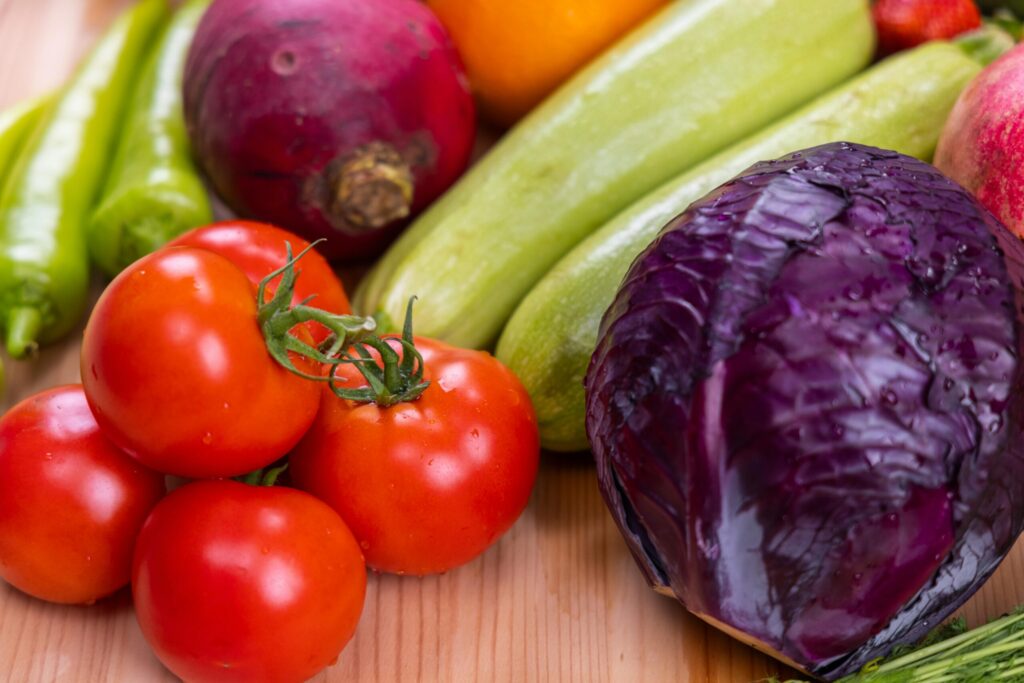
Nutritional Highlights & Quick Reference
Use this as a rapid guide for optimizing vegetable choices across specific nutritional goals:
Highest Protein
Drumstick Leaves (Moringa) — 9.4 g
→ Broad Beans — 7.9 g
→ Garlic — 6.4 g
Highest Fiber
Curry Leaves — 6.4 g
→ Broad Beans — 5.4 g
→ Green Peas — 5.1 g
Highest Vitamin C
Green Chilli — 242.5 mg
→ Drumstick Pods — 141 mg
→ Capsicum — 128 mg
Highest Vitamin A
Sweet Potato — 961 mcg RAE
→ Carrot — 835 mcg
→ Pumpkin — 426 mcg
Highest Folate
Spinach — 194 mcg
→ Broad Beans — 148 mcg
→ Cluster Beans — 130 mcg
Highest Vitamin K
Amaranth (Chaulai) — 1140 mcg
→ Kale — 817 mcg
→ Mustard Greens — 593 mcg
Highest Calcium
Curry Leaves — 830 mg
→ Fenugreek Leaves — 395 mg
→ Amaranth — 215 mg
Highest Iron
Drumstick Leaves — 4.0 mg
→ Spinach — 2.71 mg
→ Amaranth — 2.32 mg
Highest Potassium
Yam (Suran) — 816 mg
→ Taro — 591 mg
→ Lotus Stem — 556 mg
Lowest Calories
Bottle Gourd — 14 kcal
→ Cucumber — 15 kcal
→ Bitter Gourd (Karela) — 17 kcal
Best for Diabetics
Bitter Gourd (Karela)
→ Cluster Beans
→ Okra (Bhindi)
Most Underrated Indian Vegetables
Drumstick Leaves (Moringa)
→ Fenugreek Leaves
→ Cluster Beans
Vegetables offer a wide range of nutritional benefits, and choosing the right ones can help you meet specific health goals more effectively. For example, drumstick leaves stand out as a powerhouse, providing high protein, iron, and overall nutrient density, while curry leaves excel in both fiber and calcium. Green chilli and other colorful vegetables boost immunity with high vitamin C, whereas sweet potato and carrot support vision with rich vitamin A content. Leafy greens like spinach and amaranth contribute essential folate, iron, and vitamin K, making them vital for blood and bone health. For heart health, potassium-rich options like yam are beneficial, while low-calorie vegetables such as bottle gourd and cucumber support weight management. Additionally, bitter gourd, cluster beans, and okra are particularly helpful for managing blood sugar levels. Overall, incorporating a diverse mix of these vegetables ensures balanced nutrition and better health outcomes.
Data Sources & References
All nutritional data in this article is derived from the following authoritative, peer-reviewed, and government-published databases:
- USDA FoodData Central (FDC)— fdc.nal.usda.gov — Primary reference for internationally available vegetables; 2024 release. Foundation Foods and SR Legacy databases.
- Indian Food Composition Tables (IFCT 2017)— National Institute of Nutrition (NIN), Hyderabad, ICMR. Brahm Dutt Chattopadhyay et al. — Primary reference for Indian-specific vegetables (Methi, Karela, Guar, Drumstick, Arbi, Parwal, Suran, etc.).
- Nutritive Value of Indian Foods— C. Gopalan, B.V. Rama Sastri, S.C. Balasubramanian; NIN/ICMR, 2009 revised edition. Foundational reference for Indian nutritional data.
- FAO/INFOODS— International Network of Food Data Systems (fao.org/infoods) — Cross-referenced for data validation and gap-filling.
- WHO Dietary Reference IntakesandICMR Recommended Dietary Allowances (2020)— Used for all RDA reference values in this article.
- Harvard T.H. Chan School of Public Health — The Nutrition Source— nutritionsource.hsph.harvard.edu — Used for health claims verification and glycemic index data.
- National Institutes of Health (NIH) Office of Dietary Supplements— ods.od.nih.gov — Vitamin and mineral fact sheets for RDA and UL values.