
Nutritional Value and Health Benefits of Indian Condiments and Spices
Discover the nutritional and medicinal value of Indian spices and condiments like turmeric, cumin, black pepper, and coriander. Includes ICMR and WHO insights on their health benefits.
Why Spices and Condiments Are More Than Just Flavor
Indian cuisine is famous for its rich use of spices and condiments, which not only enhance taste but also provide bioactive compounds, antioxidants, vitamins, and minerals.
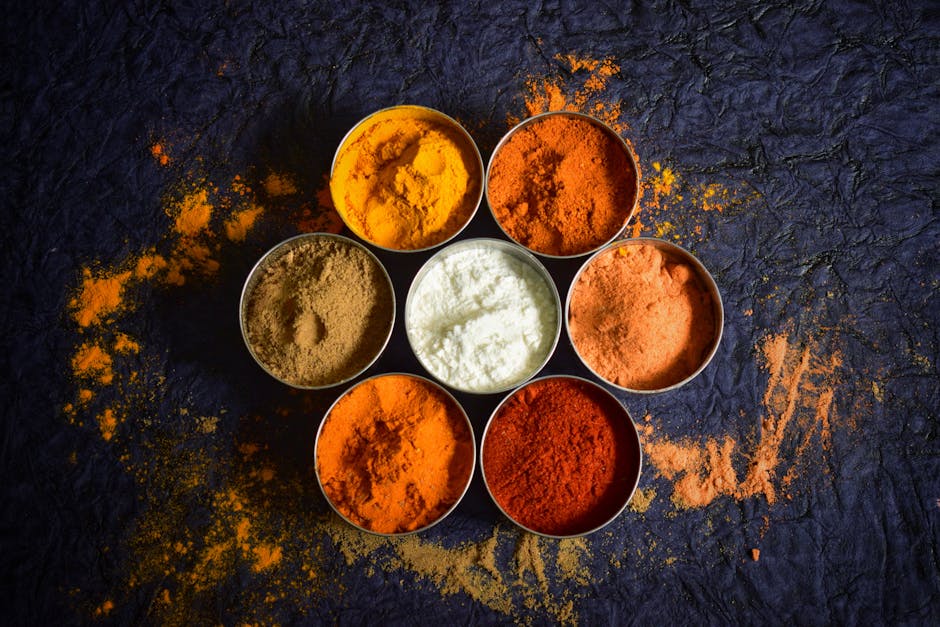
Commonly used ingredients like turmeric, cumin, coriander, pepper, clove, cardamom, mustard seeds, and fenugreek contain natural phytochemicals that promote digestion, metabolism, and immunity.
Although they are used in small quantities, their regular inclusion contributes to overall health and disease prevention.
Nutrient Composition and Health Properties of Common Indian Spices
| Spices & Condiments (Serving: 100g) | Protein (g) | Fat (g) | Carb (g) | Energy (kcal) | Fiber (g) | Calcium (mg) | Iron (mg) | Magnesium (mg) | Potassium (mg) | Zinc (mg) |
|---|---|---|---|---|---|---|---|---|---|---|
| Chillies, green- (100g) | 84.47 | 1.01 | 1.55 | 1.2 | 0.73 | 0.006 | 0.001 | 5.0 | 431.0 | |
| Chillies, green- (100g) | 85.72 | 0.85 | 1.34 | 1.67 | 0.75 | 16.86 | 1.24 | 2.0 | 51.72 | 0.26 |
| Ginger, fresh (Zingiber officinale) (100g) | 2.22 | 0.85 | 8.97 | 0.96 | 5.36 | 0.003 | 0.001 | 3.85 | 10.03 | 0.39 |
| Onion, big (Allium cepa) (100g) | 0.01 | 0.3 | 6.69 | 1.6 | 0.1 | 0.003 | 0.003 | 0.24 | 5.5 | 0.35 |
| Asafoetida (Ferula assa-foetida) (100g) | 0.01 | 0.14 | 6.28 | 0.02 | 266.0 | 15.68 | ||||
| Cardamom, green (Elettaria cardamomum) (100g) | 0.07 | 0.27 | 0.68 | 0.15 | 378.0 | 8.33 | 6.0 | 1262.0 | 3.71 | |
| Cardamom, black (Elettaria cardamomum) (100g) | 0.13 | 0.27 | 1.19 | 0.2 | 312.0 | 7.94 | 4.0 | 1331.0 | 4.75 | |
| Chillies, red (Capsicum annum) (100g) | 0.83 | 0.57 | 12.31 | 0.42 | 0.114 | 0.007 | 231.0 | 2245.0 | 19.45 | |
| Cloves (Syzygium aromaticum) (100g) | 0.22 | 0.36 | 7.84 | 0.03 | 0.047 | 0.026 | 334.0 | 1434.0 | 7.75 | |
| Coriander seeds (Coriandrum sativum) (100g) | 0.23 | 0.28 | 5.27 | 0.04 | 0.041 | 0.003 | 343.0 | 1473.0 | 6.34 | |
| Cumin seeds (Cuminum cyminum) (100g) | 0.13 | 0.22 | 6.64 | 0.39 | 0.164 | 4.01 | ||||
| Fenugreek seeds (Trigonella foenum graecum) (100g) | 0.14 | 0.27 | 12.22 | 0.77 | 0.188 | 9.98 | ||||
| Mace (Myristica fragrans) (100g) | 0.13 | 0.35 | 7.8 | 0.3 | ||||||
| Nutmeg (Myristica fragrans) (100g) | 0.05 | 0.33 | 17.87 | 0.1 | ||||||
| Omum (Trachyspermum ammi) (100g) | 0.23 | 0.22 | 12.38 | 0.24 | 0.296 | 87.04 | ||||
| Pippali (Piper longum) (100g) | 0.14 | 0.23 | 15.88 | 0.6 | 0.218 | 20.51 | ||||
| Pepper, black (Piper nigrum) (100g) | 0.09 | 0.3 | 5.23 | 0.27 | 405.0 | 11.91 | ||||
| Poppy seeds (Papaver somniferum) (100g) | 20.31 | 30.38 | 12.37 | 18.4 | 26.68 | 194.0 | 10.13 | |||
| Turmeric powder (Curcuma domestica) (100g) | 0.01 | 0.13 | 3.31 | 0.13 | 122.0 | 46.08 | ||||
| Chillies, green - all varieties (100g) | 0.11 | 0.22 | 94.07 | 22.48 | 0.28 |
“Did you know? A teaspoon of turmeric (3 g) provides powerful antioxidants equal to 1,500 IU of vitamin E in protecting your cells from damage.”
Recommended Daily Intake
ICMR and WHO Insights on Spice and Condiment Use
According to ICMR-NIN (2020):
- Spices and condiments are used in small amounts (2–5 g/day), mainly to improve flavor, digestion, and appetite.
- Certain spices like turmeric, ginger, cumin, and coriander have proven health benefits due to antioxidant and anti-inflammatory compounds.
- Overconsumption of salt, pickles, or sauces should be avoided as they can increase sodium intake.
According to WHO & FAO:
- Sodium intake from condiments and processed foods should be <5 g of salt/day (≈2 g sodium).
- Use herbs and spices as healthy alternatives to salt and sugar for flavor enhancement.
- Spices like turmeric, garlic, and pepper contain phytochemicals that support metabolic and immune health when consumed regularly.
Key Nutrients and Active Compounds
| Spice / Condiment | Key Nutrient / Compound | Function / Benefit |
|---|---|---|
| Turmeric (Haldi) | Curcumin | Anti-inflammatory, antioxidant |
| Cumin (Jeera) | Iron, essential oils | Aids digestion, boosts metabolism |
| Coriander Seeds (Dhania) | Vitamin C, calcium | Detoxifying, improves skin and digestion |
| Black Pepper (Kali Mirch) | Piperine | Enhances nutrient absorption |
| Clove (Laung) | Eugenol, manganese | Antimicrobial, improves oral health |
| Cardamom (Elaichi) | Antioxidants | Freshens breath, aids digestion |
| Fenugreek (Methi) | Fibre, protein | Balances blood sugar levels |
| Mustard Seeds (Sarson) | Selenium, omega-3 | Anti-inflammatory, heart-friendly |
| Ginger (Adrak) | Gingerol | Relieves nausea, supports immunity |
| Garlic (Lahsun) | Allicin | Lowers cholesterol and boosts heart health |
Diet Tips
- Add turmeric and black pepper together — pepper enhances curcumin absorption.
- Use cumin, coriander, and fennel seeds in cooking or tea to support digestion.
- Limit salt-based condiments like pickles and sauces to reduce sodium.
- Fresh herbs (mint, curry leaves, coriander) can replace high-sodium seasonings.
- Avoid excessive use of chili powder or spicy sauces if prone to acidity.