
BMR Calculator – Calculate Basal Metabolic Rate
Calculate your BMR to know how many calories your body burns at rest. Accurate BMR calculator using proven formulas.
Related
What is BMR?
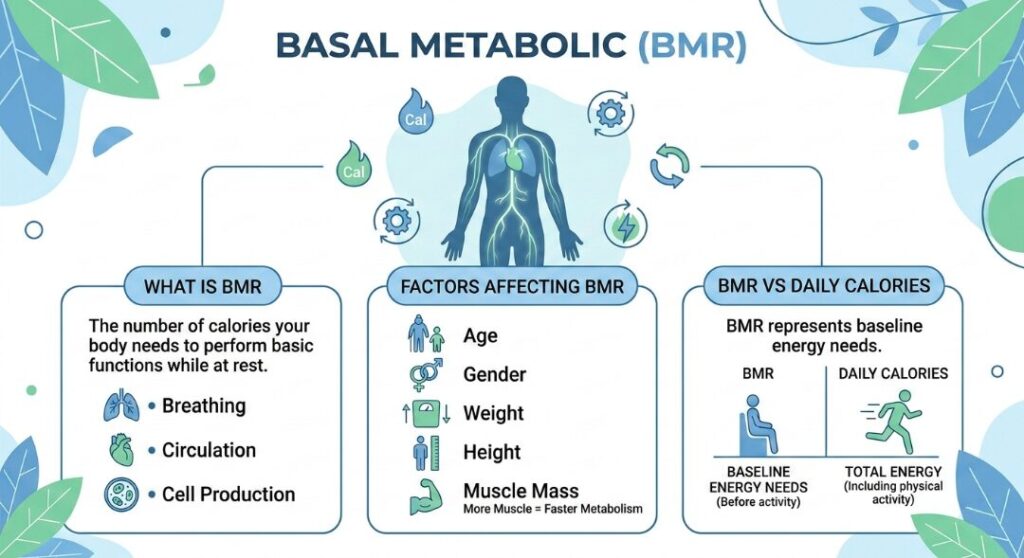
Basal Metabolic Rate (BMR) refers to the number of calories your body burns when it is at complete rest. It reflects the energy needed to keep your body functioning, even when you are not performing physical activity.
Your BMR supports essential processes such as:
- Breathing
- Blood circulation
- Brain activity
- Hormone regulation
- Body temperature maintenance
- Because these functions occur continuously, your body burns calories even while sleeping.
Why BMR is Important
- Helps determine your daily calorie requirement
- Helps set realistic weight loss or gain goals
- Improves your understanding of your metabolism
How to Use This BMR Calculator
This calculator estimates your Basal Metabolic Rate using the Mifflin-St Jeor equation, one of the most widely accepted formulas for estimating metabolic rate.
The equation considers the following factors:
- Age
- Gender
- Weight
- Height
These variables influence how much energy your body requires at rest.
This calculator has option to use Harris-Benedict equation.
How the BMR Calculator Works
For accurate results, this calculator uses the Mifflin-St Jeor Equation — widely used by nutritionists:
For Men
BMR = (10 × weight in kg) + (6.25 × height in cm) − (5 × age) + 5
For Women
BMR = (10 × weight in kg) + (6.25 × height in cm) − (5 × age) − 161
This formula estimates the calories your body needs each day to maintain basic metabolic functions.
BMR vs TDEE
Many people confuse Basal Metabolic Rate (BMR) with Total Daily Energy Expenditure (TDEE).
| Measurement | Meaning |
|---|---|
| BMR | Calories burned at complete rest |
| TDEE | Total calories burned including physical activity |
BMR represents the baseline metabolic rate, while TDEE accounts for additional calories burned through daily movement and exercise.
Factors That Affect BMR
Several biological and lifestyle factors influence Basal Metabolic Rate.
Age: Metabolic rate tends to decline gradually with age, partly due to changes in muscle mass and hormonal activity.
Body Composition: Individuals with higher muscle mass typically have higher BMR because muscle tissue requires more energy than fat tissue.
Gender: Men generally have a higher BMR than women due to differences in body composition and muscle mass.
Genetics: Genetic factors can influence metabolic efficiency and energy expenditure.
Why Knowing Your BMR Is Useful
Understanding your Basal Metabolic Rate can help you:
- Estimate daily calorie needs
- Design effective weight-loss plans
- Determine calorie intake for muscle gain
- Track metabolic health
- Adjust diet based on activity levels
BMR serves as the foundation for calculating your Total Daily Energy Expenditure (TDEE).
Tips for Supporting a Healthy Metabolism
While BMR is influenced by genetics and age, lifestyle choices can help maintain a healthy metabolic rate.
Helpful strategies include:
- Engaging in regular physical activity
- Strength training to maintain muscle mass
- Eating balanced meals with sufficient protein
- Getting adequate sleep
- Managing stress levels
Maintaining a healthy lifestyle helps support efficient energy metabolism.
Frequently Asked Questions (FAQs)
What is a normal BMR value?
It depends on age, gender, and weight — the calculator gives a personalized result.
Does higher BMR mean faster metabolism?
Yes! A higher BMR burns more calories even at rest.
How can I increase my BMR naturally?
Regular exercise, protein intake, and good sleep help increase BMR.